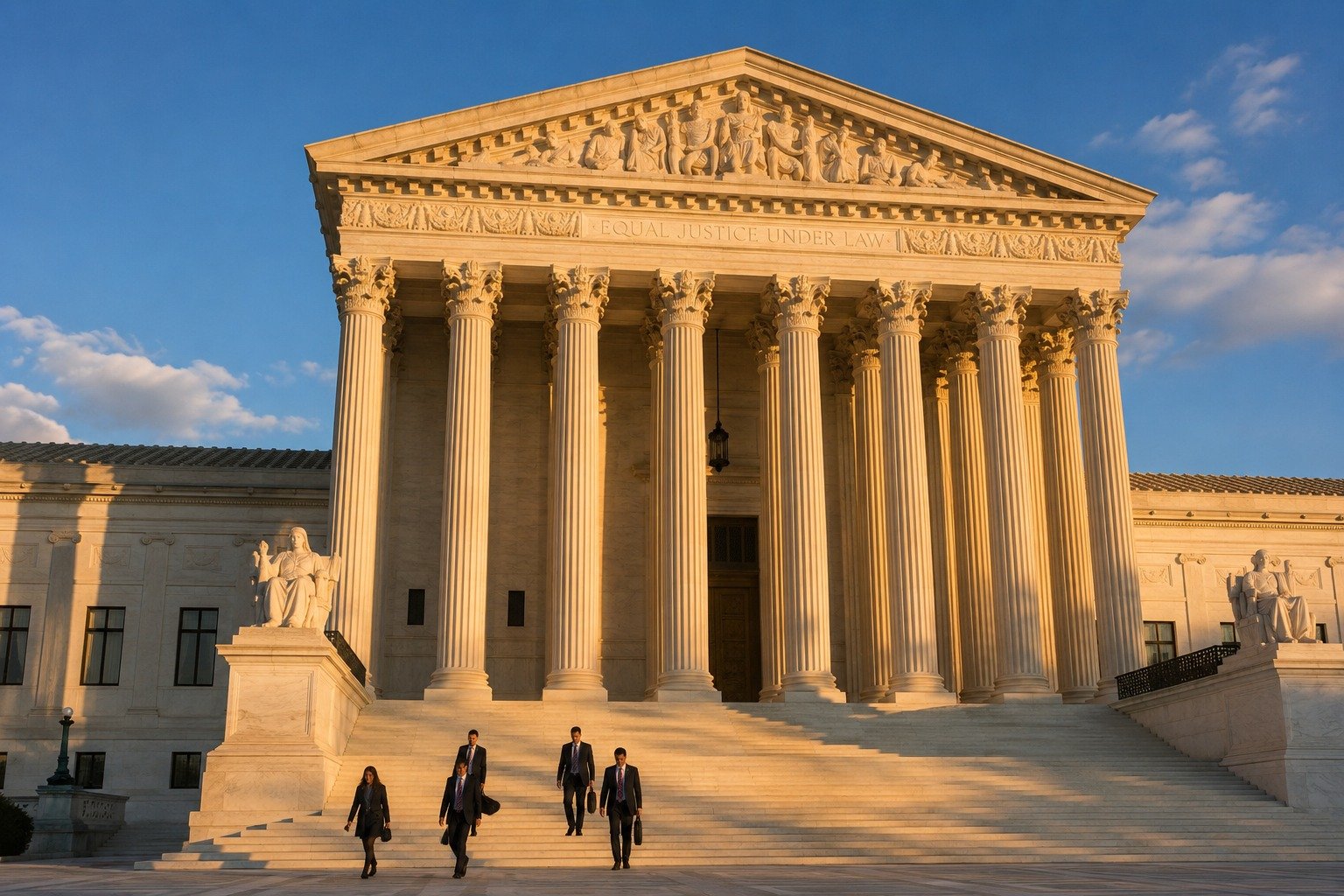
The Supreme Court has sharply limited the ability of human rights victims to sue American corporations in U.S. courts for helping foreign governments persecute their own people. In a 6-3 ruling handed down Monday in Cisco Systems v. Doe, the conservative majority threw out a long-running lawsuit and closed off one of the last major avenues victims had used to hold companies accountable for enabling abuses abroad.
Justice Amy Coney Barrett wrote the majority opinion, joined by Chief Justice John Roberts and Justices Thomas, Alito, Gorsuch, and Kavanaugh. Justices Sotomayor, Kagan, and Jackson dissented.
The Case Behind the Ruling
The lawsuit was brought by Chinese practitioners of Falun Gong, a spiritual movement the Chinese government has long suppressed. The plaintiffs alleged that Cisco Systems designed and built surveillance technology that Beijing used to identify, track, and detain them because of their religious beliefs. They argued the company knowingly helped power a system of persecution.
To bring their claims, the plaintiffs relied on two laws. The first is the Alien Tort Statute, a provision dating back to 1789 that allows foreign nationals to sue in U.S. courts for serious violations of international law. The second is the Torture Victim Protection Act, which lets victims sue individuals who commit torture under color of foreign law.
What the Court Decided
The Court ruled that federal judges no longer have the authority to recognize new causes of action under the Alien Tort Statute for violations of international norms. In practice, that shuts the door on most modern uses of the law, which human rights advocates had spent decades building into a tool for corporate accountability.
The majority also held that the Torture Victim Protection Act does not allow claims for “aiding and abetting.” Only those who directly commit torture can be sued under that statute – not companies or individuals accused of merely assisting. Taken together, the rulings make it far harder to hold a U.S. corporation liable in American courts for enabling human rights abuses overseas.
It is important to be precise about the scope here. The decision is narrow and statute-specific. It does not, despite some sweeping early headlines, ban judges from recognizing lawsuits across the board. What it does is bar courts from expanding these two particular laws – and it says that if anyone is going to broaden corporate liability for overseas abuses, it has to be Congress, not the courts.
The Dissent
In dissent, Justice Sotomayor warned that the ruling leaves survivors of some of the world’s gravest abuses with no realistic way to seek justice, while the corporations that profited from enabling those abuses walk away untouched. The dissenters argued the majority read the statutes too narrowly and ignored the very purpose those laws were meant to serve.
Civil rights and human rights groups echoed that concern, calling the decision a major setback for accountability. Supporters of the ruling, including business groups, countered that the decision restores judicial restraint and keeps American courts from becoming a forum for disputes rooted in conduct on the other side of the world.
What This Means for Americans
For ordinary readers, the stakes go beyond one company or one case. The ruling shifts the burden squarely onto Congress to decide whether, and how, American companies can be held responsible when their products and technology are used to surveil, detain, or harm people abroad. Until lawmakers act, that courthouse door stays largely closed – and a divided Congress has shown little appetite for opening it.
The question now is whether public pressure pushes lawmakers to write new accountability rules into law, or whether the path to justice for victims of corporate-enabled persecution quietly narrows further.
Stay informed on the stories that matter most. Follow Your Daily Updates on Facebook and bookmark yourdailyupdates.news for breaking news and analysis.