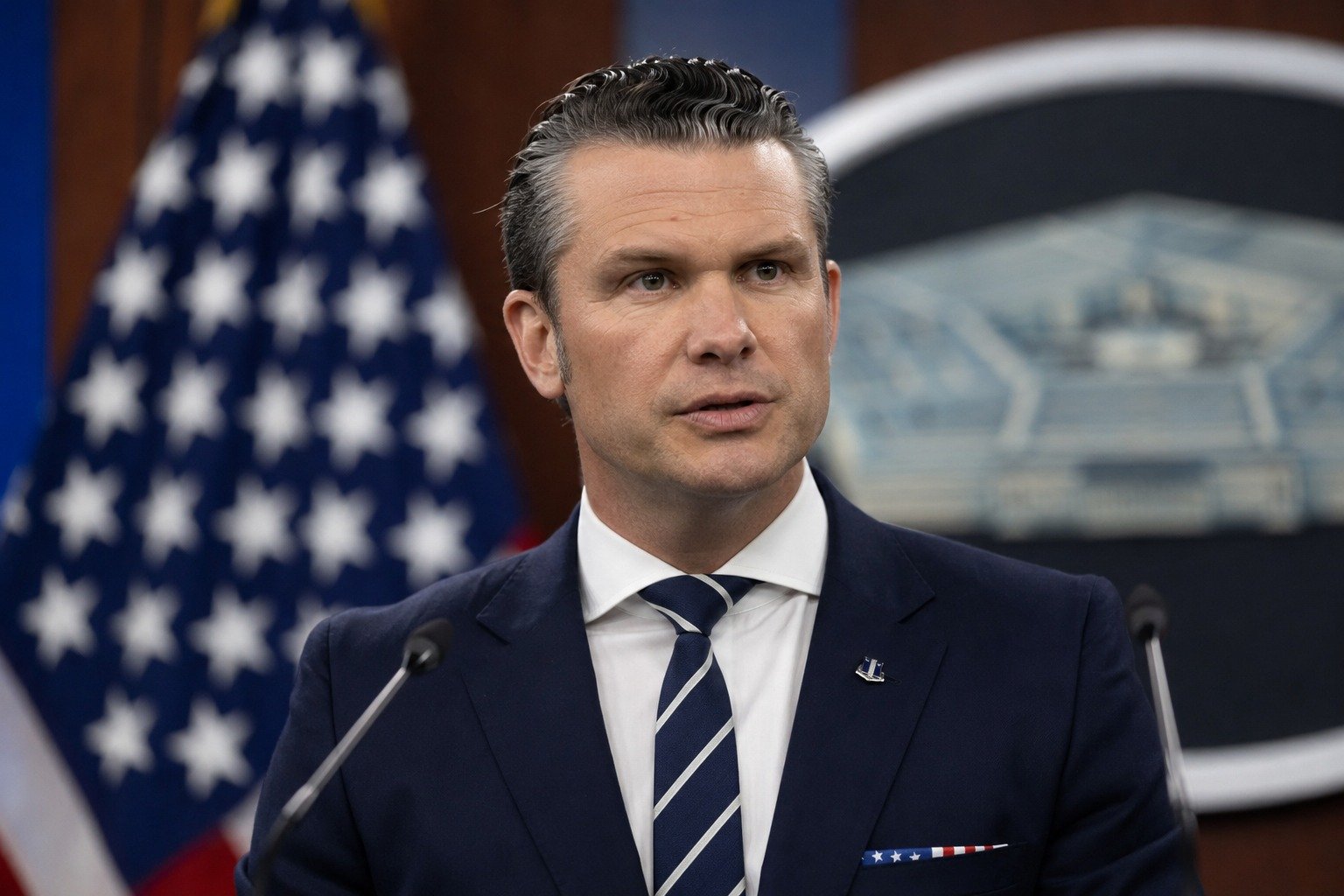
A bipartisan group of senators is reaching for one of Congress’s bluntest tools — the power of the purse — to pry overdue answers out of the Pentagon. Tucked into the Senate’s version of the annual National Defense Authorization Act (NDAA), filed in mid-June 2026, are provisions that would withhold the bulk of Defense Secretary Pete Hegseth’s office travel funds until the Defense Department turns over civilian-harm investigations it has so far declined to release.
The bill text caps spending at no more than 25% of the secretary’s travel budget — in effect freezing up to 75% — until lawmakers receive the documents they have been requesting for months. At the center of the demand is the Pentagon’s unredacted report on the February 28, 2026 U.S. strike on the Minab girls’ school in Iran, an attack in which more than 150 people, most of them children, were killed.
What the provision actually does
The measure ties the travel money to two specific disclosures. First, the Senate Armed Services Committee and its House counterpart must receive the complete, unredacted civilian-harm investigation into the Minab strike, including all supporting documentation. Second, the Defense Department must hand over unedited video of U.S. military strikes on vessels the administration has described as drug-trafficking boats in the Caribbean and Eastern Pacific.
Since early September, the U.S. military has carried out dozens of those boat strikes — at least 64 by recent counts — killing a reported 200-plus people the administration labels “narco-terrorists.” Lawmakers from both parties say they have repeatedly asked for the footage and the legal justification behind the campaign and have been turned away.
The civilian-harm investigation into the Minab strike is reportedly complete. According to lawmakers, it is sitting unreleased while it awaits sign-off from the White House, Hegseth, and senior military leaders. The Senate provision is designed to make that delay costly.
A transparency fight, not a finished law
It is important to be precise about where this stands. The travel-budget freeze is a provision in the Senate’s version of the NDAA — it has not been enacted. The competing version approved by the House Armed Services Committee does not include it. The two chambers will spend the coming months negotiating a compromise defense bill, and the provision could be strengthened, weakened, or dropped entirely before anything reaches the president’s desk.
Still, the move sends a clear signal. By attaching the demand to must-pass defense legislation and putting the secretary’s own travel budget on the line, senators are betting that the prospect of grounded official trips will succeed where months of letters and closed-door requests have not.
Why oversight matters here
At its core, this is a question of accountability. Congress is constitutionally responsible for funding and overseeing the military, and that responsibility is hollow if lawmakers cannot see how lethal force is being used in their name. When civilians — and especially children — are killed, families and the public have a basic interest in an honest accounting of what happened and why.
Withholding investigative records and strike footage from the very committees charged with oversight turns routine accountability into a standoff. The senators’ message is straightforward: the documents come first, and the travel comes after. Whether that leverage survives the NDAA negotiations will say a great deal about how much disclosure Congress is ultimately willing to force.