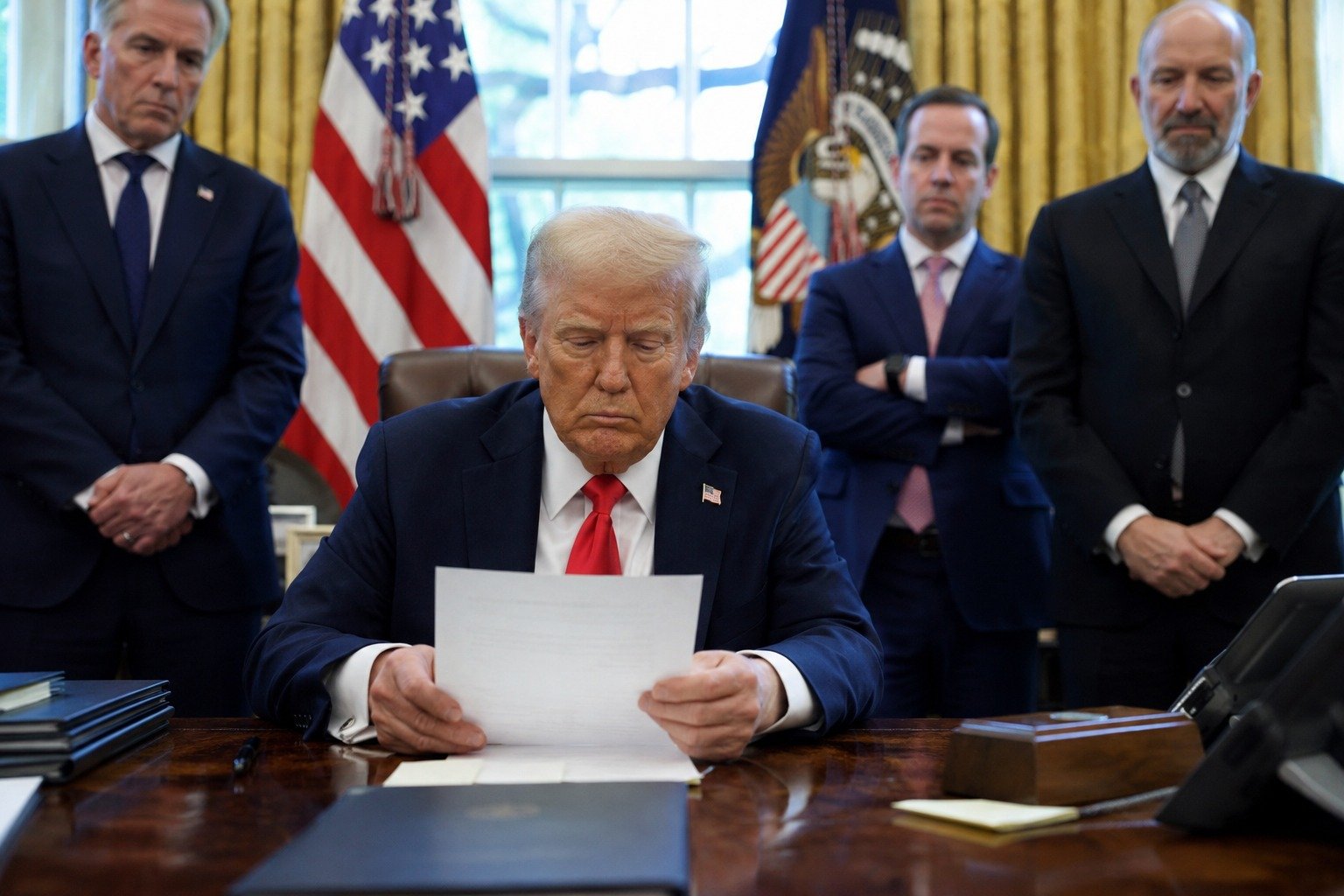
In one of the rare moments when Congress has pushed back against a president on matters of war, the U.S. Senate voted 50-48 on Tuesday to direct President Donald Trump to remove American forces from hostilities with Iran. The measure, a war powers resolution, passed only because four Republicans broke from their party to join every voting Democrat.
The four GOP senators who crossed the aisle were Rand Paul of Kentucky, Susan Collins of Maine, Lisa Murkowski of Alaska, and Bill Cassidy of Louisiana. Their votes, combined with the absence of Republican Sens. Mitch McConnell and Dave McCormick, were enough to carry the resolution across the finish line. In a twist that underscored how unusual the vote was, Democratic Sen. John Fetterman broke ranks in the other direction and voted against it.
What the Resolution Actually Does
It is important to be precise about what happened here. A war powers resolution is Congress invoking its constitutional authority over the use of military force and formally directing the president to stand down. It is a statement of where the legislative branch stands, and it carries real political weight. But it is not a self-executing law that automatically flips a switch and ends operations overnight.
Trump opposes the resolution, and concurrent resolutions of this kind function more as a formal rebuke and directive than as binding force that the executive branch must instantly obey. So this is best understood as the Senate rebuking the president and directing a withdrawal — not as Congress single-handedly banning the war. The distinction matters, but so does the message: lawmakers went on the record saying the president overstepped.
The House Moved First
The Senate vote followed action in the House of Representatives, which earlier passed its own companion concurrent resolution by a margin of 215-208. There, too, a handful of Republicans broke with their leadership. Reps. Thomas Massie, Brian Fitzpatrick, Tom Barrett, and Warren Davidson joined Democrats to send the same message from the other chamber: the decision to take the country into armed conflict belongs to Congress, not to the president acting alone.
That two chambers, controlled by the president’s own party, both produced bipartisan defections on the same question is what makes this moment stand out. It is not every day that members of a sitting president’s party publicly vote to restrain him on something as consequential as war.
Why This Matters
For decades, presidents of both parties have steadily expanded their war powers, committing American forces abroad with little meaningful pushback from Congress. The War Powers Resolution of 1973 was meant to keep that authority in check, but in practice it has rarely been enforced. Lawmakers have often preferred to avoid casting a politically risky vote on military action.
This vote is a break from that pattern. It puts senators and representatives on the record, and it forces a public conversation about who decides when the nation goes to war. For ordinary Americans — the service members who would be sent into harm’s way and the families who would bear the cost — that question is not abstract. It is the difference between a war debated openly and one waged on a president’s say-so alone.
Whether the resolution changes the facts on the ground is uncertain, given the president’s opposition. But the politics have shifted. A line has been drawn, and the White House has been dared to cross it.
Stay informed on the stories that matter most. Follow Your Daily Updates on Facebook and bookmark yourdailyupdates.news for breaking news and analysis.