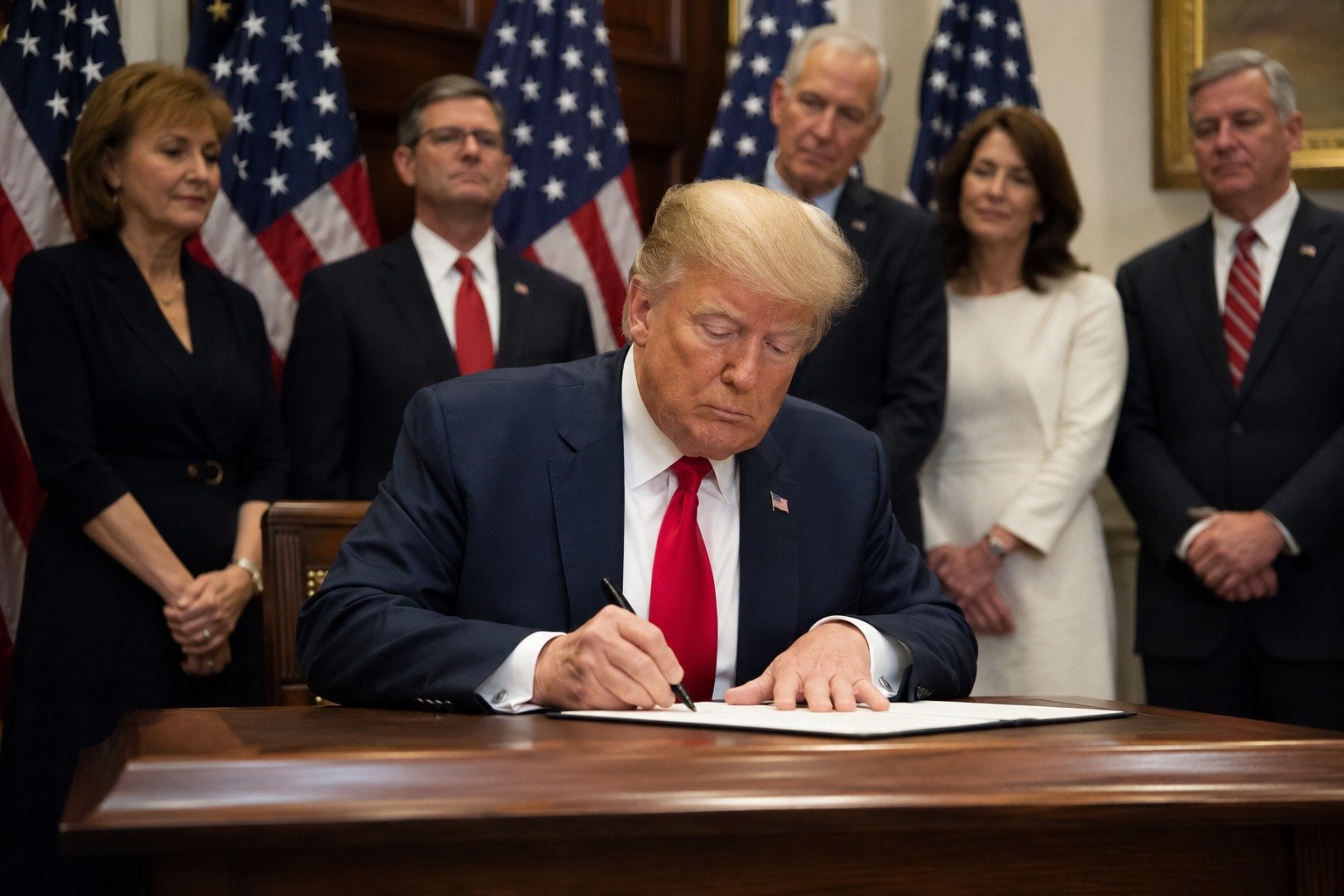
It is one of the most consequential animal-welfare laws in American history, and it has been on the books since 2019. On November 25, 2019, the Preventing Animal Cruelty and Torture Act — known as the PACT Act — was signed into law, making malicious cruelty to animals a federal crime for the first time in the nation’s history.
For decades, animal cruelty was handled entirely at the state level. Every state had its own statutes criminalizing abuse, but there was no federal standard tying them together. That gap created a real problem for prosecutors: cases that crossed state lines, or took place on federal property, often fell through the cracks. The PACT Act was written to close that gap.
What the Law Actually Does
The PACT Act targets the most serious forms of abuse. It makes it a federal felony to intentionally crush, burn, drown, suffocate, or impale animals. It also bans the creation and distribution of so-called “animal crush videos” — recordings produced to profit from that abuse. Before the law, a 2010 act had banned the videos themselves, but the underlying acts of cruelty were not federally prosecutable. The PACT Act filled in the missing piece.
Violations carry real consequences: fines, and a prison term of up to seven years. The law includes exceptions for ordinary practices such as hunting, trapping, fishing, agricultural activity, medical research, and the euthanasia of animals — it was written to go after deliberate torture, not lawful conduct.
A Rare Moment of Bipartisan Agreement
What stands out most about the PACT Act, years later, is how it moved through Congress. In an era when almost nothing passes without a partisan fight, this law sailed through. The U.S. House of Representatives approved it in October 2019, and the U.S. Senate passed it unanimously the following month.
It was a genuinely bipartisan effort from start to finish. The bill was introduced in the House by Representatives Ted Deutch, a Florida Democrat, and Vern Buchanan, a Florida Republican. In the Senate, it was championed by Richard Blumenthal of Connecticut, a Democrat, and Pat Toomey of Pennsylvania, a Republican. Lawmakers from both parties found common ground on a simple proposition: that torturing animals should be a federal crime.
Why It Mattered
Animal-welfare advocates had pushed for a federal anti-cruelty law for years. Their argument was straightforward: while every state had cruelty statutes, the absence of a national law made it difficult to pursue offenders whose conduct spanned multiple jurisdictions. A federal statute gave law enforcement a tool that did not stop at a state border.
Supporters at the time framed the law as a baseline of decency — a recognition that the deliberate torture of animals is not a private matter but a public concern. Groups that work on animal protection welcomed it as a long-overdue acknowledgment that the federal government had a role to play.
What This Means for Americans
For most people, the PACT Act operates quietly in the background. But it represents something larger: proof that Congress can still act, and act together, when the issue is clear enough. The law set a national floor for how the worst kinds of animal abuse are treated, and it gave federal prosecutors a path to pursue cases that once slipped away.
It is also a reminder worth holding onto. If lawmakers from both parties could unite to protect animals from torture, the obvious question is why that kind of cooperation remains so rare on nearly everything else.
Stay informed on the stories that matter most. Follow Your Daily Updates on Facebook and bookmark yourdailyupdates.news for breaking news and analysis.