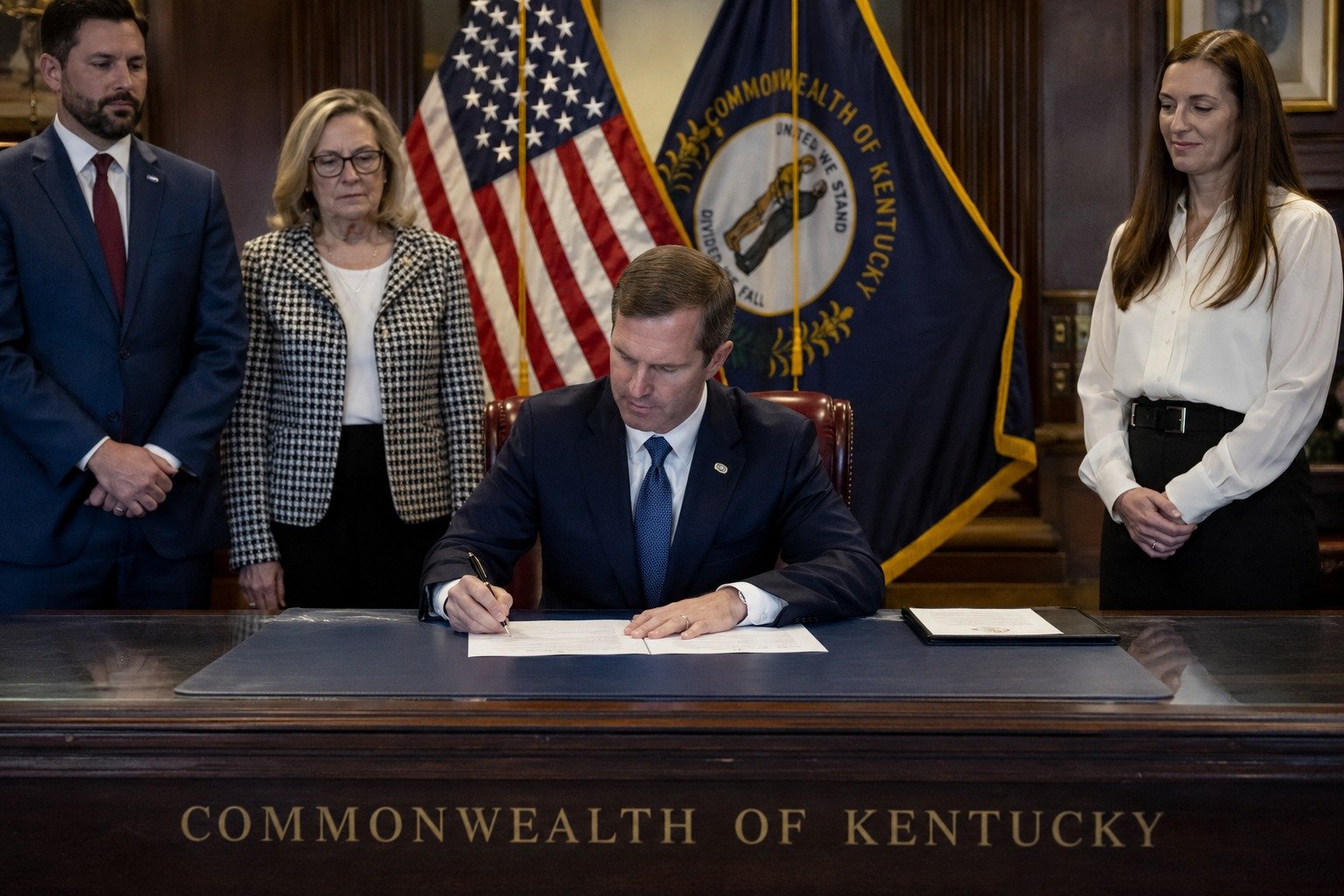
For the 43 Kentuckians who once carried a criminal record for the act of helping enslaved people reach freedom, history has finally been rewritten. Gov. Andy Beshear has signed an executive order posthumously pardoning all 43, declaring them what they always were: heroes.
The order, signed this week ahead of Juneteenth, wipes away convictions handed down generations ago to men and women who risked their lives, their freedom, and in some cases their own deaths to move human beings out of bondage. Under the laws of their era, helping someone escape slavery was a crime. Beshear’s order says plainly that the law was wrong — and the people it punished were right.
Who Was Pardoned
Among the 43 names is Elijah Anderson, a celebrated conductor on the Underground Railroad. Anderson is believed to have guided more than a thousand people toward freedom across his lifetime before he was imprisoned for his work — and ultimately died behind bars. Also pardoned were Julett Miles and Thomas Brown, names that history nearly let slip away entirely.
These were not abstract figures. They were ordinary people who made an extraordinary choice. When the legal system of their time defined freedom-seeking as theft and aiding it as a felony, they chose conscience over compliance. The price they paid was steep: prison, separation from family, and the permanent stain of a conviction that followed their names long after they were gone.
A Pardon That Corrects the Record
“These were heroes — not criminals,” Beshear said in announcing the order. The timing was deliberate. By acting ahead of Juneteenth — the holiday marking the end of slavery in the United States — the governor tied the pardons directly to the larger story of emancipation and the long, uneven reckoning that followed it.
A posthumous pardon cannot give back the years these people lost in prison. It cannot undo the suffering of families torn apart or restore reputations destroyed in their own lifetimes. What it can do is set the official record straight. For nearly two centuries, the state’s books listed these 43 as offenders. Now those same books call them heroes.
The Bigger Reckoning
The move lands as a pointed act of moral accounting. The people who broke unjust laws to free others were branded as criminals and punished for it. The system that enslaved millions of human beings faced no such reckoning. Correcting that imbalance — even a century or more after the fact — puts the state on the right side of its own history.
Supporters of the order see it as part of a broader effort to confront the full record of slavery and the people who resisted it, rather than letting that history fade into footnotes. Critics of such symbolic gestures sometimes argue they change little in practical terms. But for the descendants of those pardoned, and for a public still grappling with how to remember this chapter, naming heroism where it occurred carries real weight.
What This Means for Americans
The pardons raise an obvious question: how many other states will follow Kentucky’s lead? Across the country, countless people were jailed for the same “crime” of helping enslaved Americans escape. Most of their convictions still stand on the books. Kentucky has shown that a state can choose to correct that — and the longer the rest of the country waits, the more it signals about whose courage it is willing to honor and whose it is willing to forget.
Stay informed on the stories that matter most. Follow Your Daily Updates on Facebook and bookmark yourdailyupdates.news for breaking news and analysis.