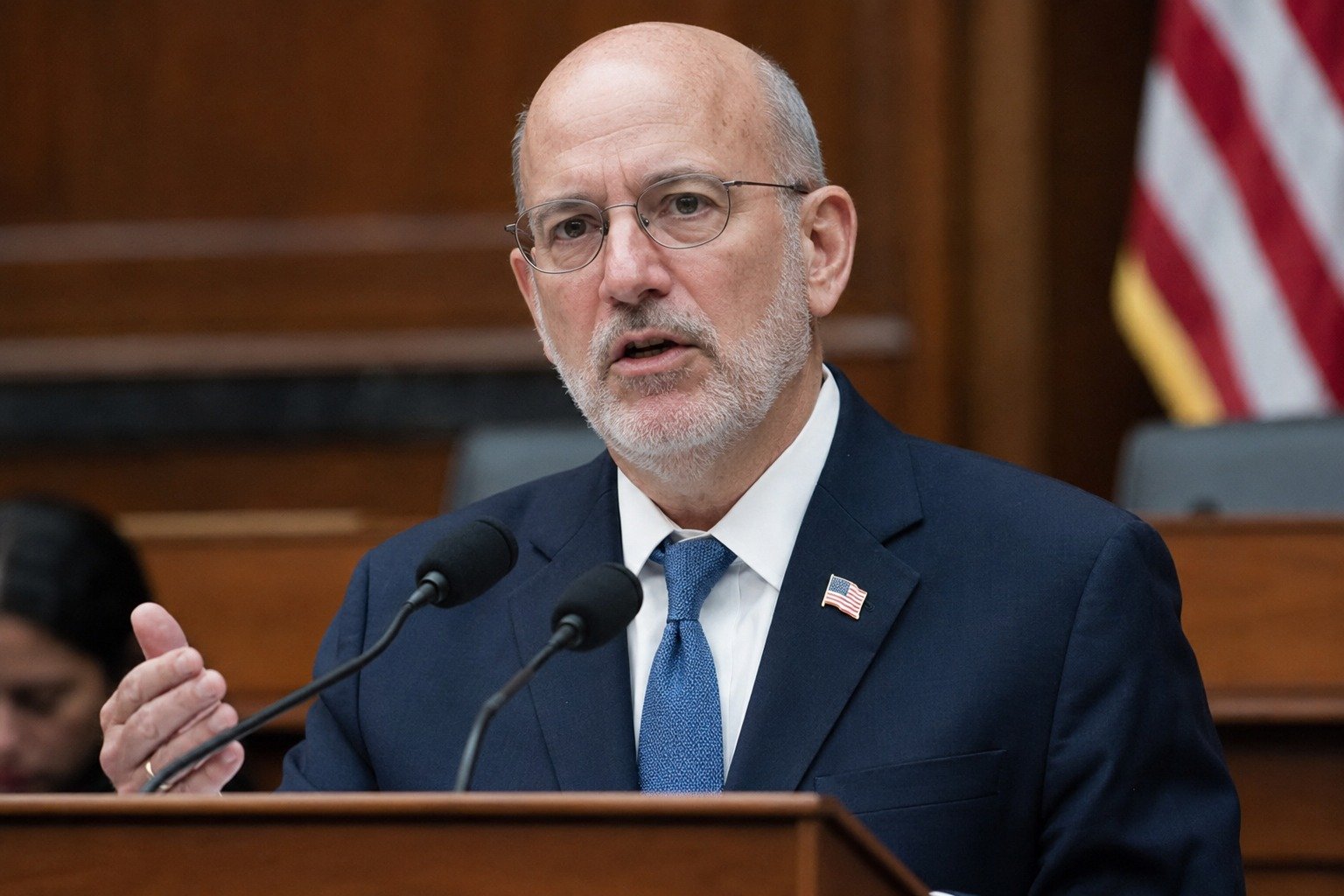
Rep. Jamie Raskin has introduced legislation that would bar any sitting president from accepting payments from the people they pardon or appoint to office — a direct strike at what reformers call pay-to-play pardons. The Maryland Democrat unveiled the measure alongside Reps. Robert Garcia and Joe Morelle as part of a broader anti-corruption package.
The bill is a proposal, not yet law. It has just been introduced and still has to move through Congress before it could take effect. But it puts a long-ignored vulnerability in the constitutional system squarely on the table: the near-absolute power of a president to grant clemency, and the absence of any rule stopping that power from being monetized.
Closing the Pardon Loophole
The presidential pardon is one of the least checked powers in the Constitution. A president can wipe away federal criminal liability for almost anyone, for almost any reason, and there is no formal mechanism to review or reverse it. What the law does not currently address is the money that can flow in the other direction — from a pardon recipient back to the president who freed them.
Raskin’s legislation is designed to close that gap. It would prohibit a president from accepting payments from anyone they pardon or appoint to a government post. Crucially, it also reaches money funneled through a business the president personally owns — an attempt to shut down the indirect routes through which a quiet quid pro quo could be disguised as an ordinary transaction.
Part of a Wider Push
The pardon provision does not stand alone. It is one piece of a larger anti-corruption package aimed at tightening the rules on how power is exercised at the very top of government. Raskin, a constitutional law professor before entering Congress, has long argued that the executive branch operates with too few guardrails against self-dealing.
By teaming with Reps. Garcia and Morelle, the sponsors are framing the effort as a structural fix rather than a partisan attack — a set of rules that would apply to any president, of any party, in any administration. The goal, as supporters describe it, is to draw a hard line between the mercy the pardon power is meant to embody and the money that could corrupt it.
The Road Ahead
Accountability measures like this one often face an uphill climb. Bills that constrain executive power can stall in committee, get buried in a crowded legislative calendar, or die without a floor vote. There is no guarantee this proposal becomes law, and its sponsors have been clear that it is a starting point, not a finished statute.
Still, simply introducing the measure forces a debate that is difficult to dodge. It asks lawmakers, and the public, to take a position on a blunt question: should a president ever be allowed to profit off the people they pardon?
What This Means for Americans
For ordinary citizens, the stakes are about trust in the system. When the most powerful office in the country can hand out get-out-of-jail-free cards with no rule against collecting a reward afterward, the door is open to a justice system that works differently for the connected and the wealthy. A law banning pay-to-play pardons would help ensure clemency is used as an act of fairness, not a favor with a price tag.
Stay informed on the stories that matter most. Follow Your Daily Updates on Facebook and bookmark yourdailyupdates.news for breaking news and analysis.