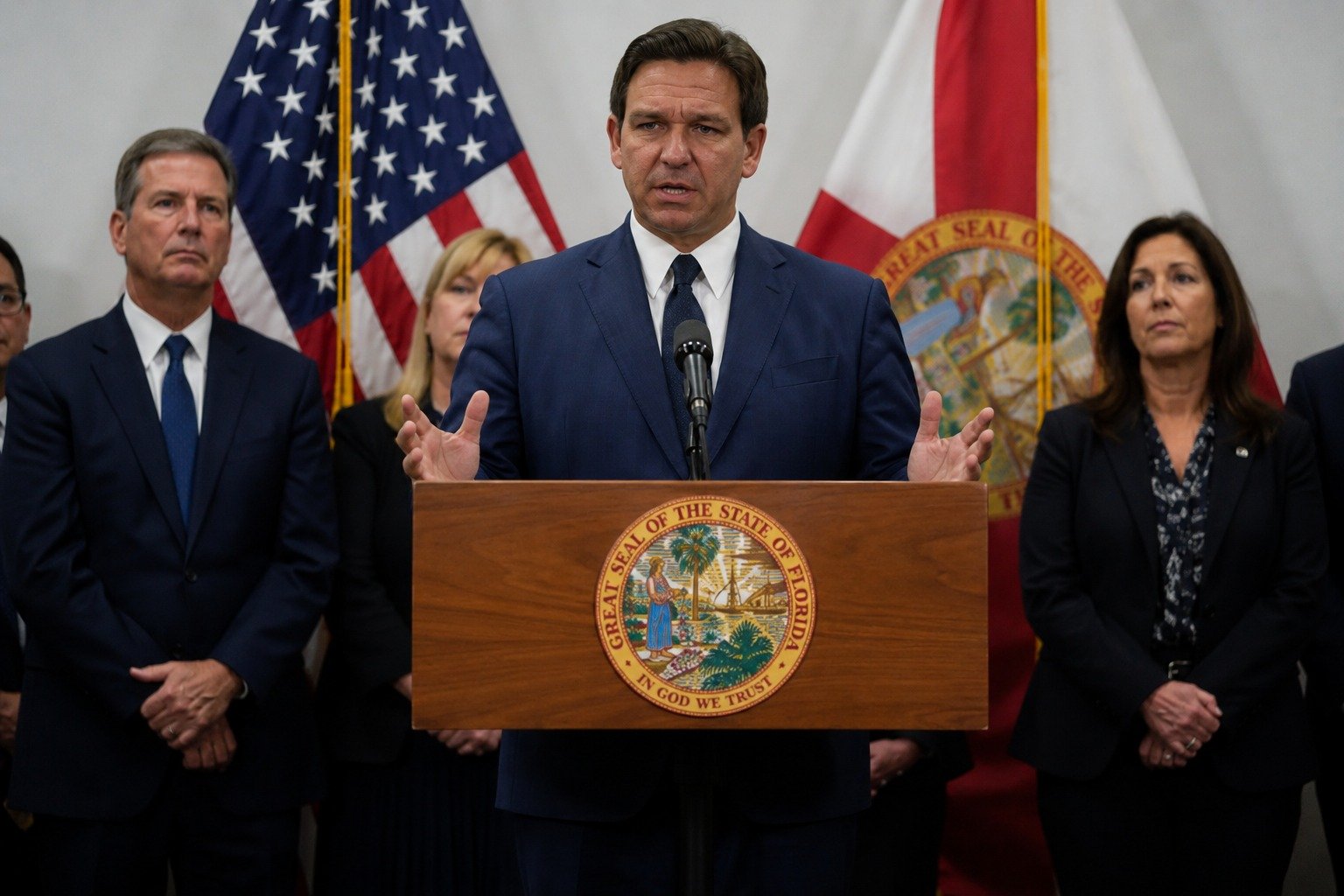
Five years after Florida’s streets filled with racial-justice demonstrations, one of the laws that moment produced is still quietly on the books – and most Floridians have no idea what it actually does. In 2021, Governor Ron DeSantis signed House Bill 1, the “Combatting Public Disorder Act,” and tucked inside it is a provision that shields drivers from civil lawsuits if they injure or kill someone while fleeing a crowd of protesters blocking a roadway.
What the Law Actually Says
HB 1 was Florida’s sweeping response to the nationwide protests that followed the 2020 killing of George Floyd. The law enhanced criminal penalties for rioting and created several new offenses. But one of its most consequential pieces deals with civil liability. Under the statute, a driver who hurts or kills a person while attempting to flee a mob that is obstructing a public road can claim immunity from being sued for damages by that injured person.
In plain terms: if a driver strikes a demonstrator under those specific conditions, the law makes it far harder for the injured party to win money in a civil court. It lowers the financial risk a driver faces – it does not erase the legal consequences entirely.
The Critical Distinction Everyone Misses
Here is the part that has been widely distorted, and it matters enormously: this is a civil shield, not a criminal one. The law does not grant anyone a “right to hit protesters.” A driver who plows into a crowd can still be arrested, charged, and prosecuted under Florida’s ordinary criminal laws – assault, battery, vehicular homicide, and more remain fully on the table.
What the statute strips away is narrower but still significant: the victim’s ability to win a civil lawsuit for damages. It protects the driver’s wallet, not their freedom. Legal experts and fact-checkers, including PolitiFact and reporting from WLRN and Newsweek, have repeatedly stressed this line, because the alternative framing – that Florida legalized running over demonstrators – is simply false.
Why It’s Back in the Conversation
The provision survived legal challenge. Portions of HB 1 were contested in court, but the civil-immunity language remained intact through 2024 and is still enforceable today. Then, in June 2025, DeSantis put it back in the headlines. Speaking publicly, he defended what he described as drivers’ “right to flee” demonstrators who surround a vehicle in the road.
Those comments were not a new policy or a fresh law. They were a restatement of the shield the governor had already signed four years earlier. But the remarks reignited a debate that had quietly faded, forcing Floridians to reckon again with a statute many had forgotten was ever passed.
The Argument on Both Sides
Civil-rights advocates argue the real danger is the message the law sends. By lowering the civil cost of injuring a protester, they say, the state itself has signaled that demonstrators in the road are fair game – a chilling effect on the constitutional right to assemble and protest. Even if criminal charges remain possible, the removal of civil accountability tilts the scales toward drivers and away from the people exercising their First Amendment rights.
Supporters of the law counter that it only protects drivers who genuinely fear for their safety when trapped by a hostile crowd. They frame it as a self-defense measure for motorists caught in a dangerous situation, not a license to attack anyone. The line between those two scenarios – a frightened driver escaping versus a driver weaponizing a vehicle – is exactly what critics say makes the law so quietly dangerous.
What This Means for Floridians
For anyone who has ever joined a march, a vigil, or a demonstration, the stakes are personal. The law remains in force, and it shapes the calculus of risk every time people take to the streets to make their voices heard. It does not legalize violence – but it does shift who bears the financial cost when violence occurs, and that shift falls on the injured, not the driver. Whether that is justice or a quiet erosion of protest rights is a question Floridians are still wrestling with.
Stay informed on the stories that matter most. Follow Your Daily Updates on Facebook and bookmark yourdailyupdates.news for breaking news and analysis.