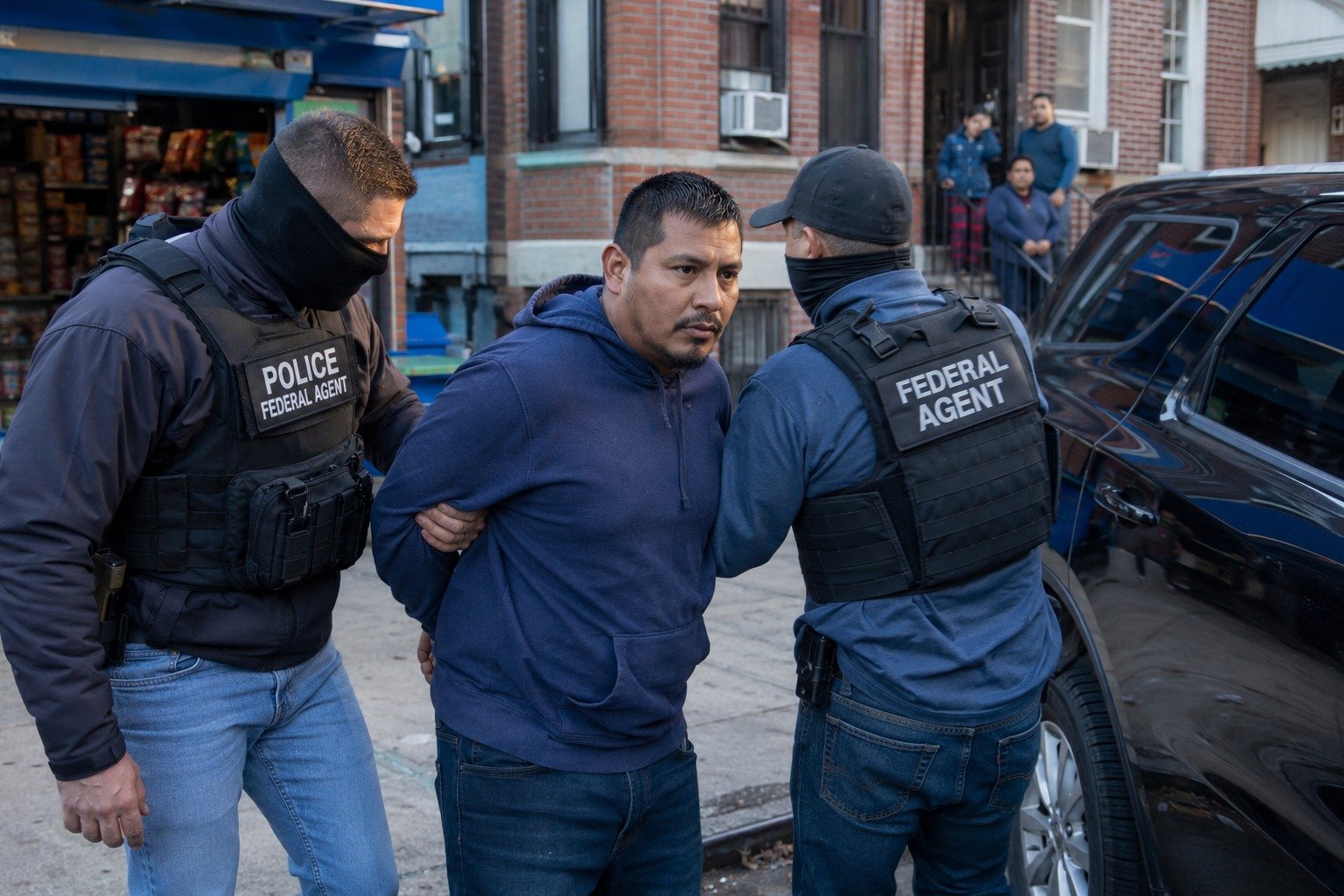
A new investigation has put hard numbers behind what immigrant communities across the New York region have been warning about for months: when ICE makes street arrests in the metro area, the people taken into custody are overwhelmingly Latino. According to a review by THE CITY and Documented published on May 27, 2026, more than 93% of documented street arrests examined targeted Latinos – a share far higher than their presence in the region’s undocumented population.
What the Investigation Found
Reporters reviewed 430 ICE street arrests carried out across the New York metropolitan area. The cases were drawn from habeas corpus petitions filed in federal court between October 2025 and March 2026 – legal challenges brought on behalf of people detained by immigration agents. When the journalists analyzed who had been swept up in those documented arrests, the pattern was stark: more than 93% of the individuals were Latino.
That figure is striking on its own. It becomes far more pointed when measured against the demographics of the region. Latinos make up only about 66% of the New York area’s undocumented population. If immigration enforcement were applied without regard to ethnicity, the arrest numbers would roughly track that 66% share. Instead, Latinos appeared in the arrest data at a rate dramatically higher than their actual presence in the undocumented community.
Why the Gap Matters
Civil-rights advocates say that gap is not a statistical quirk – it is evidence of racial profiling. The argument is straightforward: if agents were stopping people based on verified intelligence or specific evidence of immigration violations, the ethnic breakdown of arrests would look more like the population they are policing. A 27-point gap between who lives in the community and who gets arrested suggests, critics say, that agents are making decisions based on how people look rather than what they have done.
It is important to be precise about what the 93% figure represents. It describes the documented street arrests reviewed in the lawsuit dataset – the 430 cases pulled from habeas petitions – not literally every immigration action taken across the entire region. The number reflects a specific, court-documented sample. But within that sample, the lopsided pattern is hard to dismiss, and it has become central to the legal challenges now moving through federal court.
The Legal Fight Ahead
The data is already doing work inside the courtroom. Attorneys representing detained immigrants are pointing to the arrest breakdown as proof that ICE agents in the New York area have been stopping people based on appearance – a practice that, if proven, would run afoul of constitutional protections against discriminatory enforcement. The habeas petitions that produced this dataset are themselves part of a broader push to hold the agency accountable for how it conducts street operations.
For now, the courts have not issued a definitive ruling on whether the pattern amounts to unlawful profiling. But the investigation has handed advocates something they did not have before: a documented, numbers-based picture of who is actually being arrested. That kind of evidence is far harder to wave away than anecdotes, and it raises the stakes for an agency that has long insisted its enforcement is based on lawful criteria rather than ethnicity.
What This Means for Communities
For the families living under this enforcement, the report only confirms a daily reality they have described for years: in some neighborhoods, being Latino has become enough to draw the attention of federal agents. The fear that ripples through immigrant communities – the worry about a routine trip to the store, a walk to work, a stop on the sidewalk – is now backed by a court-documented record. The question moving forward is whether judges will treat these numbers as the decisive evidence advocates believe them to be, and whether that ruling will change how immigration enforcement is carried out on the streets of the New York region.
Stay informed on the stories that matter most. Follow Your Daily Updates on Facebook and bookmark yourdailyupdates.news for breaking news and analysis.