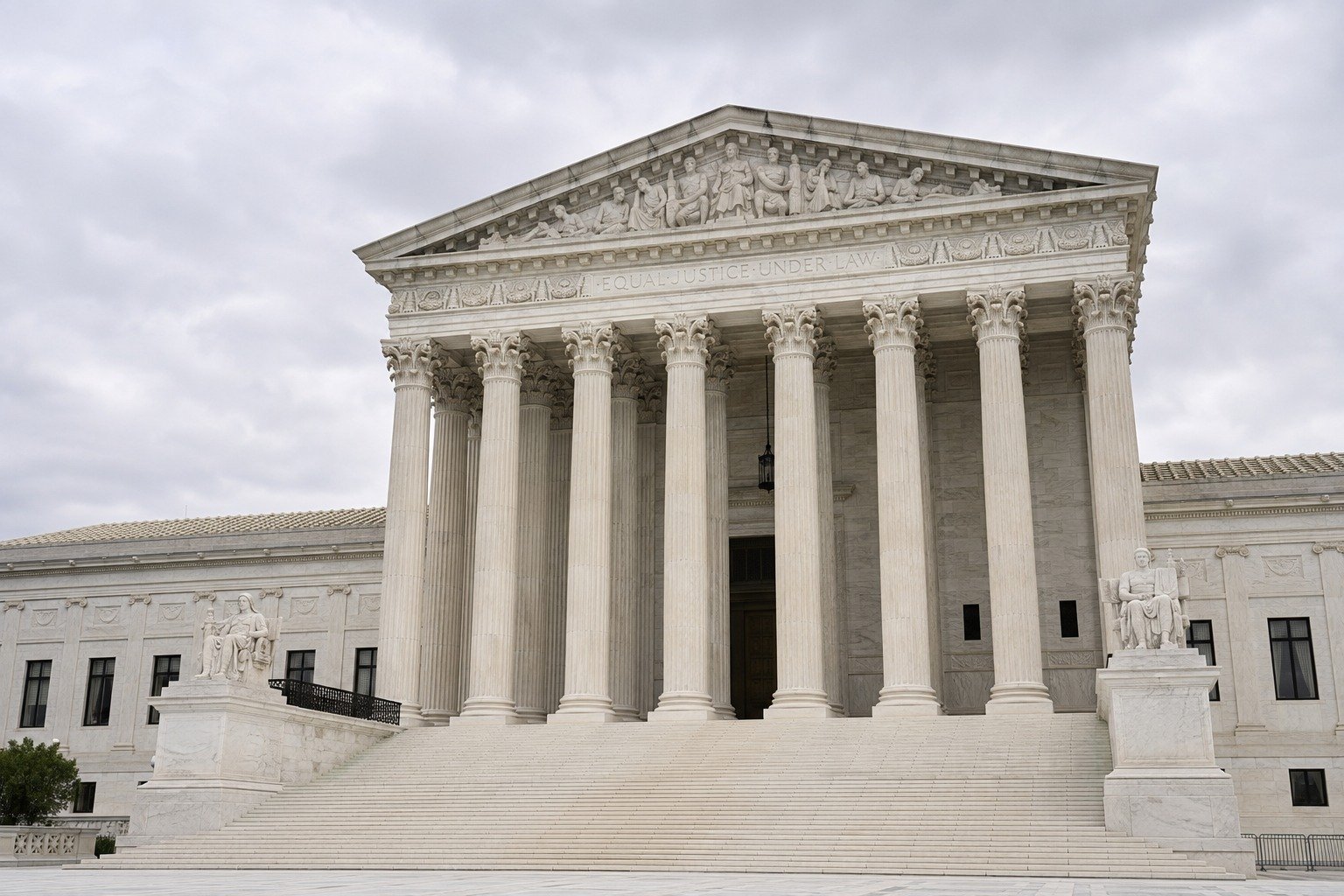
In August 2024, Senate Majority Leader Chuck Schumer and 34 Democratic senators introduced legislation with a deliberately pointed name: the “No Kings Act.” The bill set out to strip presidents of criminal immunity and rein in the Supreme Court’s authority over the question — a direct legislative answer to a ruling that had reshaped the limits of presidential power weeks earlier.
The Ruling That Started It
On July 1, 2024, the Supreme Court handed down its decision in Trump v. United States. The justices ruled that a president holds broad immunity from criminal prosecution for “official acts” carried out in office. The decision did not place presidents entirely above the law — conduct deemed unofficial can still be prosecuted — but it drew a sweeping protective shield around official acts, and it left the boundary between official and unofficial conduct strikingly unclear.
To critics, that ambiguity was the danger. If a president could plausibly recast nearly any action as an “official act,” the practical reach of criminal accountability could shrink dramatically. The ruling immediately became one of the most consequential separation-of-powers decisions in modern American history, and it set off an urgent debate over whether Congress could — or should — push back.
What the No Kings Act Would Do
Introduced as S.4973 in the 118th Congress, the No Kings Act aimed to draw the line back toward accountability. It would have made explicit in federal law that presidents and vice presidents are not immune from criminal prosecution — closing the door the Court had opened to expansive “official acts” immunity.
The bill went further than a simple declaration. It leaned on Congress’s constitutional authority to set the jurisdiction of the federal courts, seeking to limit the Supreme Court’s ability to have the final word on whether a president can be charged. In effect, the legislation tried to wrest a measure of control over presidential accountability away from the judiciary and place it back with the legislative branch — a bold assertion of congressional power in response to a decision lawmakers viewed as judicial overreach.
Schumer framed the stakes in the plainest possible terms: no one, not even a president, should be treated as a king. The name of the bill was the argument. For its 34 cosponsors, the ruling had pushed the country toward a model of executive power the Constitution was written to prevent, and the No Kings Act was the corrective.
A Bill That Stalled
Every cosponsor on the No Kings Act was a Democrat or an independent who caucuses with them. Not a single Republican signed on. In a closely divided Senate, that lack of bipartisan support left the bill without a realistic path to passage. It stalled, and it never became law.
That outcome was, in some ways, predictable. Legislation aimed at curbing the Supreme Court’s jurisdiction raises thorny constitutional questions of its own, and it was always going to face fierce resistance. But supporters argued the point was not only to pass a law — it was to plant a marker. The No Kings Act put on the record exactly where a large bloc of senators stood on the question of whether a president can be held criminally accountable.
Why It Still Matters
The fight the No Kings Act represented has not gone away. At its core sits a question as old as the republic and as urgent as ever: can a president break the law and walk free? The Supreme Court’s 2024 ruling did not settle that question so much as sharpen it, and the bill was the most direct attempt to answer back through legislation.
For ordinary Americans, the abstraction has a concrete edge. The principle that no one is above the law is not a slogan — it is the safeguard that keeps power answerable to the public rather than to itself. When the line around presidential accountability blurs, it is the public’s leverage over its own government that thins out. The No Kings Act was a bet that Congress, not the courts alone, should decide how bright that line stays.
Stay informed on the stories that matter most. Follow Your Daily Updates on Facebook and bookmark yourdailyupdates.news for breaking news and analysis.