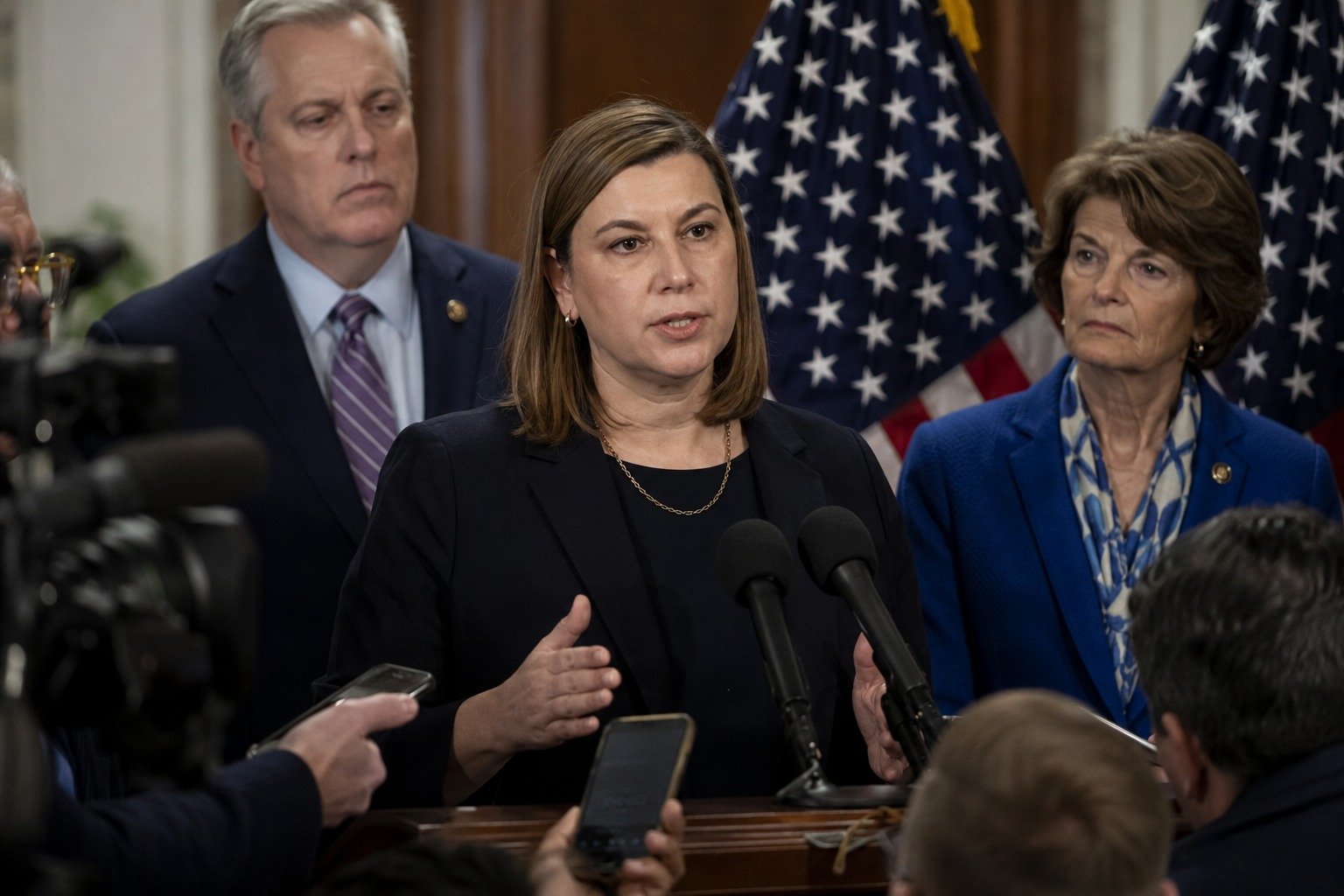
Senate Democrats have drawn a hard constitutional line over one of the most charged questions in American democracy: whether a sitting president can station armed troops at the places where citizens vote. On Capitol Hill, Sen. Elissa Slotkin of Michigan, joined by Sen. Alex Padilla of California, introduced the “Protect Our Polls Act,” a bill that would forbid any president from deploying armed soldiers or federal agents to a polling location without first securing the explicit approval of Congress.
The legislation arrives at a moment of acute anxiety over the militarization of civilian life and the prospect of federal force being used near the ballot box. For its sponsors, the principle is simple: elections should be free of intimidation, and the sight of armed troops at a polling place sends precisely the wrong message in a country that prides itself on peaceful self-government.
How the Bill Would Work
The mechanics of the Protect Our Polls Act are built around a single idea: no unilateral deployment. Before a single armed agent could be sent near a polling site, the president would be required to hand Congress a detailed package — the underlying intelligence, the legal justification, and concrete proof that state and local officials genuinely cannot manage the situation on their own. That material would have to be delivered at least 48 hours in advance.
Even then, the deployment could not proceed automatically. Congress would have to affirmatively pass a Joint Resolution of Approval. In other words: no vote, no troops. The bill converts what could otherwise be a snap executive decision into a deliberate, on-the-record act that lawmakers — and the public — can see and weigh before any boots hit the ground near a voting site.
Who Is Behind It
Slotkin, a former CIA analyst and Pentagon official, has built much of her political identity around national security and the guardrails that are supposed to constrain executive power. Padilla, California’s senior senator and a former secretary of state who oversaw elections in the nation’s largest state, brings direct experience administering the voting process.
Seven other Democratic senators signed on as co-sponsors — Tammy Baldwin, Ruben Gallego, Mark Kelly, Amy Klobuchar, Jacky Rosen, and Raphael Warnock among them — giving the measure a roster of members from battleground and traditionally competitive states. That coalition underscores how seriously the party’s national-security and election-focused wings view the issue.
The Argument — and the Obstacle
Slotkin’s case is blunt. Voting, she argues, is supposed to happen free of fear, and armed troops standing at the ballot box send the opposite signal. The bill, in her framing, is about keeping a particular kind of raw presidential power in check before it is ever exercised — a preventive guardrail rather than a reaction to a crisis already underway.
But the political reality is unforgiving. Not a single Republican has signed on, and with the GOP in control of Congress, the bill has no clear path to passage. For now it functions less as imminent law and more as a marker — a public stake in the ground over who, exactly, gets to decide whether soldiers belong anywhere near an American election.
What This Means for Americans
For ordinary voters, the stakes are concrete. The question at the heart of the bill is whether the experience of casting a ballot remains an ordinary civic act or becomes something that can be shadowed by a federal show of force. By demanding congressional sign-off, the measure asks whether decisions touching the most fundamental right in a democracy should rest with one person or require the consent of the people’s elected representatives. Even if it stalls, it forces that debate into the open.
Stay informed on the stories that matter most. Follow Your Daily Updates on Facebook and bookmark yourdailyupdates.news for breaking news and analysis.