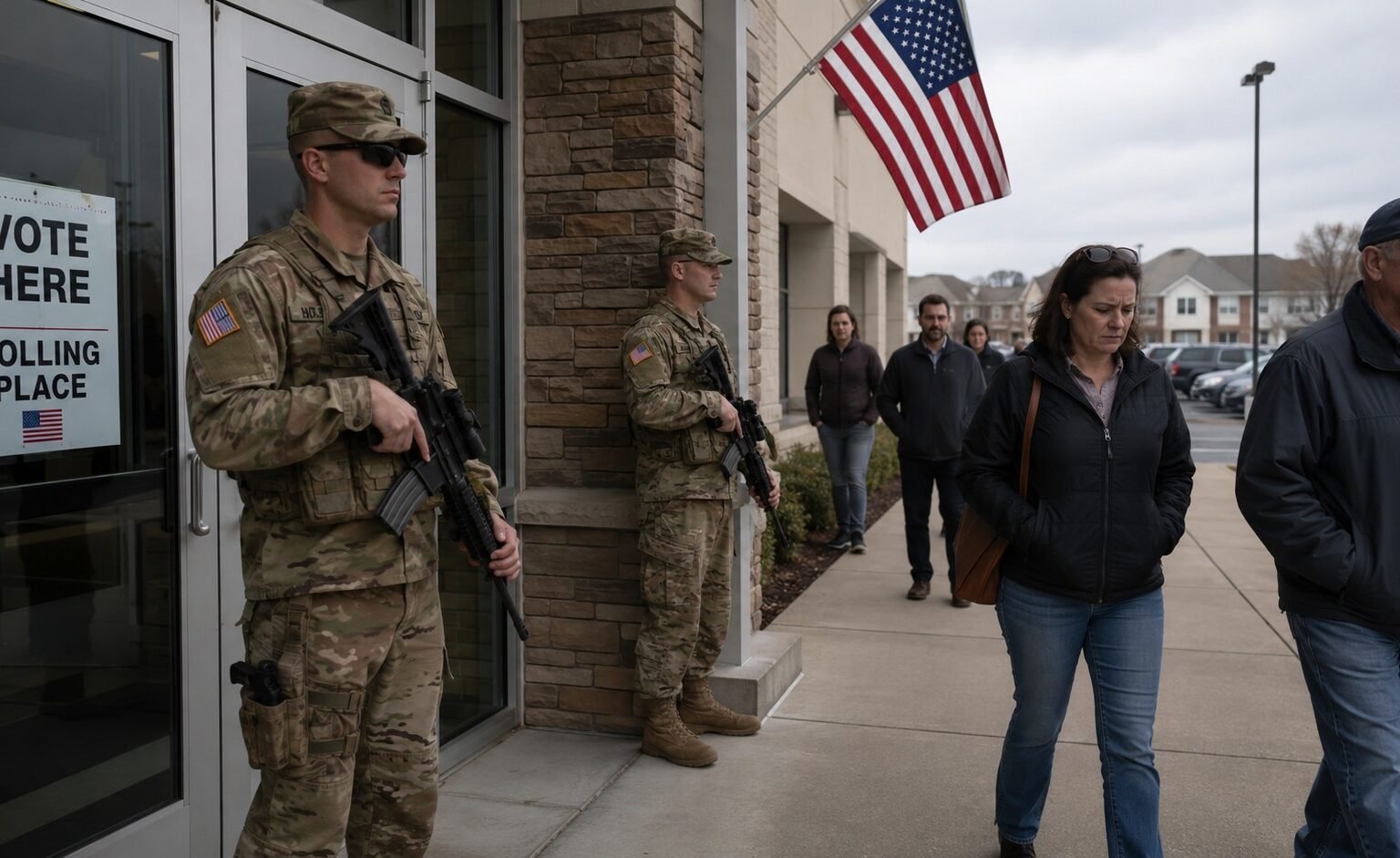
A group of Senate Democrats has introduced legislation that would make it illegal for any president to send federal troops or armed federal agents to polling places without first securing approval from Congress. The bill, called the Protect Our Polls Act, was rolled out by Sen. Elissa Slotkin and Sen. Alex Padilla in mid-June 2026, alongside a notably purple-state group of co-sponsors.
Why This Bill Exists Now
The timing is no accident. The legislation arrives after President Trump declined to rule out positioning troops near polling sites ahead of the November midterm elections. For the senators behind the bill, that refusal was a warning sign worth acting on. Their argument is blunt: free and fair elections do not happen at gunpoint, and the sight of soldiers near a ballot box has no place in American democracy.
The use of the military in domestic affairs has long been treated as an extraordinary step, hemmed in by law and tradition. Deploying armed forces to the places where citizens cast their votes would push into especially sensitive territory, raising questions about intimidation, coercion, and the basic separation between the armed forces and the electoral process.
What the Protect Our Polls Act Would Do
The bill is built around three core provisions. First, it would require congressional approval before any deployment of federal troops or armed federal agents to polling places. Second, it would require the president to provide Congress with a detailed justification at least 48 hours before any such deployment. Third, it would flatly prohibit the military from accessing election records.
The list of co-sponsors is striking for its political geography. Beyond Slotkin and Padilla, the backers include Tammy Baldwin, Ruben Gallego, Mark Kelly, Amy Klobuchar, Jacky Rosen, and Raphael Warnock — several of them from competitive, purple states where election integrity is a live and personal issue for voters.
A Bill, Not a Law
It is important to be precise about where this stands. The Protect Our Polls Act has been introduced, not passed. It faces a steep climb in a sharply divided Senate, and Republican senators have already blocked a related effort to limit troop deployments. Without bipartisan support, the bill could stall the same way the earlier attempt did.
Supporters say the principle is simple and worth fighting for regardless of the odds: voters should never have to walk past soldiers to cast a ballot. Critics and skeptics will likely frame the measure as a political message bill aimed at the president. The deeper question it raises — whether a sitting commander in chief should be able to put the military near the polls at all — is not going away.
What This Means for Americans
For ordinary voters, the stakes are concrete. The presence of armed troops at a polling site could discourage turnout, particularly in communities already wary of law enforcement. The bill’s backers argue that protecting the ballot box from a military presence is a baseline guarantee of a functioning democracy — and that the absence of such a guarantee in current law is exactly the gap they are trying to close. The fight now moves to the Senate floor, where the question is whether protecting elections from soldiers can win the votes it needs, or whether it gets buried like the last attempt.
Stay informed on the stories that matter most. Follow Your Daily Updates on Facebook and bookmark yourdailyupdates.news for breaking news and analysis.