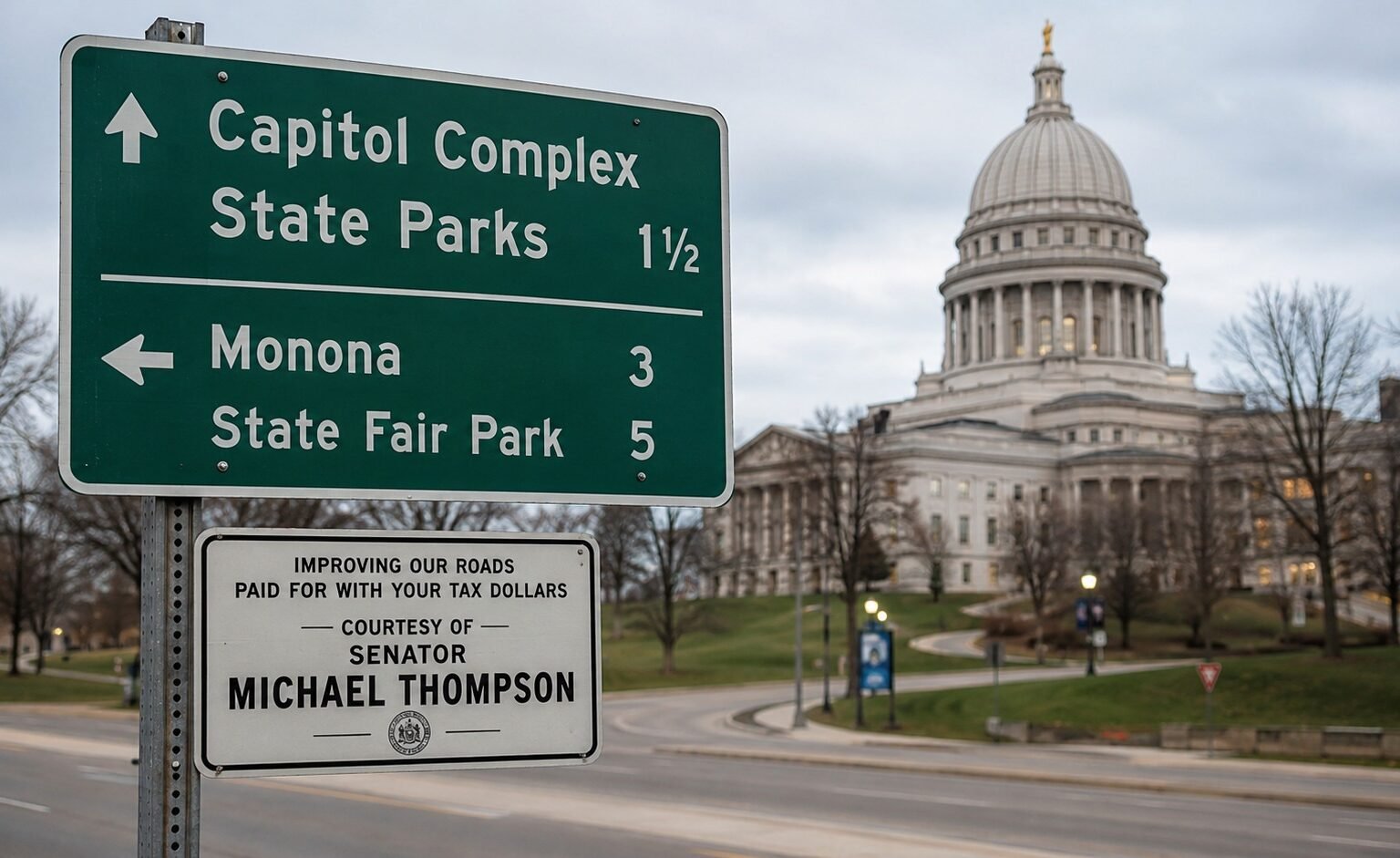
A pair of Ohio state lawmakers want to end a perk that politicians have quietly enjoyed for generations: stamping their own names and faces on signs that taxpayers paid for. Their proposal would make the practice not just frowned upon, but illegal.
State Representatives Mark Hiner, a Republican from Howard, and Tex Fischer, a Republican from Canfield, have introduced House Bill 938, formally titled the “No Free Advertising for Politicians Act.” The measure was introduced in May 2026 and would bar a sitting public official’s name or likeness from appearing on any publicly funded signage, from highway markers to billboards to public notices.
What the Bill Would Do
The logic behind HB 938 is straightforward. When the public pays for a sign, the bill’s sponsors argue, that sign should not double as a campaign advertisement for whoever currently holds office. The proposal would still allow the office or title itself to be displayed, so a sign could note that a project was funded under a particular department or position. What it could not do is broadcast the individual officeholder’s name or image.
The bill puts real consequences behind the rule. A violation would be classified as a first-degree misdemeanor, the most serious misdemeanor level in Ohio, carrying penalties of up to 180 days in jail and a fine of up to $1,000. That elevates what has long been treated as a routine courtesy of public office into a punishable offense.
Where It Stands
It is important to be clear about the bill’s status. HB 938 has only been introduced. It was referred to the Ohio House General Government Committee and is still awaiting its first hearing. That means it is a proposal, not law. For it to take effect, it would need to clear committee, pass both chambers of the Ohio legislature, and be signed by the governor. Any of those steps could stall or kill it.
Bills like this one often face a quiet kind of resistance. Lawmakers across the political spectrum have benefited from the name recognition that comes with seeing their names on public works. Asking elected officials to surrender a built-in advertising channel is not a small request, and good-government measures that target the perks of incumbency frequently die without a vote.
A Bipartisan-Appeal Measure
What makes HB 938 notable is its cross-aisle appeal. It was introduced by Republicans, but it targets a habit that politicians of every party have indulged on the public’s dime. The core idea, that taxpayer money should not subsidize the personal promotion of whoever happens to be in power, is the kind of accountability principle that tends to resonate with voters regardless of partisan affiliation.
Supporters frame the bill as a small but meaningful step toward separating public service from self-promotion. Critics, where they emerge, are more likely to question the enforcement mechanism than the underlying goal. Turning a sign into a potential criminal matter is an aggressive approach, and the details of how the law would be policed could become a sticking point in committee.
What This Means for Ohioans
For ordinary residents, the stakes are simple. Every dollar spent printing a politician’s name on a public sign is a dollar of taxpayer money working as free campaign advertising. HB 938 asks a basic question: should the people footing the bill be paying to boost the profile of the officials they elect? The answer the legislature gives, whether through a vote or through silence, will say a lot about who the system is built to serve.
Stay informed on the stories that matter most. Follow Your Daily Updates on Facebook and bookmark yourdailyupdates.news for breaking news and analysis.