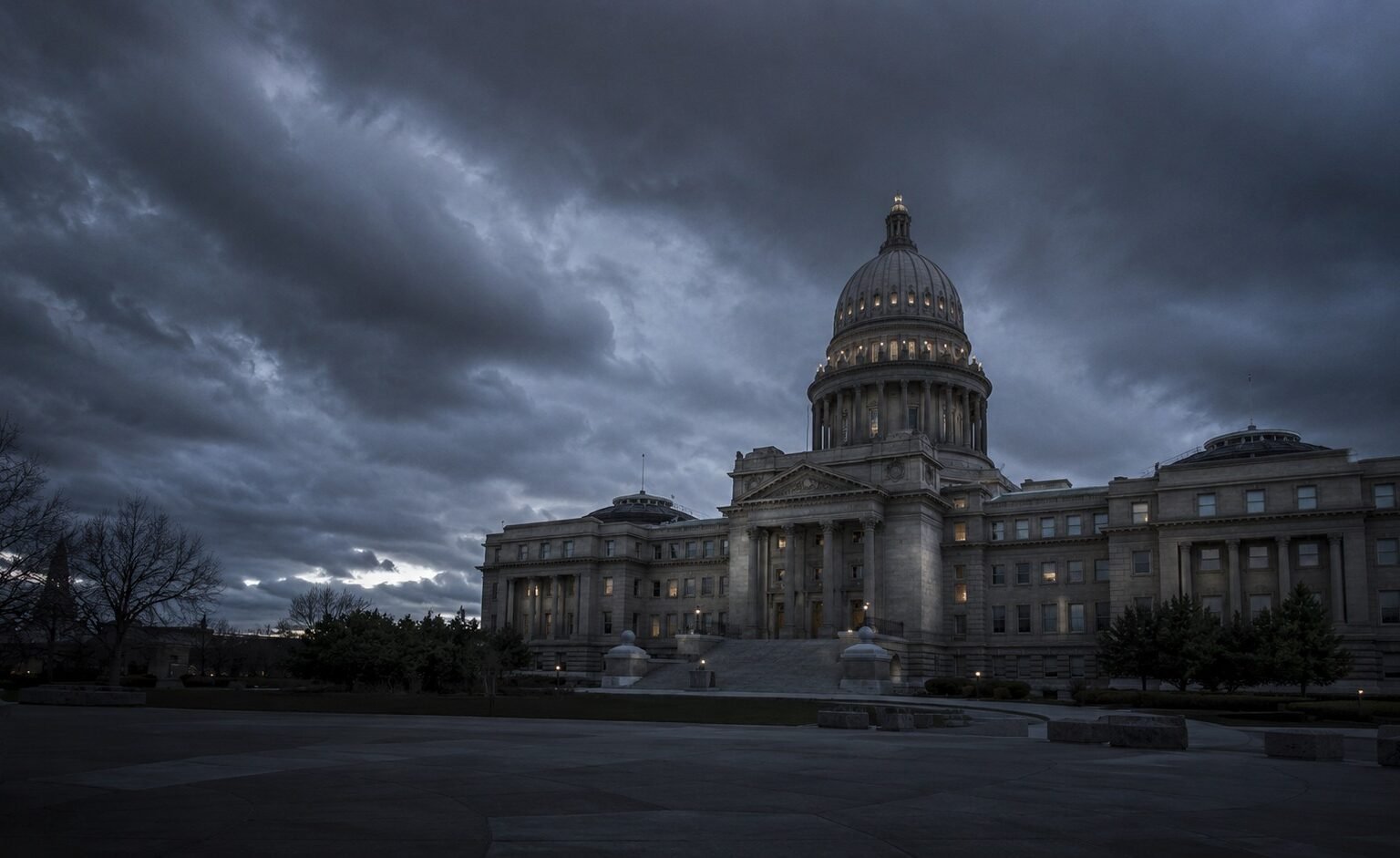
In under two weeks, Idaho will stand alone. On July 1, 2026, a law signed by Governor Brad Little takes effect that makes Idaho the only state in the country to designate the firing squad as its primary method of execution. Not a backup. Not a last resort. The default.
A First in American Justice
House Bill 37, which Little signed in March 2025, does not simply permit the firing squad. It elevates the method above every other option on the books, formally establishing it as the state’s preferred way to carry out a death sentence. When the law takes effect, Idaho will become the first state in the nation to make the firing squad its primary execution method rather than an alternative reserved for special circumstances.
That distinction matters. The United States has spent decades moving away from older, more visibly violent methods of execution, gravitating toward lethal injection as the supposedly clinical standard. Idaho’s law cuts sharply against that trend, reaching back to a method most of the modern world abandoned long ago and writing it into statute as the option of first resort.
How Idaho Compares to Other States
Idaho is not the only state where firing squads are legal. Four others — Utah, South Carolina, Oklahoma, and Mississippi — permit the method. But in every one of those states, the firing squad is a secondary option, available only when other methods, such as lethal injection, are unavailable or have been ruled unconstitutional. None of them put it at the front of the line.
Idaho’s move changes that calculus entirely. By making the firing squad the default, the state has signaled that this is not a fallback for rare cases of drug shortages or legal challenges. It is the plan.
Why the State Says It Acted
Supporters of the law frame it as a practical fix. Idaho, like many death-penalty states, has struggled for years to carry out executions. Lethal injection drugs have become increasingly difficult to obtain as pharmaceutical companies refuse to supply them for use in executions, and botched attempts have drawn lawsuits and national scrutiny. To proponents, the firing squad is reliable, fast, and immune to the supply problems that have stalled the machinery of capital punishment.
Critics see something far more troubling. To death-penalty opponents and civil-liberties advocates, the choice represents a government deliberately selecting one of the most violent and archaic forms of state killing and enshrining it as the preferred way to end a human life. They argue the state is not solving a problem so much as normalizing a practice the rest of the developed world has rejected.
The Debate Ahead
The questions raised by the law are hard to look away from. What does it say about a justice system when bullets become the standard? Who decides that this is the version of justice the country should be moving toward? And does the pursuit of an execution method that “works” justify reaching for one this brutal?
Legal challenges are widely expected. Opponents are likely to argue that the firing squad violates the Eighth Amendment’s prohibition on cruel and unusual punishment, setting up a fight that could reach the federal courts. For now, though, the law is no longer theoretical — it is days from taking effect.
What This Means for Americans
Idaho’s decision is bigger than one state. It tests how far a government can go in the name of efficiency, and whether the country is comfortable with a justice system that treats firing squads as routine. The outcome of the legal battles ahead could shape how executions are carried out across the nation for years to come.
Stay informed on the stories that matter most. Follow Your Daily Updates on Facebook and bookmark yourdailyupdates.news for breaking news and analysis.