Congress refused to pay for President Donald Trump’s new White House ballroom. Now his administration appears to have found the money somewhere else — $352 million that was originally meant to protect the very people who guard the president.
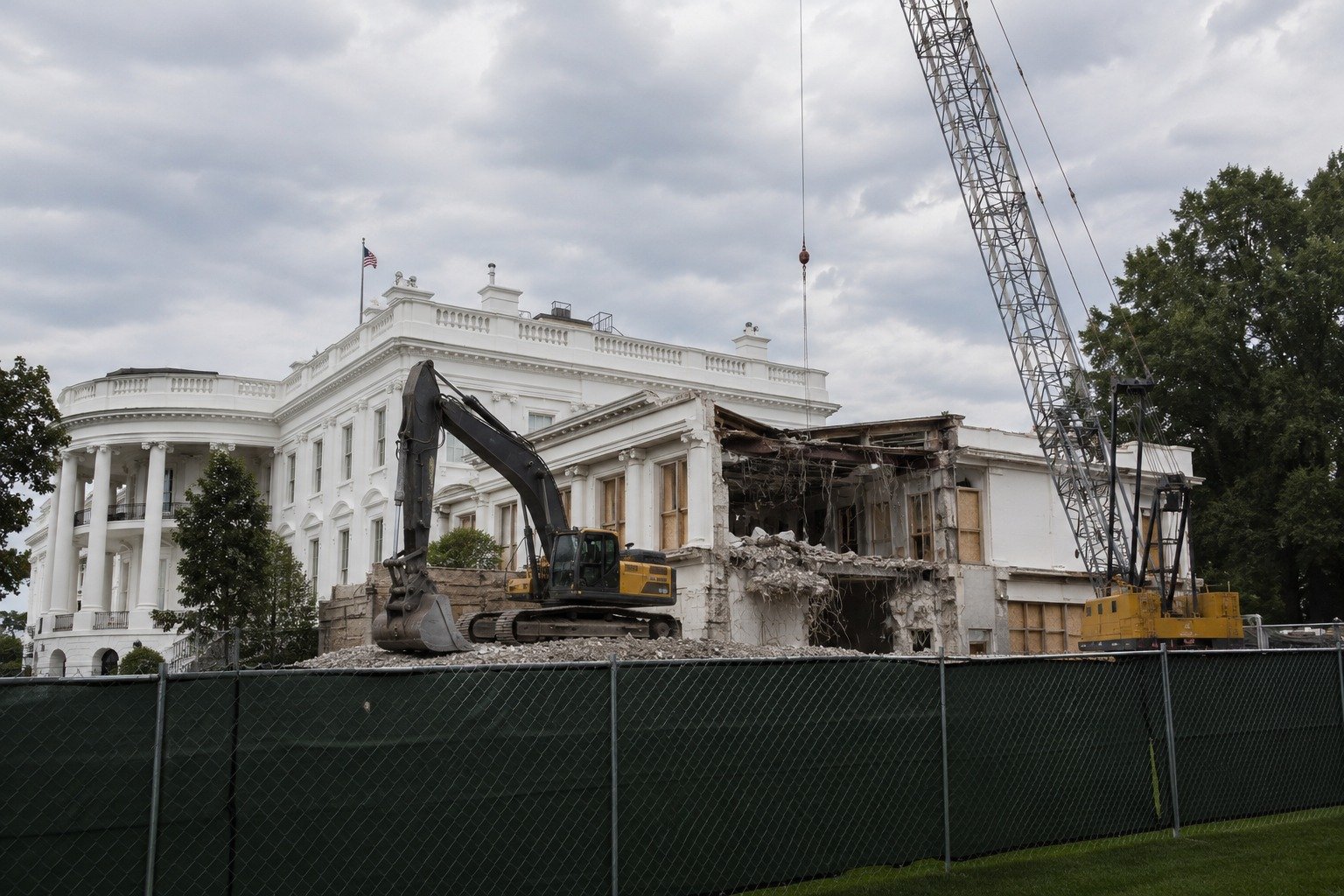
According to reporting from The New Republic and NOTUS, the White House Office of Management and Budget quietly redirected $352 million that had been earmarked for Secret Service resources — funding made available through the 2025 tax law — into a newly created and deliberately vague budget line called “White House Security Measures.” Sources familiar with the move say that label is doing a lot of work: it covers the demolition of the East Wing and the construction of the sprawling new ballroom now rising in its place.
A label that doesn’t say “ballroom”
The part that has lawmakers in both parties uneasy is the language itself. The administration is not calling the project what its critics say it plainly is. It is not “ballroom” money on the books. It is “security” money. And the relabeling, according to those tracking the budget, happened only after Congress specifically declined to appropriate funds for the construction.
That sequence — Congress says no, and the money reappears under a different name — is what has drawn warnings from senators across the political spectrum. The concern is not simply about a ballroom. It is about whether an administration can route around the power of the purse, the constitutional authority that gives Congress, not the president, the final say over how federal dollars are spent.
The Secret Service angle
The source of the money makes the story sharper. The $352 million was tied to Secret Service resources — the agency responsible for protecting the president, his family, visiting heads of state, and major national events. Diverting protective resources toward a construction project raises an obvious question about priorities: if the funds were genuinely needed for security, why were they available to be moved at all? And if they were not needed for protection, why were they labeled for the Secret Service in the first place?
Lawmakers who have raised alarms say the maneuver blurs the line between legitimate security spending and a vanity construction project, using the credibility of the protective mission as cover.
A broken promise on the cost
Then there is the price tag. Internal projections now put the ballroom’s total cost in the neighborhood of $600 million — with roughly half of that expected to be covered by taxpayers. That directly contradicts what the public was told earlier, when Trump promised the ballroom would be privately funded and would not burden taxpayers at all.
A project pitched as a gift to the public, paid for by private money, has quietly become a project the public is helping to fund — through dollars that were never openly approved for it. The gap between the original promise and the current reality is exactly what has critics describing the funding shift as a quiet end-run around both Congress and the public.
Why it matters
Strip away the architecture and the story is about accountability. Secret Service money becomes “security” money. “Security” money becomes a ballroom. And a project the public was assured it would never pay for is now, by internal estimates, partly on the public’s tab.
The construction is real, the demolition of the East Wing is already underway, and the bipartisan unease is on the record. What remains unresolved is whether anyone with the power to stop a covert funding shift — the Congress that holds the purse strings — will do anything about it. For now, the cranes keep moving, and the bill keeps growing.