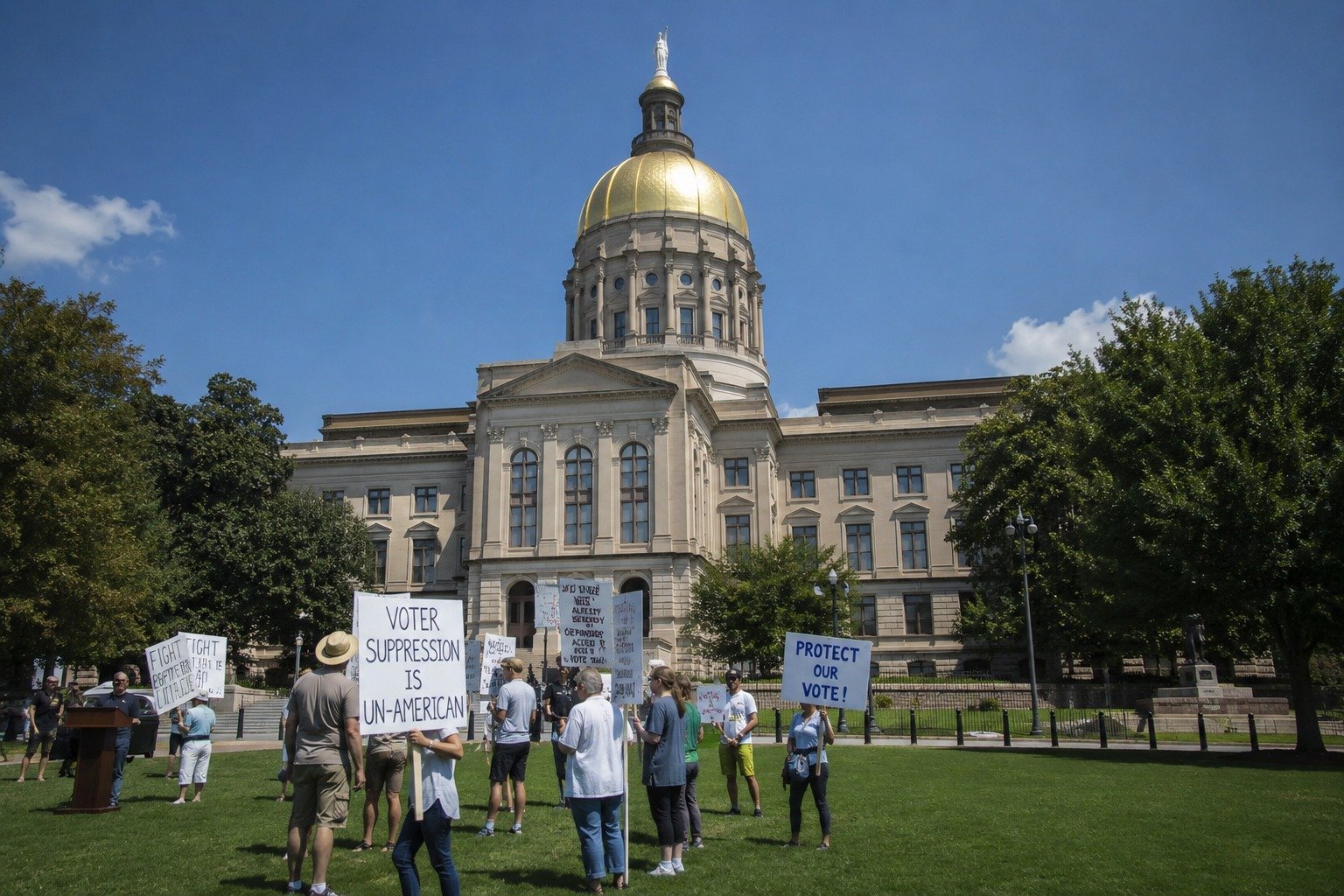
Georgia’s Republican legislative leaders delivered a rare rebuke to President Donald Trump this week, declining to take up Governor Brian Kemp’s call to redraw the state’s congressional and legislative maps during a special session. The decision, announced Wednesday, halted – at least for now – a partisan redistricting push that Trump had personally championed.
House Speaker Jon Burns made the move official just hours before the special session was scheduled to begin, sending Kemp a letter informing him that lawmakers would not consider redistricting at all. For a party that controls every lever of power in Georgia state government, choosing not to act was a striking reversal.
A Setback for a National Strategy
The decision is a setback not only for Kemp but for Trump, who has spent months pressuring Republican-led states to redraw their congressional boundaries to maximize GOP advantage ahead of upcoming elections. Ten states have already enacted new congressional districts. Georgia would have been the first to redraw its maps specifically for the 2028 cycle, and the first to redraw its state legislative districts as part of that effort.
Instead, Georgia’s own Republican leadership applied the brakes. The reasoning, according to legislative leaders, was rooted in legal caution rather than a change of political heart.
The Legal Cloud: Louisiana v. Callais
At the center of the hesitation is a recent U.S. Supreme Court decision, Louisiana v. Callais, that weakened Voting Rights Act protections for minority voters. Rather than treating that ruling as a green light, Georgia Republicans warned that rushing a mid-decade redraw into an unsettled legal environment could backfire in court – potentially undoing any map they drew and exposing the state to prolonged, expensive litigation.
Redistricting fights are notoriously slow and unpredictable. A map redrawn hastily and then struck down can leave a state worse off than if it had never acted, scrambling election calendars and handing opponents a powerful talking point. For leaders weighing the risk, the safer political bet was to wait.
Public Pressure Was Part of the Equation
Hanging over the decision was a wave of organized opposition. Democratic officials and civil-rights groups mobilized against the redraw, framing it as a naked attempt to entrench one party’s power by redrawing lines rather than winning votes. That public scrutiny – and the prospect of an energized opposition heading into the midterms – factored into the calculation. Some Republicans privately worried that a high-profile gerrymander fight could do more to motivate Democratic turnout than to lock in GOP seats.
It is important to be precise about what happened: Georgia Republicans did not permanently ban a future redraw. They declined to pursue one now. The door to revisiting redistricting later remains open. But for the moment, the combination of legal risk and public pushback was enough to stop the effort before it started.
What This Means for Americans
Redistricting decisions shape who represents you and how much your vote actually counts. When maps are drawn to favor one party, voters can find their choices effectively decided before a single ballot is cast. Georgia’s pause shows that those decisions are not inevitable – that legal limits and sustained public attention can still slow a partisan power grab, even in a state where one party holds total control. Whether that pause holds is a question voters and watchdogs will have to keep pressing.
Stay informed on the stories that matter most. Follow Your Daily Updates on Facebook and bookmark yourdailyupdates.news for breaking news and analysis.