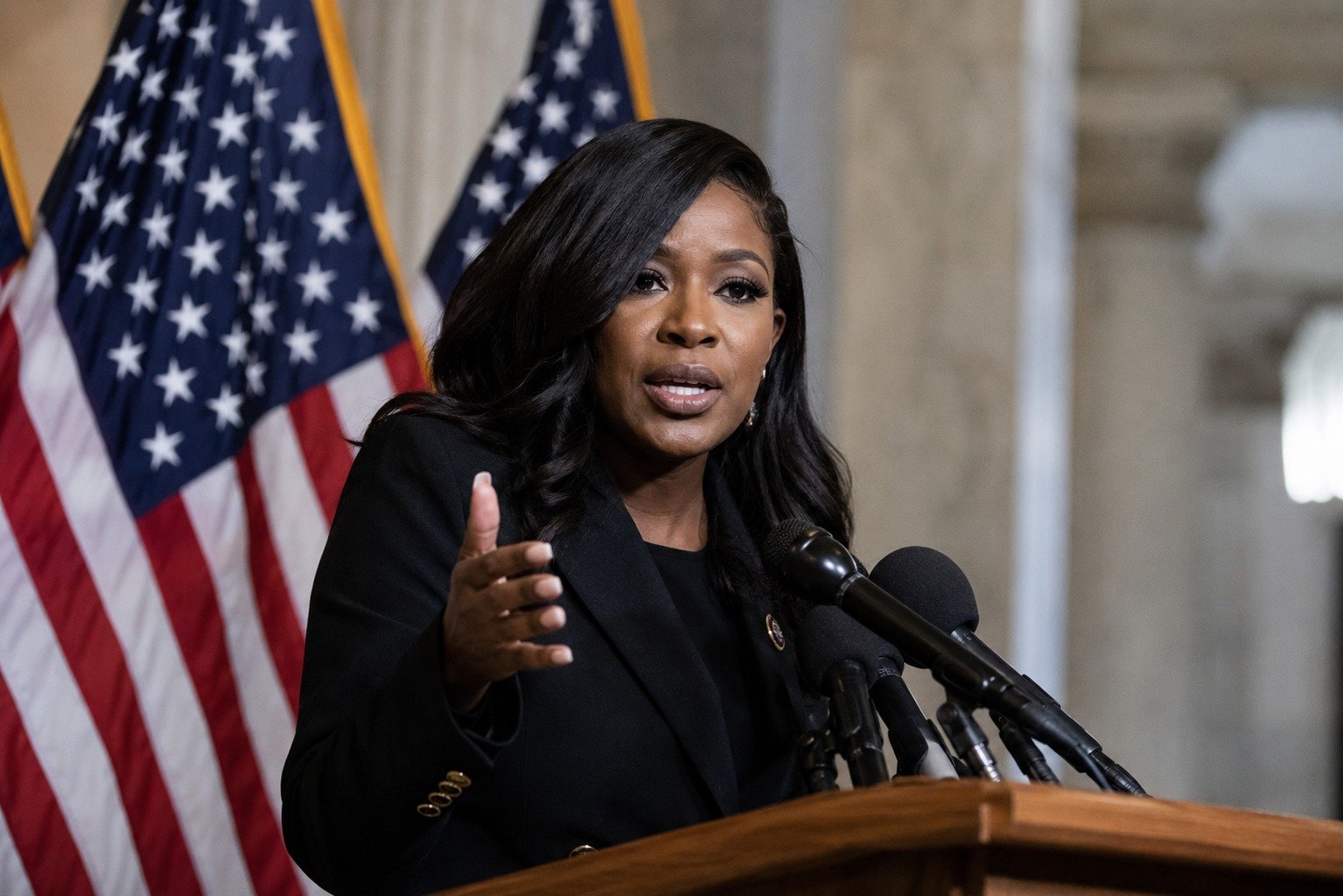
Rep. Jasmine Crockett of Texas has introduced new legislation aimed at stopping federal taxpayer money from being used to compensate people involved in the January 6 attack on the U.S. Capitol — and at forcing the recovery of any funds already paid out. The Texas Democrat is calling the measure the STOP TRUMP Act, short for the Stop Taxpayer-funded Reimbursement for Unlawful Misconduct by Presidents Act.
The bill responds to a reported plan to create a compensation fund for participants in the Capitol attack through a settlement involving federal agencies. Figures cited in connection with that fund have run as high as $1.776 billion, a sum commonly rounded to $1.7 billion in public discussion. Crockett’s legislation is designed to block that money from flowing and to recover any portion of it that has already been distributed.
What the Bill Would Do
At its core, the STOP TRUMP Act would prohibit federal funds from being used to pay any settlement that compensates individuals for conduct tied to January 6. But the measure does not stop at blocking future payments. It would also require the government to claw back any money already handed out under such an arrangement, and it would render the underlying agreements unenforceable going forward.
In practical terms, that means the bill is built to work in three directions at once: prevent new payouts, recover dollars that have already left the Treasury, and strip any legal force from the deals that authorized them. It is a comprehensive attempt to shut the door on the idea that public money could be used to reward people connected to the assault on the Capitol.
Why It Matters
January 6, 2021, remains one of the most consequential events in recent American political history. Hundreds of people were charged in connection with the breach of the Capitol, and the question of how the federal government treats those individuals has remained politically charged ever since. The prospect of taxpayer dollars being directed toward a compensation fund for participants has drawn sharp attention precisely because it touches both the public purse and the national memory of that day.
Crockett has framed her bill as a straightforward matter of accountability. The argument is simple: taxpayers should not be footing the bill to reward an attack on the seat of American democracy. Supporters of the measure say public money has no business compensating people tied to January 6, and that anyone who has already received funds should be required to return them.
An Introduced Bill, Not a Law
It is important to be precise about where this stands. The STOP TRUMP Act has been introduced — it has not passed. Like the overwhelming majority of bills filed in Congress, it faces a steep climb before it could ever become law. Introduction is the first step in a long legislative process, and a single member’s bill must clear committees and secure broad support to advance.
That distinction matters because it shapes what the bill actually accomplishes right now. At this stage, its primary effect is to force a public debate: who should pay, and whether the people involved in January 6 should ever see a federal check. By putting the question on the legislative record, Crockett has guaranteed that lawmakers will have to take a position on it.
What This Means for Americans
For ordinary taxpayers, the stakes are concrete. The money in question is public money — funds collected from working Americans and held in the Treasury. The fight Crockett has launched is, at bottom, about whether those dollars can be spent to compensate people connected to an attack on the Capitol, and about who is held responsible if they are. It is a debate over accountability and over the basic principle of how public funds should be used.
Stay informed on the stories that matter most. Follow Your Daily Updates on Facebook and bookmark yourdailyupdates.news for breaking news and analysis.