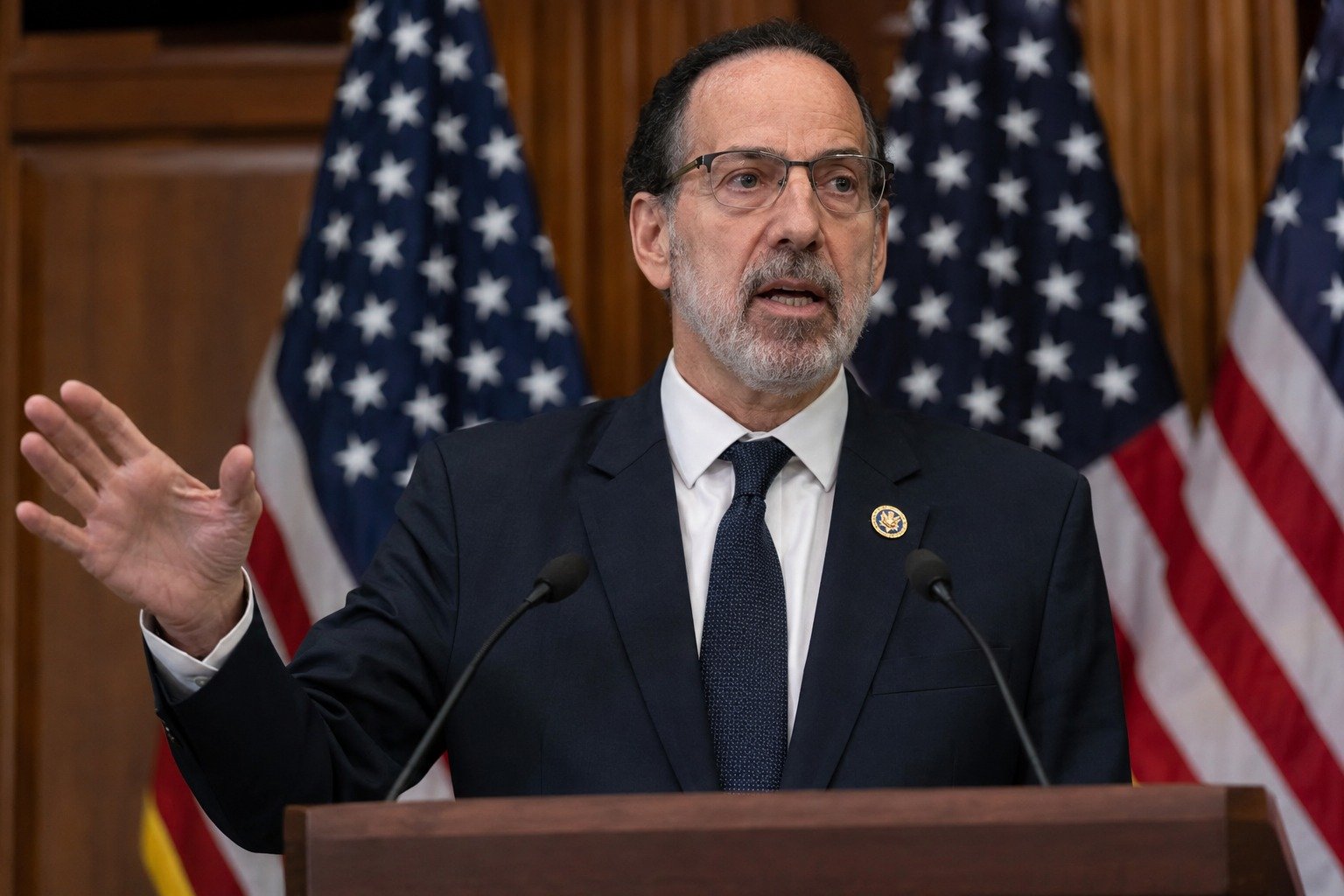
Rep. Jamie Raskin has introduced anti-corruption legislation aimed at one of the most direct conflicts of interest a president can have: profiting off the very people he pardons. The measure would prohibit the President from accepting payments from pardon recipients — and from Senate-confirmed appointees — through any business the President personally owns, and it would require the White House to disclose to Congress any money flowing in from people granted clemency.
The goal, as Raskin frames it, is straightforward: make it impossible to quietly convert the constitutional pardon power into a private revenue stream. A pardon is meant to be an act of mercy and justice. The bill is built on the premise that it should never double as the opening transaction in a financial relationship between the person granting clemency and the person receiving it.
What the bill would actually do
At its core, the legislation targets two flows of money. First, it would bar a sitting president from taking payments from anyone he has pardoned when those payments run through a business the president owns — a hotel stay, a membership, a licensing arrangement, or any other commercial channel that could function as a quiet thank-you. Second, it extends the same prohibition to Senate-confirmed appointees, closing a related avenue through which favors and funds could move.
Beyond the outright ban, the bill layers on a transparency requirement. Any payment from a clemency recipient that does reach the president’s businesses would have to be disclosed to Congress. The idea is that even where a transaction might not be flatly prohibited, lawmakers and the public should be able to see it — rather than having such payments buried inside a private company’s books.
Part of a broader anti-corruption package
Raskin did not introduce the measure in isolation. He unveiled it as part of a wider anti-corruption package alongside Reps. Robert Garcia and Joe Morelle. Taken together, the package is aimed at what its sponsors describe as profiteering inside the Trump administration — the broader concern that the line between a president’s public duties and his private financial interests has eroded.
That framing matters. The sponsors are not presenting this as a narrow, one-off fix. They are presenting it as one piece of a structural response to a pattern they say has become normalized: public power and private money sitting uncomfortably close together, with too few rules drawing a clear boundary between the two.
Introduced, not passed
It is important to be precise about where this stands. The bill and the package around it have been introduced — not passed, and not enacted into law. To become law, the legislation would have to move through committee and win votes in both chambers of Congress, a steep climb in the current political environment. Realistically, its near-term odds of advancing are slim.
But sponsors of accountability legislation often argue that introduction itself carries weight. Putting a bill on the record forces a question into the open and establishes a marker — a statement that a bloc of lawmakers believes the conduct in question warrants a concrete legal response. Even bills that stall can shape the debate and lay groundwork for future action.
The debate it forces
The legislation draws a sharp line in the sand. Clemency, in the view of its sponsors, is supposed to be an act of mercy and justice — not the first step in a financial arrangement. The bill asks whether granting someone a pardon and later accepting their money should be flatly illegal, or whether disclosure alone is a sufficient guardrail.
That is the question now hanging over the proposal. Supporters say a bright-line ban is the only way to remove the temptation entirely. Others may argue that transparency — sunlight on every such payment — is enough to deter abuse without a categorical prohibition. Either way, Raskin’s bill puts the issue squarely on the table: should the people who hold the pardon power be allowed to profit from the people they pardon?