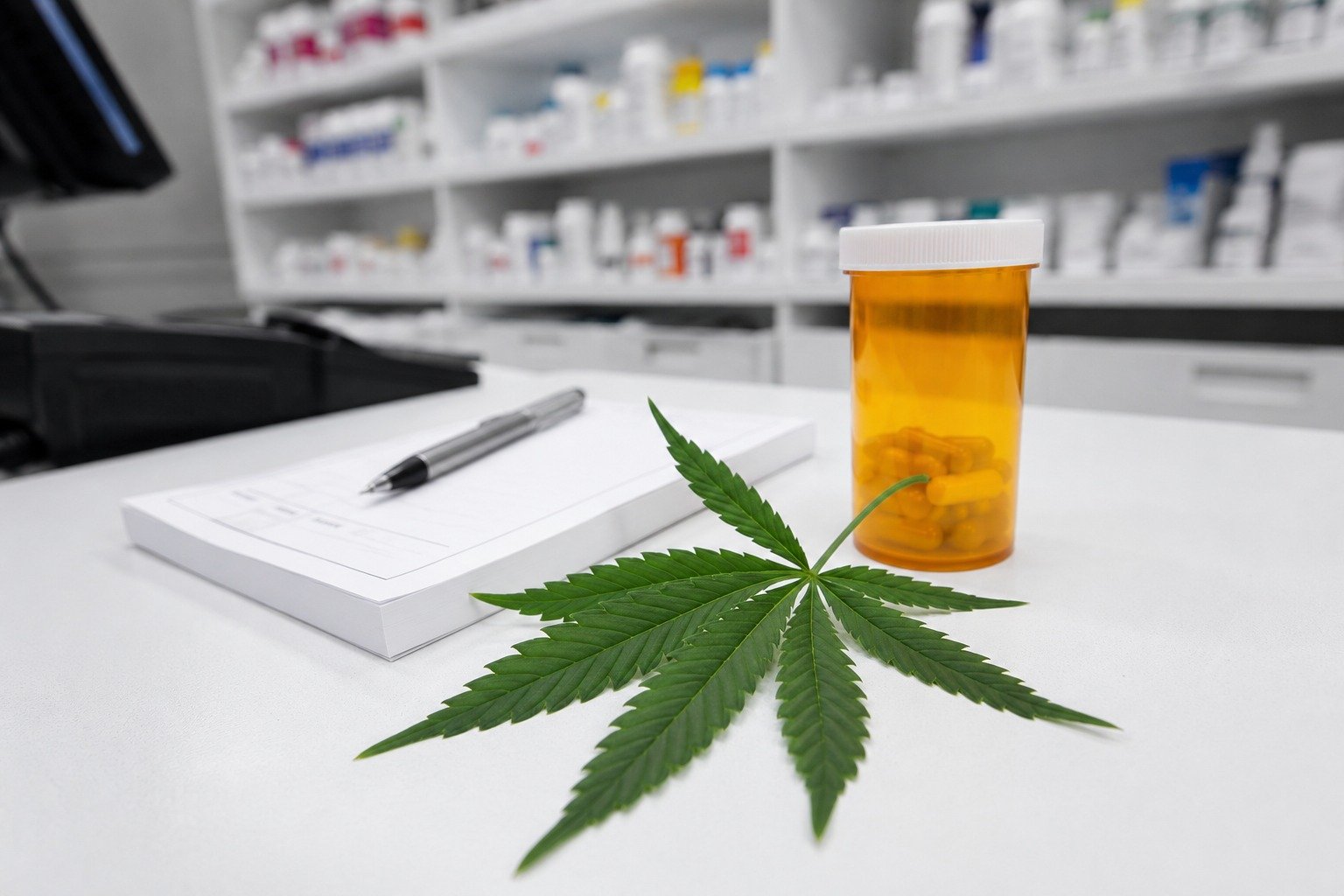
For the first time in more than half a century, the federal government has loosened its grip on medical marijuana. A Drug Enforcement Administration final order that took effect in late April reclassified FDA-approved marijuana products and cannabis sold under a qualifying state medical-marijuana license from Schedule I — the most restrictive tier in federal drug law — down to Schedule III. But the change is far narrower than the celebratory headlines suggest, and most of the marijuana Americans actually use was left exactly where it was.
Fifty Years on the Most Restrictive List
Since the Controlled Substances Act took shape in the early 1970s, marijuana has sat in Schedule I — the federal category reserved for drugs deemed to have “no accepted medical use” and a high potential for abuse. That put cannabis in the same legal bucket as heroin and LSD, even as a majority of states legalized it for medical use and, in many cases, for adults over 21.
Schedule III is a meaningfully different place. It is the tier that holds drugs like Tylenol with codeine, ketamine, and anabolic steroids — substances recognized as having legitimate medical value and a lower abuse potential. Moving any form of cannabis off Schedule I is a milestone reform advocates have pushed toward for decades.
What the DEA Order Actually Does
Acting Attorney General Todd Blanche signed the final order in April, acting on an executive order President Trump issued in December that directed the federal government to expand medical marijuana and CBD research. The order is precise about its scope: it moves only FDA-approved marijuana products and marijuana subject to a qualifying state-issued medical-marijuana license into Schedule III.
For licensed medical operators, the practical effects are substantial. The reclassification ends the punishing reach of Section 280E — a tax provision that has long barred cannabis businesses from deducting ordinary expenses, leaving many with effective tax rates far above other industries. It also opens a real federal pathway for clinical research that Schedule I status had effectively choked off for years.
What It Does Not Do
Here is the part the celebratory framing tends to skip: the order does not legalize marijuana federally, and it does not touch the cannabis most Americans buy. Recreational and adult-use marijuana — along with any bulk product not tied to a state medical license — remains firmly in Schedule I. If you are buying at a dispensary in a state with legal recreational sales, nothing about your purchase changed under federal law.
The result is a two-tier federal system. Medical cannabis operating under state licenses now gets the science, the tax relief, and a measure of federal legitimacy. Everyone else — the millions of ordinary adult users in legal recreational states — is still, technically, in the same federal category as heroin. It is progress carved out for the regulated medical market while the broader population was left behind.
The Bigger Fight Is Still Coming
The next round could change all of that. The DEA has set an expedited administrative hearing to begin around June 29 to weigh moving marijuana more broadly out of Schedule I — the question of whether adult-use cannabis should follow the medical market down to Schedule III. Reform advocates have waited years for a genuine federal reckoning, and they will be watching closely to see whether this becomes full rescheduling or stalls as a half-measure that benefits the licensed few.
For now, the message from Washington is mixed. The government has acknowledged, after fifty years, that marijuana can have accepted medical use. It just has not extended that acknowledgment to most of the people using it.
Stay informed on the stories that matter most. Follow Your Daily Updates on Facebook and bookmark yourdailyupdates.news for breaking news and analysis.