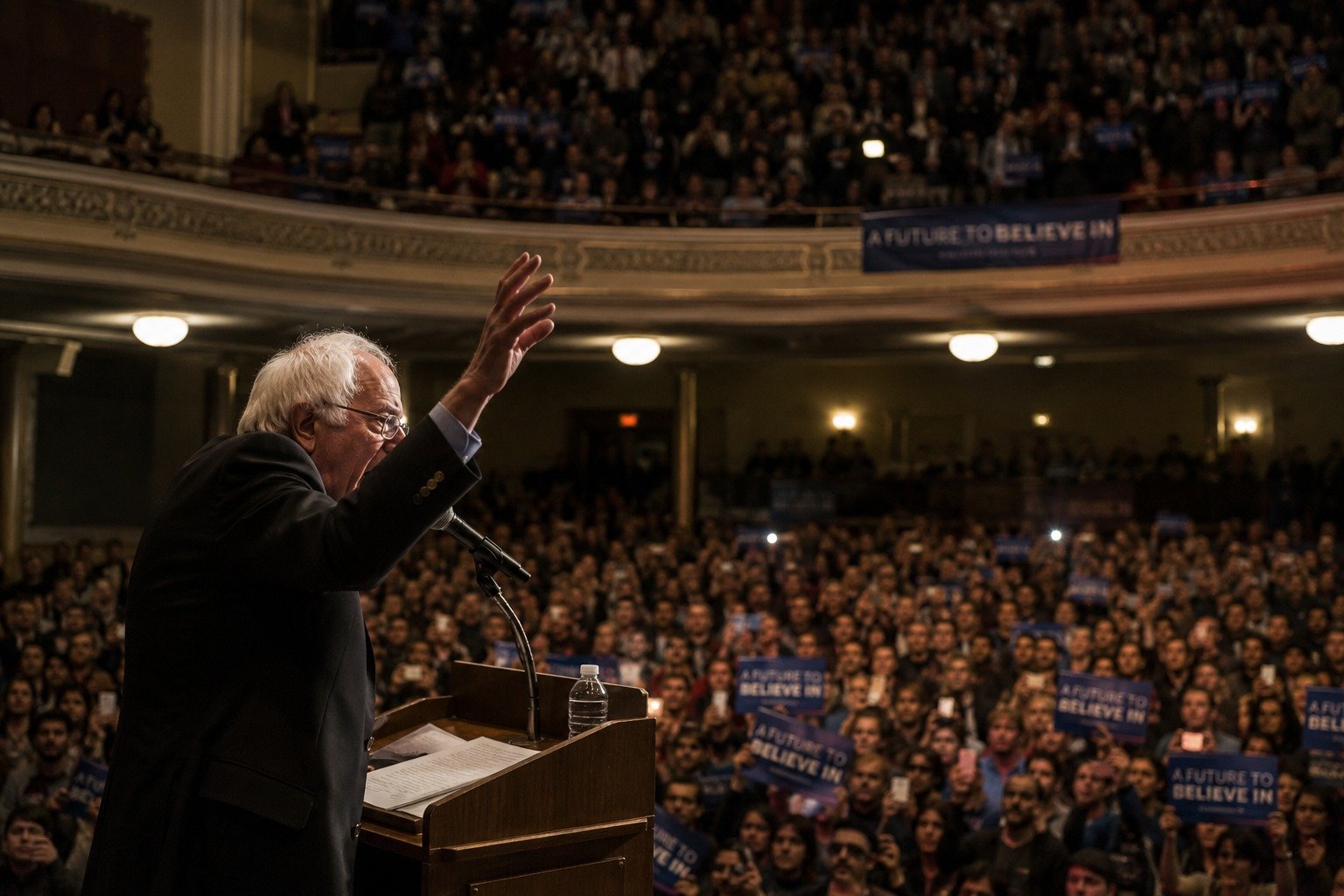
The progressive movement is closing out the New York City primary the way it started: with a packed house and its biggest names on stage. Sen. Bernie Sanders will headline a rally at Brooklyn’s historic Kings Theatre alongside Democratic mayoral nominee Zohran Mamdani, just five days before the June 23 primary, in a full-throated push for a slate of grassroots House candidates.
The event is designed to do one thing above all else: convert enthusiasm into turnout. With early voting already underway, organizers are betting that a marquee rally in a beloved Brooklyn theater can carry a group of insurgent, working-class candidates across the finish line.
A Slate Built to Shake Up the Establishment
The lineup tells you exactly what this rally is about. Sanders and Mamdani are throwing their weight behind Claire Valdez in NY-7, Darializa Avila Chevalier — who is mounting a direct primary challenge to longtime Rep. Adriano Espaillat in NY-13 — and Brad Lander. Each candidate represents a different front in the same fight: a push to make the city’s congressional delegation answer to working people rather than donors.
Challenging a sitting congressman like Espaillat from the left is no small move. Incumbents carry name recognition, institutional support, and fundraising networks that primary challengers rarely match. Backing Avila Chevalier is a calculated bet that primary voters in NY-13 are hungry for a different kind of representation — and that the energy in the streets can outmuscle the advantages of incumbency.
Why Mamdani’s Presence Matters
Zohran Mamdani arrives at this rally not as the sitting mayor, but as the Democratic mayoral nominee and mayor-elect — the candidate whose own campaign became a proof of concept for what grassroots organizing can accomplish in a city long run by establishment machines. His win electrified the city’s progressive base, and that energy is now being channeled into races up and down the ballot.
That is the strategic logic behind Friday’s event. Mamdani’s coalition — young voters, tenants, union members, and first-time voters — is exactly the base these House challengers need to activate. By appearing together, Sanders and Mamdani are signaling that the movement is bigger than any single candidate, and that the goal is to build a durable progressive bench, not just win one office.
The Sanders Playbook
For Sanders, the strategy is familiar. The Vermont senator built the modern progressive wing on exactly this kind of organizing: pack a theater, name the incumbents, and ask voters to choose candidates who put working people first. He has spent years arguing that change comes not from a single election but from a sustained movement willing to challenge its own party from the left.
Kings Theatre, a restored 1929 movie palace that now serves as one of Brooklyn’s signature venues, offers the kind of backdrop these rallies thrive on — large, dramatic, and unmistakably local. The setting is part of the message: this is a movement rooted in the neighborhoods it hopes to represent.
What This Means for Voters
For New Yorkers heading to the polls, the rally is a clear closing argument. The candidates on stage are asking voters to think about who their representatives actually answer to — and whether the city’s congressional seats should reflect the same grassroots energy that powered Mamdani’s mayoral campaign. With the primary just days away, every rally, door knock, and early ballot now carries real weight.
The open question is whether enthusiasm translates into turnout. Primaries are won by the voters who actually show up, and challengers face a steeper climb than incumbents at every turn. A packed theater is a powerful image — but it is the ballots cast on June 23 that will decide whether this movement adds new seats to its column.
Stay informed on the stories that matter most. Follow Your Daily Updates on Facebook and bookmark yourdailyupdates.news for breaking news and analysis.