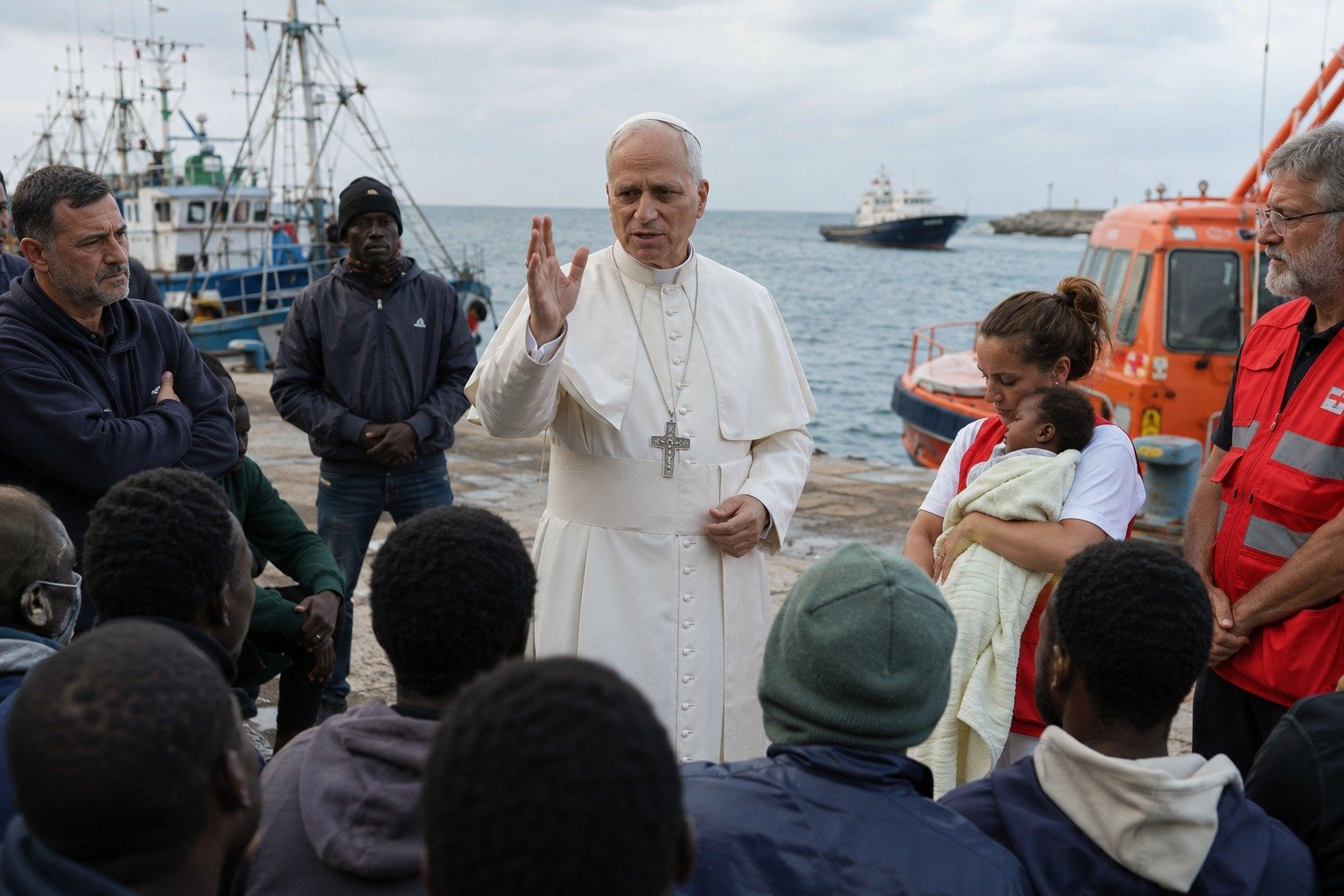
Pope Leo XIV stood at the edge of the Atlantic on June 11 and delivered a rebuke the world has been avoiding. Speaking at the docks of Arguineguín, a port on the southern coast of Gran Canaria in Spain’s Canary Islands, he told a gathering of migrants and the volunteers who rescue them that “human dignity has no passport and does not lose its value when crossing a border.”
It was a deliberate choice of location. The Arguineguín pier is known to human-rights workers as Europe’s “pier of shame” — the place where nearly 3,000 people were once crammed together in squalid conditions during the height of the pandemic. The waters off the Canary Islands have become one of the deadliest migration routes on earth.
A Pointed Appeal to Europe
The pope did not soften his message. He called for an “examination of conscience,” and he aimed it squarely at Europe — a continent that, in his words, cannot keep proclaiming human dignity while it grows accustomed to tragedy on its doorstep.
“Europe cannot proclaim human dignity and get used to the Mediterranean and the Atlantic being cemeteries without tombstones,” he said. The line landed as both an indictment and a warning: indifference, he argued, has a body count.
The Human Cost Behind the Numbers
For years, the route from West Africa to the Canary Islands has drawn people fleeing poverty, conflict, and climate collapse. Many never arrive. Overcrowded boats capsize in open ocean, and the dead are rarely recovered or named. Those who do reach Arguineguín often land exhausted, dehydrated, and traumatized.
Standing among them, the pope pressed for legal, safe pathways for migration — a system that would replace the smuggling networks and exploitation that currently fill these waters with the dead. He denounced human trafficking and the criminal industry that profits from desperation, and he urged the world not to grow numb to suffering simply because it happens far from the headlines.
Dignity Without Conditions
The heart of his message was a single, uncompromising idea: a person’s worth is not conditional. It does not depend on their nationality, their bank account, or their migratory status. It does not shrink when they cross a line drawn on a map. The value of a human life, he insisted, is fixed — and it travels with the person, not the paperwork.
That framing cut directly against the rising tide of anti-migrant politics across Europe and beyond, where hardline rhetoric increasingly treats arrivals as a threat to be repelled rather than people to be protected. By choosing the “pier of shame” as his pulpit, Pope Leo forced the contradiction into the open.
Why It Matters
Migration is one of the defining moral and political questions of the era, and how wealthy nations respond shapes millions of lives. The pope’s appeal reframes the debate away from logistics and toward conscience: not whether borders should exist, but whether human worth can be made to vanish at them. For anyone watching the politics of immigration harden, it is a reminder that the people at the center of the argument are exactly that — people.
Stay informed on the stories that matter most. Follow Your Daily Updates on Facebook and bookmark yourdailyupdates.news for breaking news and analysis.