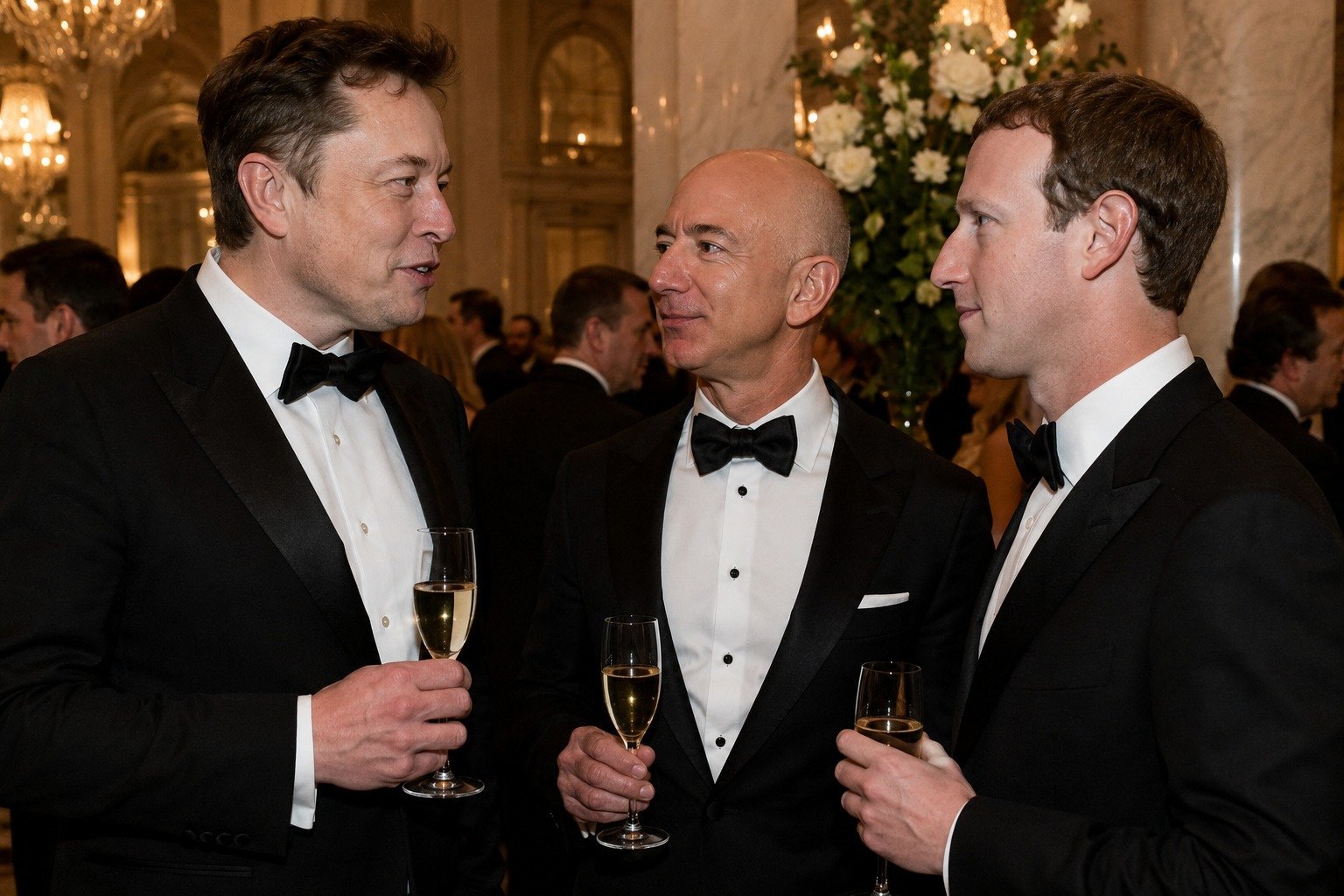
Across the democratic world, a growing number of countries have decided that elections should be decided by voters, not by the deepest pockets. They have written rules that ban corporate and union money from political campaigns outright and strictly cap how much any single person can give. The contrast with the United States — where billionaires and corporate-funded super PACs can pour effectively unlimited sums into elections — is stark. It raises a question worth putting to American voters directly: should the U.S. do the same?
It is important to be precise about what these laws actually do. They are not a literal “billionaire ban.” No democracy has a statute singling out the ultra-wealthy by name. What these countries have done instead is close the door on organizational money — contributions from corporations, trade unions, and other entities — while holding individual donations to low, fixed limits. The effect is the same in spirit: no single person or company, however rich, can buy outsized influence over a campaign.
France: corporate cash banned, the state foots part of the bill
France offers one of the clearest examples. A law passed in January 1995 banned donations to candidates and parties by “legal persons” — meaning companies and unions can no longer write political checks at all. Individuals may still give, but they are capped: a donor cannot contribute more than roughly 4,600 euros (about \$5,000) to a candidate in an election. Campaign spending itself is also capped.
To make sure candidates are not dependent on wealthy benefactors, the French state reimburses nearly half — about 47.5 percent — of the campaign expenses of candidates who clear a minimum vote threshold. The logic, as French lawmakers framed it, was simple: money should not determine the outcome of elections, and candidates should not be beholden to generous donors. Public financing fills the gap so that politicians can run competitive campaigns without auctioning off access.
Canada: only people can donate, and only a little
Canada went even further with its 2006 Federal Accountability Act, a signature reform of Prime Minister Stephen Harper’s government. The law imposed a complete ban on contributions by corporations, unions, and organizations to federal parties and candidates. Only individual citizens may donate — and even then, the annual limit is low, set in the low four figures.
The reasoning was rooted in transparency and trust. Organizational donations, lawmakers argued, allowed money to flow from sources the public could not easily trace, and gave well-funded interests a quiet channel of influence. By restricting giving to individuals and capping it tightly, Canada made its system harder to dominate with a checkbook.
A broad international pattern
France and Canada are not outliers. Many member countries of the Organization for Economic Cooperation and Development restrict or ban corporate and organizational political donations, according to International IDEA’s Political Finance Database, the most authoritative global catalog of these rules. Across these democracies, the common thread is a refusal to let elections become a contest of wallets — combined with public funding, spending caps, or both, to keep campaigns competitive.
The American contrast
The United States runs on a very different model. Since the Supreme Court’s Citizens United decision in 2010, corporations and wealthy individuals have been able to spend without limit through super PACs and other outside groups. A handful of billionaire megadonors now rank among the largest single forces in American elections, and the cost of running for federal office has climbed into the hundreds of millions of dollars. Critics across the political spectrum argue this has tilted the playing field toward those who can write the biggest checks and left ordinary voters feeling drowned out.
That is precisely why the comparison resonates. Other democracies decided, often decades ago, that letting unlimited corporate and personal fortunes flood campaigns was a threat to democratic equality. They banned the corporate cash, capped what any one person could give, and backstopped candidates with public funds. Whether the United States should follow that path is, of course, a matter of fierce debate. But it is no longer a hypothetical: the models already exist, and they have been running for years.
So we want to hear from you: should America ban corporate cash from elections and cap what any one person can give? Share your view in the comments.