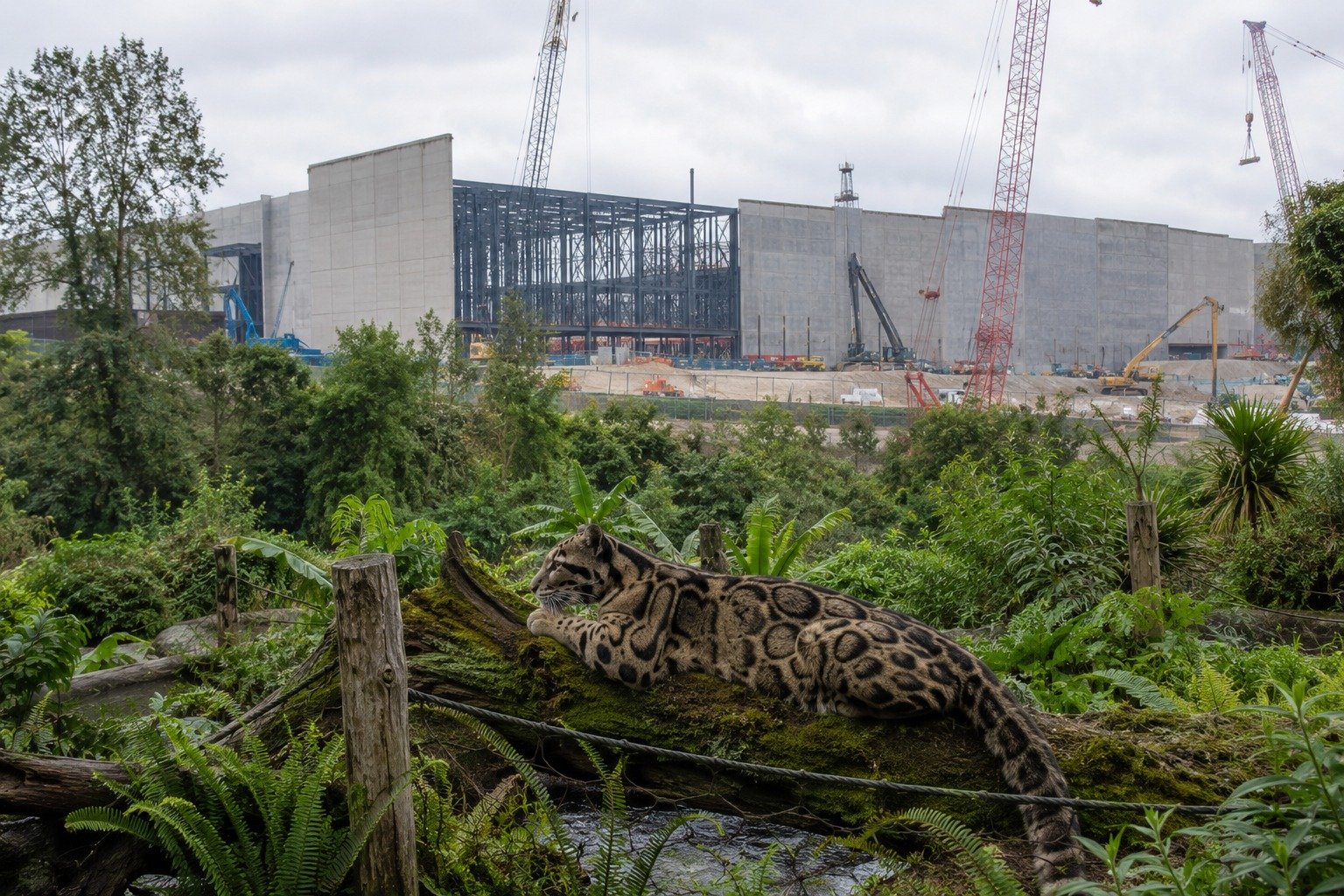
A clouded leopard trying to rest, breed, and raise its cubs in peace. A wall of steel and concrete rising just 50 yards away. That is the collision now playing out at the Nashville Zoo, where a proposed data center has sparked one of the largest community uprisings the city has seen in years — with more than 330,000 people signing on to stop it.
The developer behind the project, DC BLOX, has proposed building a sprawling data center directly adjacent to the zoo’s animal habitats. Zoo leaders say the siting is not just inconvenient — it is potentially devastating. The constant low-frequency hum and mechanical noise that a facility of that scale produces, they warn, could disrupt some of the most sensitive animals in their care.
A breeding program on the line
Chief among the zoo’s concerns is its clouded leopard breeding program — one of the most delicate conservation efforts it runs. Clouded leopards are notoriously difficult to breed in human care; they are skittish, easily stressed, and highly sensitive to environmental disturbance. Zoo officials argue that round-the-clock noise from a neighboring data center could undermine years of careful conservation work and threaten a program that contributes to the survival of a vulnerable species.
Rather than quietly absorb the decision, the zoo did what a growing number of communities are being forced to do when confronted with deep-pocketed developers: it pushed back. The zoo filed a formal zoning appeal challenging the project, setting up a fight between a beloved local institution and the fast-moving data center construction boom sweeping across the country.
330,000 voices — and a country star
The public response has been overwhelming. An opposition petition has surged past 330,000 signatures, with some later counts running higher still — a striking show of force for a local land-use dispute. The campaign drew national attention when country singer Brad Paisley publicly threw his support behind the zoo, calling the plan “an absolute nightmare.”
That kind of celebrity backing, paired with hundreds of thousands of signatures, has put real pressure on local officials. Nashville is now weighing a broader policy response: a potential ban on hyperscale data centers altogether. Such a move would mark a significant shift, signaling that the city is no longer willing to let the build-anything-anywhere data center rush steamroll its parks, neighborhoods, and wildlife without scrutiny.
A bigger fight over data centers
The Nashville Zoo fight is a local story with national stakes. As demand for cloud computing and artificial intelligence explodes, data centers are being proposed at a furious pace — often in or near residential areas, parks, and green spaces. These facilities consume enormous amounts of electricity and water, generate persistent noise, and can reshape the character of the communities around them, frequently with limited public input before the decisions are made.
Across the country, residents are increasingly organizing to demand a say in where these massive facilities go. The Nashville case stands out because of its sympathetic protagonists — endangered animals who cannot advocate for themselves — and the sheer scale of the public response. It has become a flashpoint in a larger conversation about whether every available patch of land should be paved over for server farms, or whether some places deserve protection.
For now, the outcome remains uncertain. The zoning appeal is pending, the proposed hyperscale ban is still under consideration, and DC BLOX’s plans hang in the balance. But the message from the community has been unmistakable. The animals at the Nashville Zoo cannot speak for themselves — so more than 330,000 people decided to speak for them.