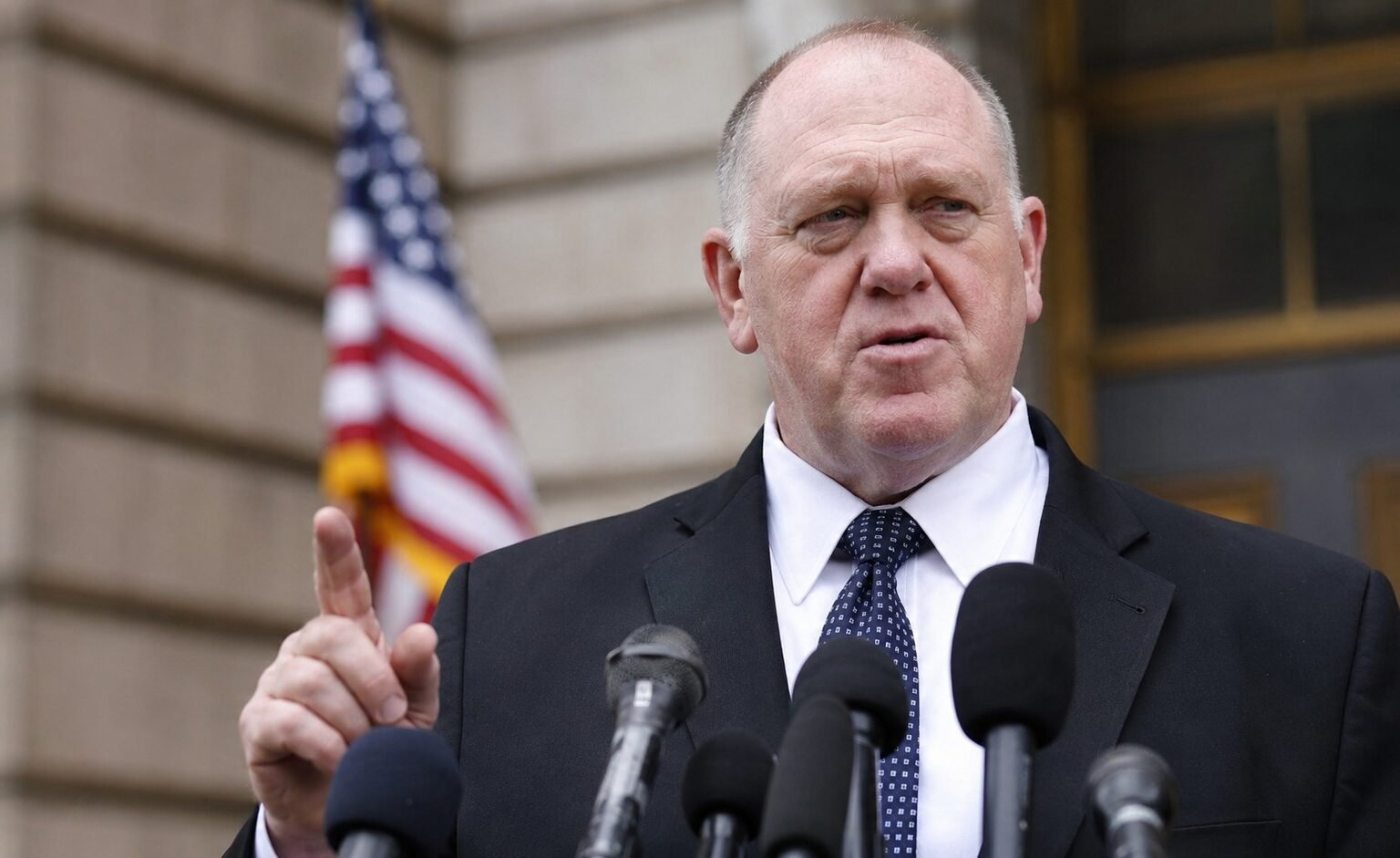
Border czar Tom Homan has put New York City on notice. In a Fox appearance during the week of June 8, Homan delivered a blunt warning: “You’re going to see more ICE agents than you’ve ever seen in New York City, and it’s coming.”
Homan confirmed he is reviewing an operational plan to send more federal immigration agents into the city than ever before, with the surge reaching into all five boroughs. He framed the move as a direct response to New York officials — including Gov. Kathy Hochul and Mayor-elect Zohran Mamdani — who have moved to limit how much local police cooperate with federal immigration enforcement.
A vow, not yet a reality
It is worth being precise about where this stands. What Homan described is an announced plan and a vow — not an operation already underway. He says the agents are “coming.” As of his remarks, no flood of federal agents had hit New York’s streets. The framing is future-tense, and that distinction matters for anyone trying to separate political signaling from what is actually happening on the ground.
But the intent Homan is putting on the record is unmistakable. He is describing a deliberate effort to turn one of the most diverse cities in the country into a showcase for mass immigration enforcement — and to do it specifically as a rebuke to the leaders New Yorkers just elected.
The fight over local cooperation
At the center of the standoff is a long-running legal and political question: how much should local police be required to do the federal government’s immigration work? New York officials limiting that cooperation are not breaking any law. They are exercising a principle courts have recognized for years — that cities cannot be commandeered into serving as deportation arms of the federal government.
Homan’s answer to that line is not to respect it but to overwhelm it. By saturating neighborhoods with federal agents, the strategy effectively tries to make local resistance feel beside the point. Whether or not such a surge is legal in its particulars, the political message is that cooperation is no longer optional — and that cities that decline will face a heavier federal footprint as a consequence.
Who actually bears the weight
The officials Homan named — a governor, a mayor-elect — are not the people who would feel a surge like this most directly. The weight would fall on immigrant families, mixed-status households, and entire communities that would suddenly be living under the threat of stepped-up raids, detentions, and daily fear.
History with aggressive enforcement sweeps suggests that much of that impact lands on people with no criminal record at all — workers, parents, longtime residents swept up in dragnets aimed at hitting numbers. When enforcement is scaled up as a show of force rather than targeted at specific threats, the collateral reach tends to widen.
New York’s congressional delegation and immigrant-rights organizations are already signaling they intend to push back, both in public and potentially in court. They are likely to challenge not only the scale of any deployment but the premise that a city can be punished for declining to hand its police over to federal immigration operations.
What comes next
For now, the surge remains a plan under review and a vow delivered on national television. The open question is whether something pitched as a warning to elected officials becomes a sweep that lands hardest on the working families those officials represent. New Yorkers, advocates, and local leaders will be watching closely to see whether “it’s coming” turns into agents on the street — and what guardrails, if any, accompany it.