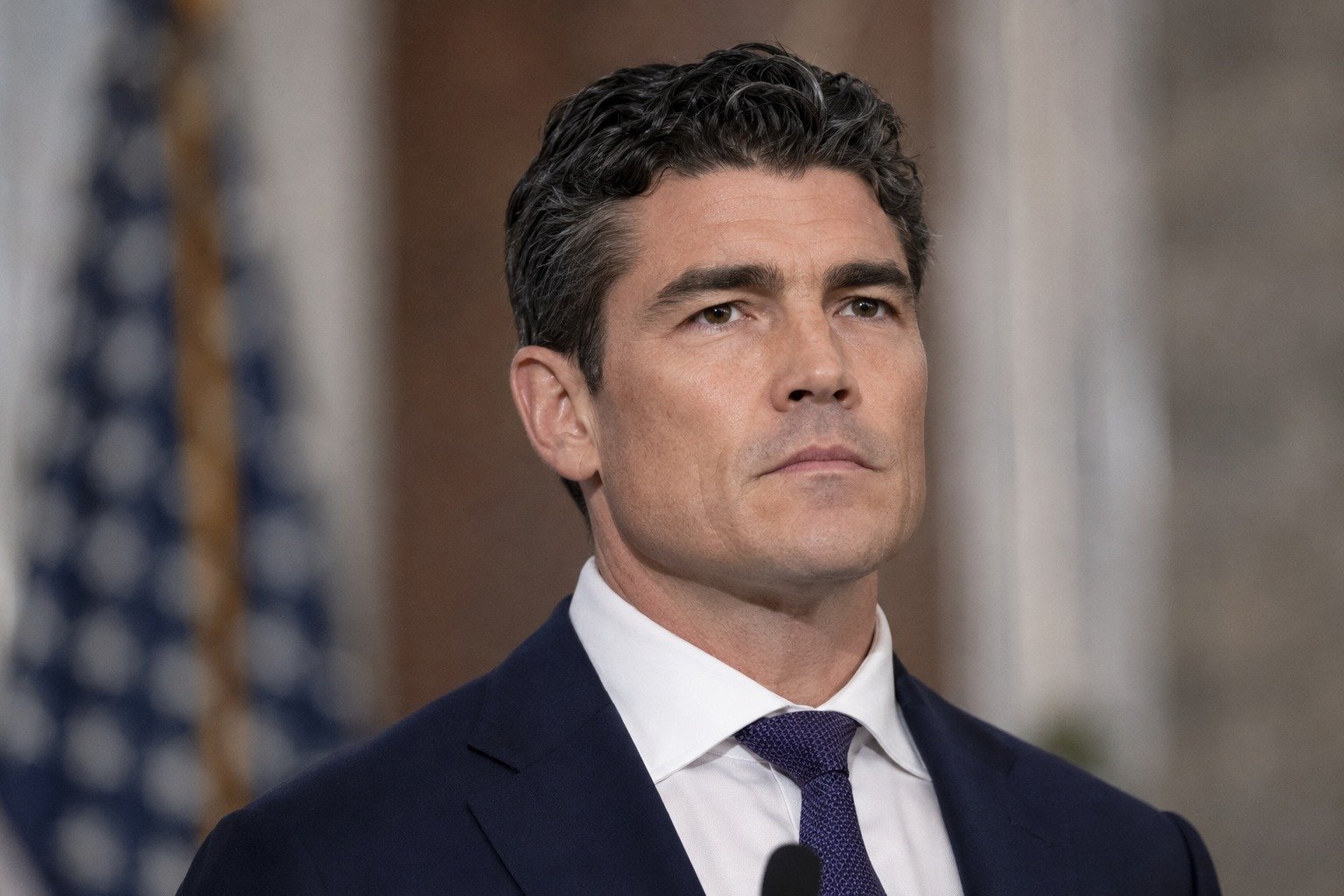
A former top national-security official in the Trump administration is making a demand that puts him sharply at odds with much of Washington’s foreign-policy establishment: cut U.S. military and intelligence aid to Israel in order to keep the newly announced Iran peace deal from unraveling.
Joe Kent, who served as the U.S. intelligence community’s top counterterrorism official before resigning in March, has emerged as one of the most prominent voices arguing that the path to a durable peace with Iran runs directly through restraining America’s closest Middle East ally. Kent led the National Counterterrorism Center and was a senior aide to the Director of National Intelligence before stepping down in protest of the U.S.-Israeli strike on Iran earlier this year.
A national-security professional who resigned on principle
Kent’s resignation set him apart from the typical Washington revolving door. A former U.S. Army Green Beret, he was not a political appointee chasing a cable-news contract but a career national-security professional who walked away from one of the most sensitive intelligence posts in government because he disagreed with the decision to attack Iran. That background is part of what gives his current argument weight: this is not an outside activist, but someone who sat at the center of America’s counterterrorism apparatus.
This week, Kent welcomed the announced U.S.-Iran agreement. But he immediately warned that the deal would not survive without sustained American pressure on Israel. “We can strengthen our chances of this deal holding by cutting all military/intel assistance to Israel,” he wrote, adding that Israel “took every opportunity to tank this deal and will likely do so again unless we take action.”
Drawing down troops and conditioning aid
Kent’s proposal goes beyond rhetoric. He has called for quietly drawing down U.S. troops from Gulf bases that sit within range of Iranian missiles – a move he frames as reducing the risk that American forces become tripwires in a renewed conflict. And he has argued that the ceasefire between Iran and Israel will only hold if Israel is restrained and effectively put back into what he calls a “junior partner” role in its relationship with Washington.
In an interview with Tucker Carlson, Kent went further still, suggesting that the United States could have prevented Israel’s unilateral attack in the first place simply by threatening to halt the flow of American aid. The implication is pointed: the leverage to stop a war already existed, and Washington chose not to use it.
A debate over leverage Washington rarely uses
At the heart of Kent’s argument is a question that American policymakers have long been reluctant to confront out loud: what is the United States actually getting in return for the billions of dollars in military and intelligence support it provides to Israel each year, and should that support come with conditions?
For decades, U.S. aid to Israel has been treated as effectively untouchable – delivered with few strings attached and largely shielded from the kind of cost-benefit scrutiny applied to other foreign commitments. Kent is arguing that this hands-off posture has left Washington without the tools to rein in an ally whose actions, in his view, repeatedly undercut American interests and risk dragging the U.S. into a wider war.
His critics will counter that conditioning aid to a key ally during a fragile ceasefire is risky, and that pressure of this kind could backfire. But Kent’s position reflects a growing strain of thought – particularly among those who favor military restraint – that says genuine peace requires accountability, and that accountability is impossible when aid flows automatically regardless of an ally’s conduct.
Whatever one makes of his prescription, the spectacle is striking: a career intelligence officer who resigned rather than support a war is now publicly arguing that the surest way to protect a hard-won peace deal is to attach conditions to the military aid the United States has long handed out with no strings at all.