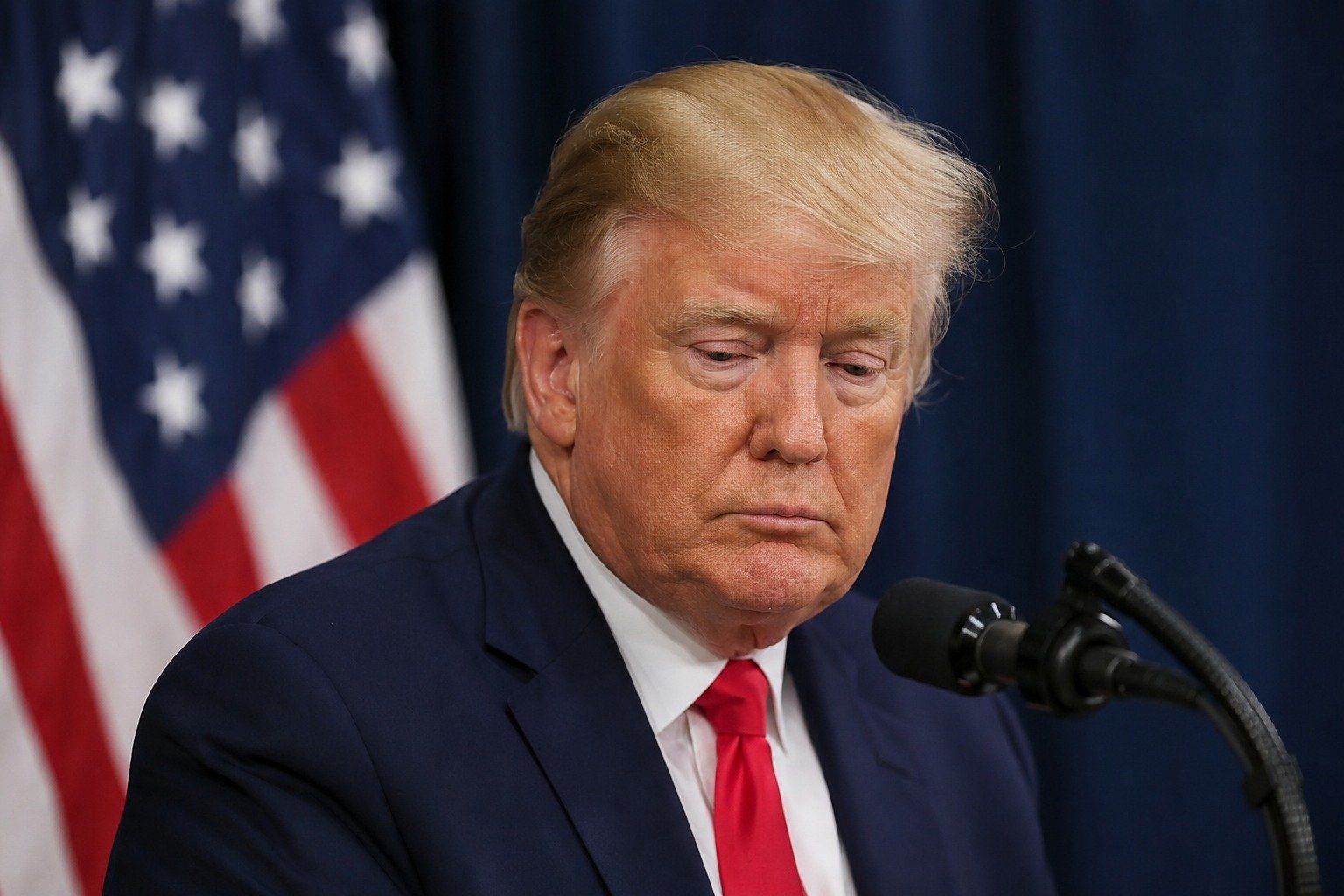
The numbers just landed, and they tell the same story no matter which pollster you ask: Donald Trump’s standing with independent voters has fallen to roughly one-quarter — about 25% — a low point for his second term. It is not the verdict of a single survey having a bad week. Across four separate pollsters using different methods, the share of independents still in Trump’s corner has settled at around a quarter, and the trend line is pointing down.
Four pollsters, one direction
PRRI puts Trump’s favorability among independents at 25%, down sharply from 35% in early 2025. AP-NORC finds his support among independents has slid to about one in four, after sitting closer to four in ten during the 2024 election cycle. The Economist/YouGov tracker recently recorded a new low for independents within its own series, while Civiqs shows roughly 30% approval against 63% disapproval. Newsweek, aggregating the picture across these surveys, framed the shift as a collapse among the voters least anchored to either party.
It is worth being precise about what these numbers measure. Some of the polls track job approval, others track favorability, and the headline figure moves a few points depending on which question is being asked. But the direction does not move. Whether the metric is “do you approve of the job he’s doing” or “do you view him favorably,” the answer from independents has converged on roughly one-quarter — and it keeps drifting lower rather than recovering.
Why the consistency matters
Any single poll can be an outlier. A small sample, an unusual weighting choice, or a rough news week can push one survey out of line with the others. That is exactly why analysts look for agreement across pollsters before drawing conclusions. When PRRI, AP-NORC, the Economist/YouGov tracker, and Civiqs all land in the same neighborhood — and all show the same decline from a year earlier — the signal is hard to wave away as noise.
The drop is also notable for its size. PRRI’s figure represents a ten-point fall in favorability among independents in roughly a year. AP-NORC’s shift, from about four in ten to about one in four, is a comparable slide. These are not the small, within-margin wobbles that pollsters expect month to month. They describe a bloc of voters steadily moving away.
The voters who decide elections
Independents are the part of the electorate neither party can take for granted. They are the swing in swing states, the voters who break late and decide close contests. Partisans on both sides tend to stay locked in; it is the unaffiliated middle that moves, and when it moves this consistently against an incumbent, it tends to show up where it counts — in turnout, in fundraising, and ultimately at the ballot box.
That is why a second-term low with independents is more than a talking point. A president’s ability to push an agenda through Congress, hold his party in line, and project momentum all depend in part on the perception that the public is still with him. When three out of four independents have walked away, that perception gets harder to sustain — and members of his own party watching the same numbers begin to calculate accordingly.
What comes next
With the midterms inching closer, these readings will be watched closely by strategists in both parties. The open question is whether the slide stabilizes or continues. For now, the most accurate way to describe the moment is also the simplest: across multiple credible polls, Trump’s support among independents has settled at roughly one-quarter, a second-term low, and the consistency of that finding is the story. The figures cited here reflect surveys reported in May and June 2026 by PRRI, AP-NORC, the Economist/YouGov tracker, Civiqs, and Newsweek’s aggregation of them.