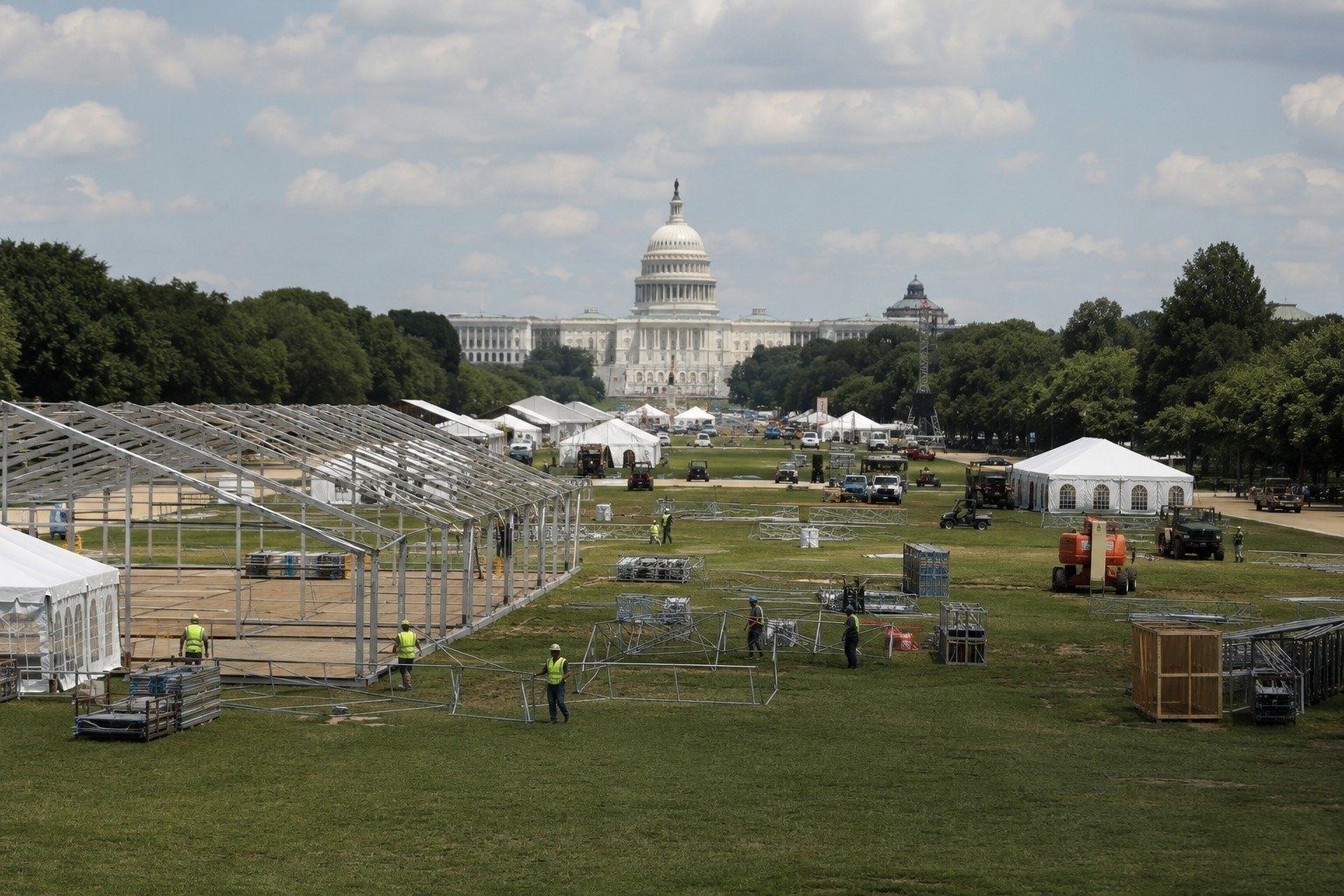
The fairgrounds are already rising on the National Mall – and a growing number of states want no part of them. At least six states have now declined to send official delegations to President Trump’s “Great American State Fair,” the centerpiece of a privately organized “Freedom 250” celebration scheduled to open June 25, citing the steep cost of participation and concerns that the event has become a partisan spectacle.
Oregon, Washington, Massachusetts, Illinois, North Carolina, Maine and Connecticut have all told organizers they will not be staffing official state booths, according to reporting on the event. The list has been growing in the weeks leading up to the opening, and it has turned what was pitched as a unifying national party into a flashpoint over money, politics and who is really behind the celebration.
A Private Group, Not the Official Commission
One of the most important details in this story is also one of the easiest to miss. The “Great American State Fair” is being run by Freedom 250, a private organization – not by the congressional “America 250” commission that was created to coordinate the nation’s official 250th-anniversary events. The two are separate entities, and it is the private operation that states are now walking away from.
That distinction matters because of where the money is coming from. The administration reportedly steered at least $68 million toward Freedom 250. When tens of millions of dollars flow toward a privately organized event, taxpayers have a reasonable interest in knowing how that money is being spent and who benefits – especially as the states whose names are supposed to anchor the celebration begin to bow out.
Why States Are Saying No
The reasons states have given fall into two buckets: cost and politics. Building and staffing an exhibition booth on the National Mall for more than two weeks is expensive, and many states would rather put those dollars toward their own local and statewide events. Several officials made clear they did not see the return on investment.
But the political concerns are just as significant. Oregon’s office pointed to both the price tag and “growing concerns that the event in Washington D.C. is shaping up to be a more partisan affair than originally presented.” That is a notable shift – states were initially pitched a nonpartisan celebration of the country’s history, and some now say the reality looks different from the sales pitch.
The Stand-Ins Tell the Story
Organizers insist the show will go on. They say all 50 states and six U.S. territories will be “represented in some form,” even if the states themselves are not sending official delegations. But the substitutions are revealing. The Peoria Riverfront Museum is set to fill in for Illinois, and a specialty vehicle company called Spevco is representing North Carolina.
When private museums and companies are standing in for entire states, the promise that “all 50 states” will be present starts to look a lot thinner than the marketing suggests. A booth with a corporate sponsor’s name on it is not the same thing as a state choosing to show up.
What This Means for Americans
At its core, this is a story about public money and public trust. A privately run event has reportedly received at least $68 million in connection with a milestone that belongs to every American – the country’s 250th birthday. When states representing tens of millions of people decide the event is not worth their participation, and private stand-ins are brought in to paper over the gaps, it raises fair questions about whether this celebration reflects the nation or a narrower slice of it.
The fair will open on June 25 regardless of who shows up. Whether it lands as a genuine national celebration or a costly, contested spectacle may depend on how many more states decide to walk away before the gates open.
Stay informed on the stories that matter most. Follow Your Daily Updates on Facebook and bookmark yourdailyupdates.news for breaking news and analysis.