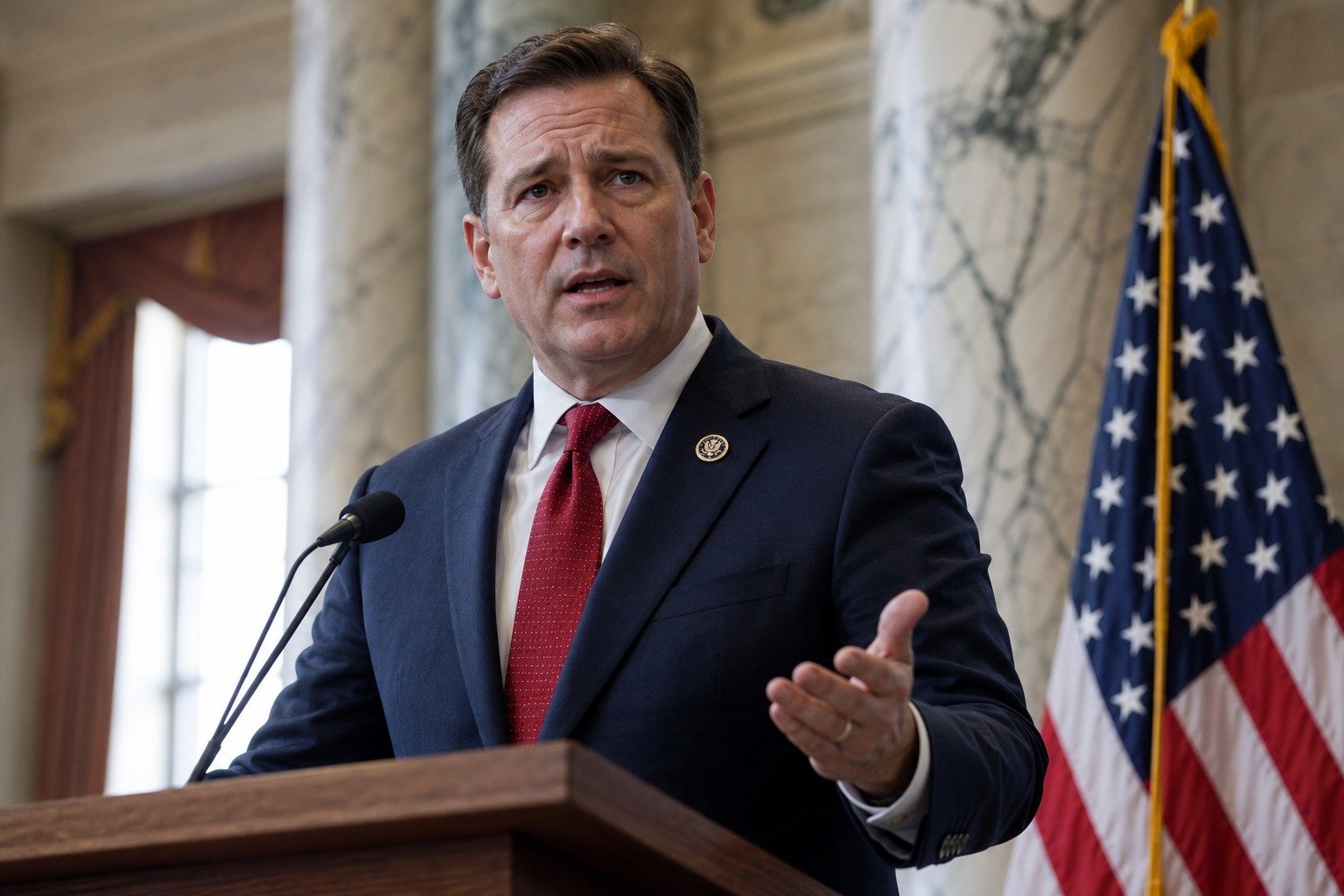
A senior member of the House Armed Services Committee has put a blunt label on the deal President Donald Trump says he is preparing to sign with Iran: a surrender. Rep. Seth Moulton, a Massachusetts Democrat and Marine veteran, described the reported US-Iran peace framework as “basically a surrender document from Donald Trump to the supreme leader of Iran.” The comment, made around June 12-13, 2026, landed as Trump signaled he was ready to formalize the agreement.
Who Is Making the Charge
Moulton is not a peripheral voice on national security. He sits on the House Armed Services Committee, the panel responsible for overseeing the U.S. military and the policies that shape American defense posture. He is also a combat veteran, having served multiple tours as a Marine officer. When a lawmaker with that background and that committee seat reaches for the word “surrender,” it carries a specific weight: it is the assessment of someone who reads these kinds of agreements as part of his job.
That framing matters because the debate over the framework is not a simple yes-or-no on diplomacy. It is a fight over terms — what the United States gives up, what it gets back, and whether the balance favors Washington or Tehran.
What Was Actually Said — And When
The precise sequence is important. At the time Moulton made his remark, the framework had not been signed. Trump had announced plans to sign it, but it remained exactly that — a framework, not a finished treaty. Critics argue that the window before an agreement is locked in is precisely when scrutiny should be loudest. Once ink hits paper, the leverage to demand changes largely evaporates.
Moulton’s objection was aimed at the cost of the deal, not at the idea of reducing tensions with Iran. He was not arguing that the United States should avoid diplomacy. He was arguing that the specific terms on the table amounted to giving away too much for too little. The word “surrender” was a judgment about the trade, not a rejection of negotiation itself.
The Stakes Behind the Framework
Any agreement with Iran touches some of the most sensitive questions in American foreign policy: the future of Tehran’s nuclear program, the lifting or maintenance of sanctions, regional security across the Middle East, and the credibility of U.S. commitments to allies who watch Washington’s moves closely. A framework that lowers the temperature can be genuinely valuable. A framework that concedes core leverage can be costly for years.
That is why the fight is over the fine print. Supporters of the framework will say that any deal reducing the risk of conflict with Iran is worth pursuing, and that engagement beats escalation. Critics like Moulton counter that the details — not the headline of “peace” — determine whether the outcome is real diplomacy or a one-sided giveaway dressed up as a breakthrough.
Reactions and the Road Ahead
Moulton’s comment is among the sharpest from a sitting committee member, and it raises the political temperature on a deal Trump is eager to claim as a foreign-policy win. The central question now is procedural as much as substantive: will Congress get a meaningful chance to examine the terms before they are finalized, or will the framework be signed first and debated after?
With Trump signaling he is ready to sign, the pressure falls on lawmakers who want the specifics made public. Transparency before signature is the difference between informed consent and a fait accompli — and that is the line Moulton and other critics are trying to hold.
What This Means for Americans
Foreign-policy deals can feel distant, but the terms of an agreement with Iran ripple into real life: the risk of military conflict that could put U.S. service members in harm’s way, the stability of energy markets, and the long-term security of American allies. When a Marine veteran on the Armed Services Committee warns that the country may be giving away too much, it is a signal worth taking seriously — and a reason for citizens to demand the details before, not after, the deal is done.
Stay informed on the stories that matter most. Follow Your Daily Updates on Facebook and bookmark yourdailyupdates.news for breaking news and analysis.