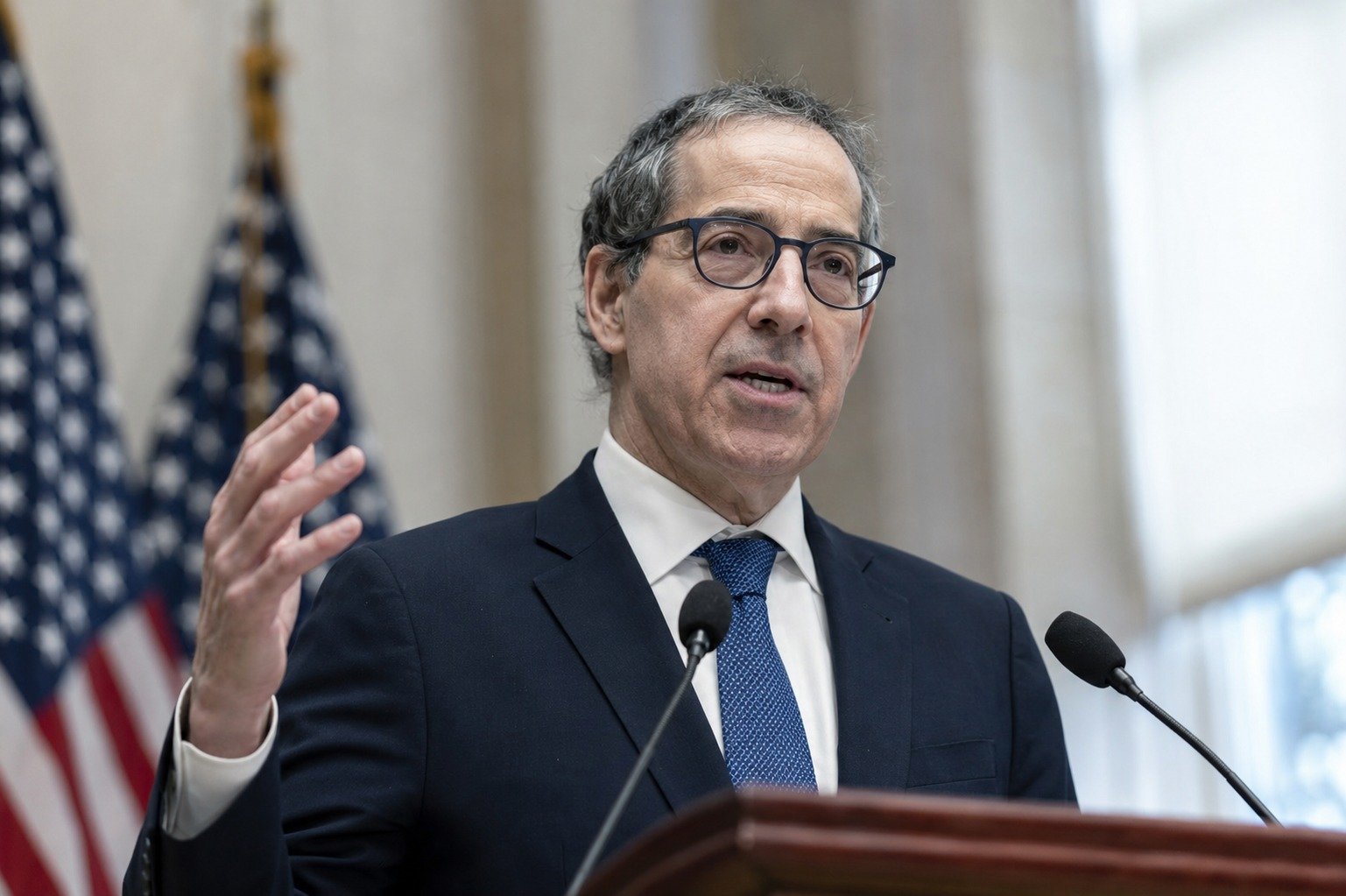
Rep. Jamie Raskin has introduced legislation that would make one thing about the presidency explicitly illegal: taking money from the very people a president pardons. The bill, unveiled as part of a broader anti-corruption package, would bar the president from accepting payments from anyone they grant clemency to or appoint to office, and would force the disclosure of any such payment to Congress.
Raskin, a Maryland Democrat and one of his party’s most prominent voices on government ethics, is joined by Reps. Robert Garcia and Joe Morelle. Together they are targeting what they describe as one of the most glaring accountability gaps at the very top of American government.
Why the Pardon Power Is Under Scrutiny
The presidential pardon is one of the broadest and least-checked powers in the Constitution. A president can wipe away federal criminal liability for almost anyone, for almost any reason, with no requirement to explain the decision. For most of American history, that power was treated as an act of mercy or a tool of justice.
But the lack of guardrails has long worried ethics experts. If a president can erase someone’s legal jeopardy and then accept money from that same person, the line between clemency and a transaction begins to blur. Raskin’s bill is built around a simple premise: the pardon power was never meant to be a revenue stream.
What the Bill Actually Does
The legislation does two things. First, it prohibits the president from accepting payments from anyone they pardon, grant clemency to, or appoint to a government position. Critically, that prohibition extends to payments routed through a business the president personally owns, closing a loophole that could otherwise let money flow indirectly while staying technically off the books.
Second, it requires disclosure. Any payment a president receives from a clemency or pardon recipient would have to be reported to Congress, dragging into the open what might otherwise happen quietly. The combination of a ban plus mandatory transparency is meant to take the price tag off clemency entirely.
An Introduced Bill, Not Law
It is important to be precise about where this stands. This is one provision inside a larger anti-corruption package, and it has only just been introduced. It has not passed a committee, has not cleared either chamber, and has not been signed into law. With Republicans in control of Congress, its near-term odds are slim, and its sponsors are well aware of that reality.
That does not make the move pointless. By putting the prohibition in writing, Raskin and his co-sponsors are drawing a clear line on conduct they argue should never have been legal in the first place. They are also forcing a public conversation, and putting every member of Congress in a position to go on record about whether a president should be allowed to profit from the people they let off the hook.
The Debate Ahead
Supporters frame the bill as basic ethics: no one, including the most powerful person in the country, should be able to sell a pardon. Critics are likely to argue the measure is aimed at a specific administration rather than the institution itself. Either way, the proposal puts a pointed question on the table that is difficult to dodge once it is stated plainly.
What This Means for Americans
For ordinary citizens, the stakes are about trust in the fairness of the system. A justice system where outcomes can be quietly purchased at the top is one where the rules stop applying equally. Whether or not this bill becomes law, it forces a debate about who the pardon power is supposed to serve, and whether accountability reaches all the way to the Oval Office.
Stay informed on the stories that matter most. Follow Your Daily Updates on Facebook and bookmark yourdailyupdates.news for breaking news and analysis.