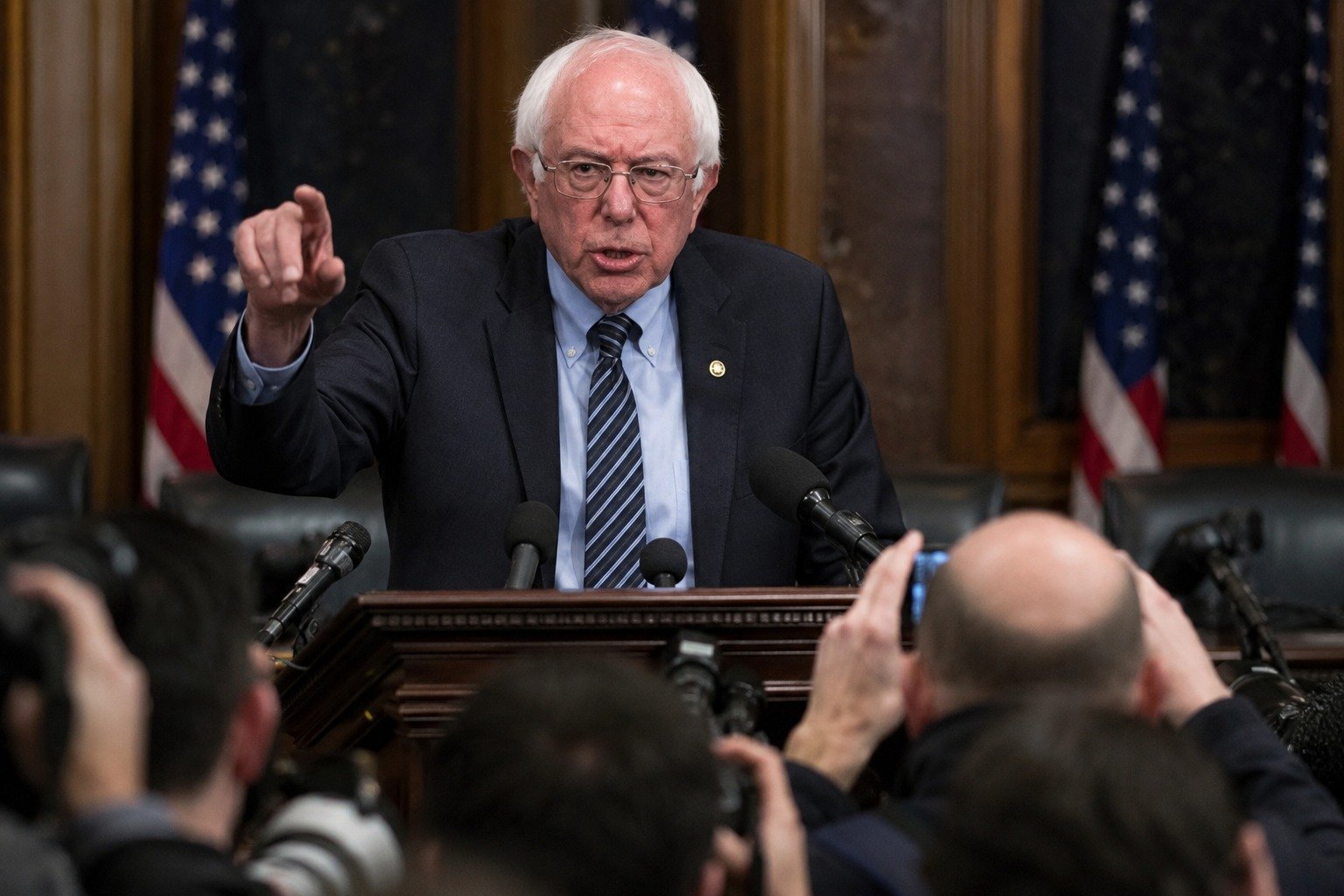
Senator Bernie Sanders forced the U.S. Senate to take a public, on-the-record vote on whether to block roughly $658.8 million in bomb sales to Israel. He filed Joint Resolutions of Disapproval to halt the transfer and pushed the measures all the way to the Senate floor, refusing to let leadership in either party quietly avoid the question.
The resolutions failed. In votes held in mid-April 2026, the first measure went down roughly 40 to 59, and the second fell by an even wider margin of about 36 to 63. The weapons sale moves forward. But Sanders accomplished something he has fought months to achieve: he made every senator declare where they stand.
What Sanders Was Trying to Do
Under the Arms Export Control Act, individual senators have the power to force a vote on major foreign weapons sales by filing a Joint Resolution of Disapproval. It is a rarely used tool, and one that almost never succeeds — but it guarantees a floor vote, stripping leadership of the ability to bury the issue in committee.
Sanders used exactly that mechanism. His resolutions targeted a package of bomb sales to Israel, and his goal was twofold: to attempt to block the transfer outright, and, failing that, to force the Senate to debate it in the open. For months he has argued that the United States should attach conditions to its military aid rather than approving sales automatically.
The Argument He Made
Sanders’ case is direct: American taxpayers should not be funding bombs used in a war that has killed tens of thousands of civilians. He has framed the issue as one of accountability — that a democracy ought to be able to vote on where its weapons go, rather than rubber-stamping every sale through a process most Americans never see.
He has repeatedly pressed for conditions on U.S. military assistance, tying continued aid to standards on how it is used. That position has put him at odds with leadership in both parties, who have largely treated the weapons relationship with Israel as untouchable.
The Vote and the Pushback
When the resolutions reached the floor, they were defeated decisively. The roughly 40-59 and 36-63 tallies showed that a clear Senate majority was unwilling to interrupt the sale. Critics of Sanders’ effort argued that the transfer supports a key U.S. ally’s right to defend itself, and that blocking it would tie the hands of an elected government in the middle of a conflict.
Supporters of Sanders countered that the point was never only about winning the vote. By forcing the question onto the record, he made every senator’s position visible to the public — a level of transparency that arms sales rarely receive. Sanders couldn’t get the votes, but he got the debate.
What This Means for Americans
For ordinary Americans, the fight is about more than one weapons package. It is about whether elected officials have to answer publicly for how U.S. military aid is spent, and whether voters get to see those decisions made in the open. Sanders’ resolutions failed, but they pulled a normally invisible process into daylight — and now the record exists for constituents to judge.
Stay informed on the stories that matter most. Follow Your Daily Updates on Facebook and bookmark yourdailyupdates.news for breaking news and analysis.