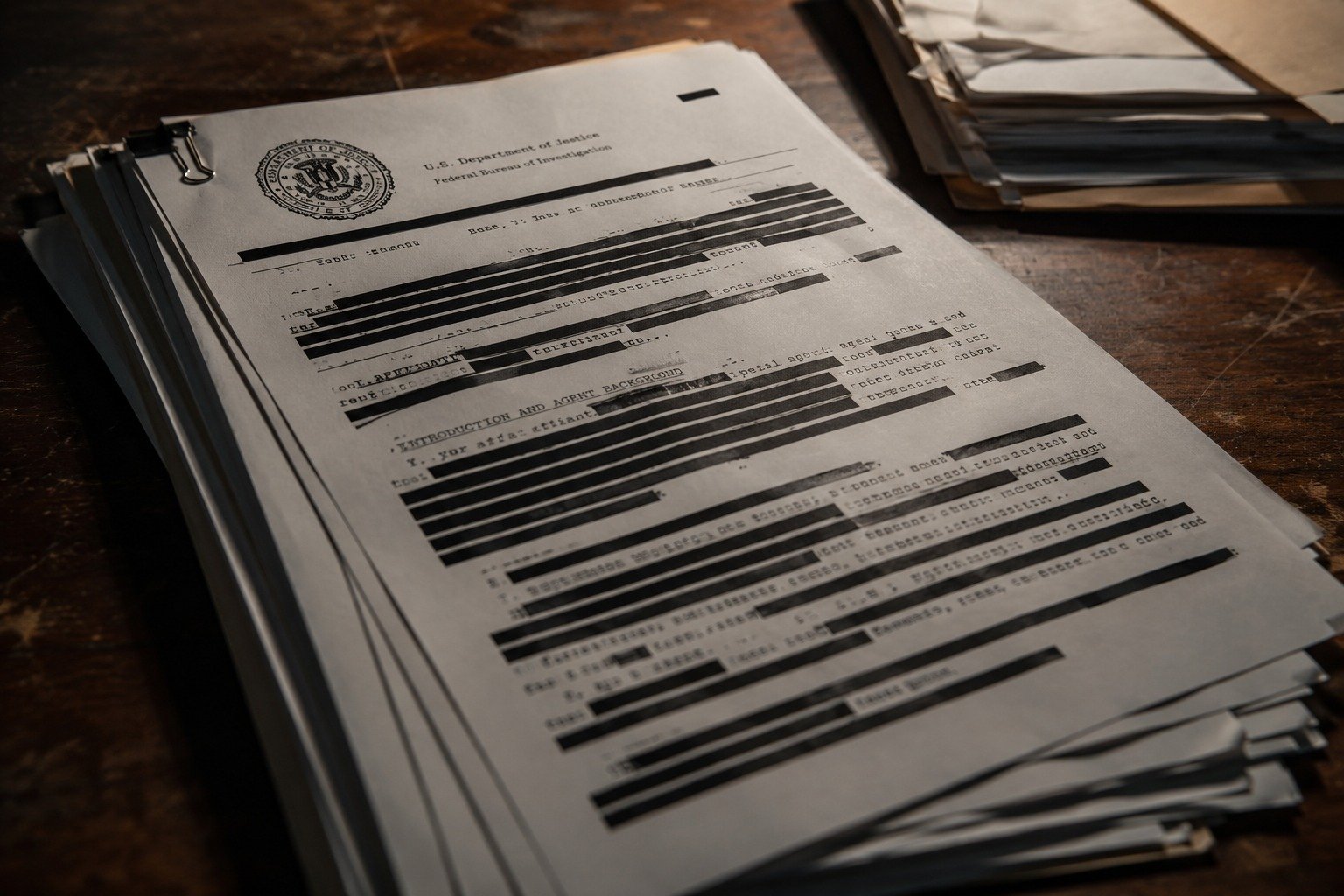
The Justice Department released millions of pages of records from its investigation into Jeffrey Epstein on January 30, 2026 — and within hours, the conversation had shifted from what the files revealed to what they concealed. The documents arrived heavily redacted, with entire blocks of text blacked out, and critics quickly argued that the redactions were protecting the wrong people.
The release was billed as a major step toward transparency. But for survivors, advocates, and a bipartisan pair of lawmakers who reviewed the unredacted material, it raised a pointed question: when the government decides what to hide, who exactly is it shielding?
Two Lawmakers, One Unredacted Look
Reps. Ro Khanna, a California Democrat, and Thomas Massie, a Kentucky Republican, were among those who reviewed unredacted versions of the files. The two come from opposite ends of the political spectrum, but they reached a similar conclusion about what was being kept from the public.
Khanna went public with six of the names that had been blacked out in the version released to the public. Among them was billionaire Leslie Wexner, the former owner of Victoria’s Secret. Wexner’s connection to Epstein has long drawn scrutiny — the FBI labeled him a possible co-conspirator back in 2019. His name appearing behind a redaction bar, rather than in plain view, became a flashpoint for critics who said the most powerful figures were the ones being protected.
It is worth being precise here: this was not a blanket blackout of every name in the files. The records run to millions of pages, and much of the material was released. But the pattern that drew the loudest objections was a specific one — that identities of prominent, powerful men were obscured while other sensitive information was not handled with the same care.
The Survivors’ Objection
What turned criticism into outrage was the contrast survivors and their advocates pointed to. They argued that the release exposed victims’ identifying information — the very people the system is supposed to protect — while keeping the identities of named men hidden behind redactions.
For people who came forward at real personal cost, the idea that a government document dump could expose them while shielding the powerful was a betrayal of the basic promise of accountability. The redaction process, in their view, had its priorities backwards.
This was not the first time the handling of these records had gone wrong. An earlier release in December 2025 had been hit with a faulty-redaction flaw — a technical failure that undercut confidence in the government’s ability to manage the material carefully. Each misstep deepened the suspicion that the redactions were less about protecting victims and more about managing embarrassment.
Transparency Versus Protection
The debate now sits squarely between two competing principles. On one side is transparency: the argument that in a case this consequential, involving allegations against powerful people, the public has a right to see everything. On the other is protection: the legitimate need to shield victims and to avoid naming individuals who were never charged with a crime.
Those principles are not always in conflict. A careful release can protect victims while still holding the powerful to account. But the criticism of this release is that it managed to do the opposite — exposing the vulnerable while obscuring the influential. That is the worst of both worlds, and it is why a release meant to project openness instead became a fresh controversy.
What This Means for Americans
At its core, this is a question about whether the rules apply equally. When a government redaction protects a billionaire’s name while a survivor’s identity slips through, ordinary people are right to ask whether accountability stops at a certain level of wealth and power. The answer shapes public trust in every institution that promises to treat everyone the same.
That is what makes this a genuine debate rather than an easy one. Full disclosure carries real risks for victims. But selective disclosure that favors the powerful carries a different risk — the slow erosion of the belief that the system works for anyone but them.
Stay informed on the stories that matter most. Follow Your Daily Updates on Facebook and bookmark yourdailyupdates.news for breaking news and analysis.