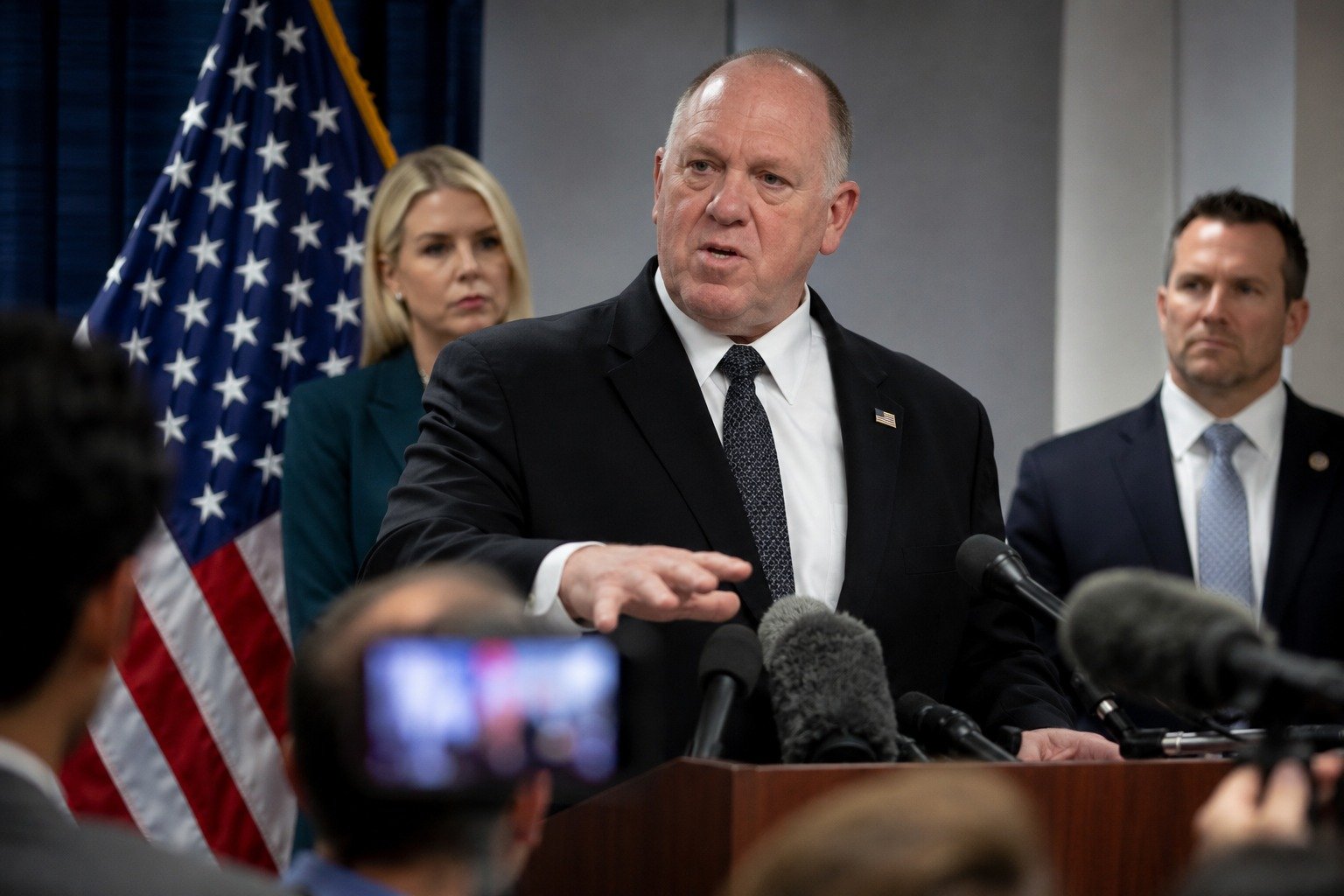
Border czar Tom Homan has put New York City on notice. The Trump administration, he says, is preparing a major surge of Immigration and Customs Enforcement agents across all five boroughs – and he isn’t softening the message. “More ICE agents than you’ve ever seen,” Homan said, adding a blunt warning to the city: “It’s coming.”
Homan says he has already reviewed an operational plan for the deployment. It’s important to be precise about where this stands: what Homan described is a stated and approved plan – a threat the administration is broadcasting loudly – not agents already on the ground. But the intent is being made unmistakably public, and that alone has set off alarm across the city.
Why New York Is the Target
By Homan’s own framing, the trigger is New York’s sanctuary policies. These are local and state laws that limit how much city resources, including police and jail cooperation, are used to assist federal immigration enforcement. Supporters of sanctuary measures argue they keep immigrant communities willing to report crimes, send their kids to school, and seek medical care without fear that any contact with local government becomes a pipeline to deportation.
The administration sees those same laws as obstruction. Rather than working with local officials, Homan’s comments signal a strategy of overwhelming the city with federal presence – flooding neighborhoods with agents in numbers New York has not seen before. That escalation, framed as a response to local policy choices, is what makes this moment different from routine enforcement.
A Threat, Not Yet a Deployment
The distinction matters. Homan has described a plan he says is approved and reviewed, and he has promised it is coming. What has not happened is the deployment itself. No mass operation has been carried out across the boroughs as of his remarks. That gap between announcement and action is exactly where the political fight is now playing out – because once agents are in the streets, the consequences for families are immediate and difficult to reverse.
For residents, the uncertainty itself carries weight. A publicly broadcast threat of an unprecedented surge can change how people live their daily lives long before a single arrest is made – whether to go to work, whether to answer the door, whether to show up for a court date or a clinic appointment.
Local Leaders Push Back
The threat has drawn sharp resistance from New York’s leadership. Mayor-elect Zohran Mamdani and Governor Kathy Hochul have both rejected it, defending the city’s immigrant neighbors and the sanctuary measures designed to keep families from living in fear of a knock at the door. Their argument is straightforward: a city does not become safer by terrorizing the people who live and work in it, and local governments are not obligated to convert their police and agencies into arms of federal immigration enforcement.
That sets up a direct collision between federal authority and local self-determination. The administration is asserting the power to deploy agents wherever it chooses; the city and state are asserting the right to decline cooperation and to protect their residents. How that conflict resolves – in the courts, in the streets, or both – will shape immigration enforcement well beyond New York.
What This Means for Americans
Behind the political standoff are real people: workers, parents, and longtime neighbors who are being told the federal government plans to descend on their streets in numbers never seen before. Immigration enforcement on this scale doesn’t stay neatly contained to those without status – it sweeps up mixed-status families, citizens, and entire communities into a climate of fear. New York is the test case, but the precedent set here, whether enforcement-by-intimidation becomes a normal tool against cities that disagree with Washington, is one every American city should be watching. The question now is whether New York’s leaders can hold the line.
Stay informed on the stories that matter most. Follow Your Daily Updates on Facebook and bookmark yourdailyupdates.news for breaking news and analysis.