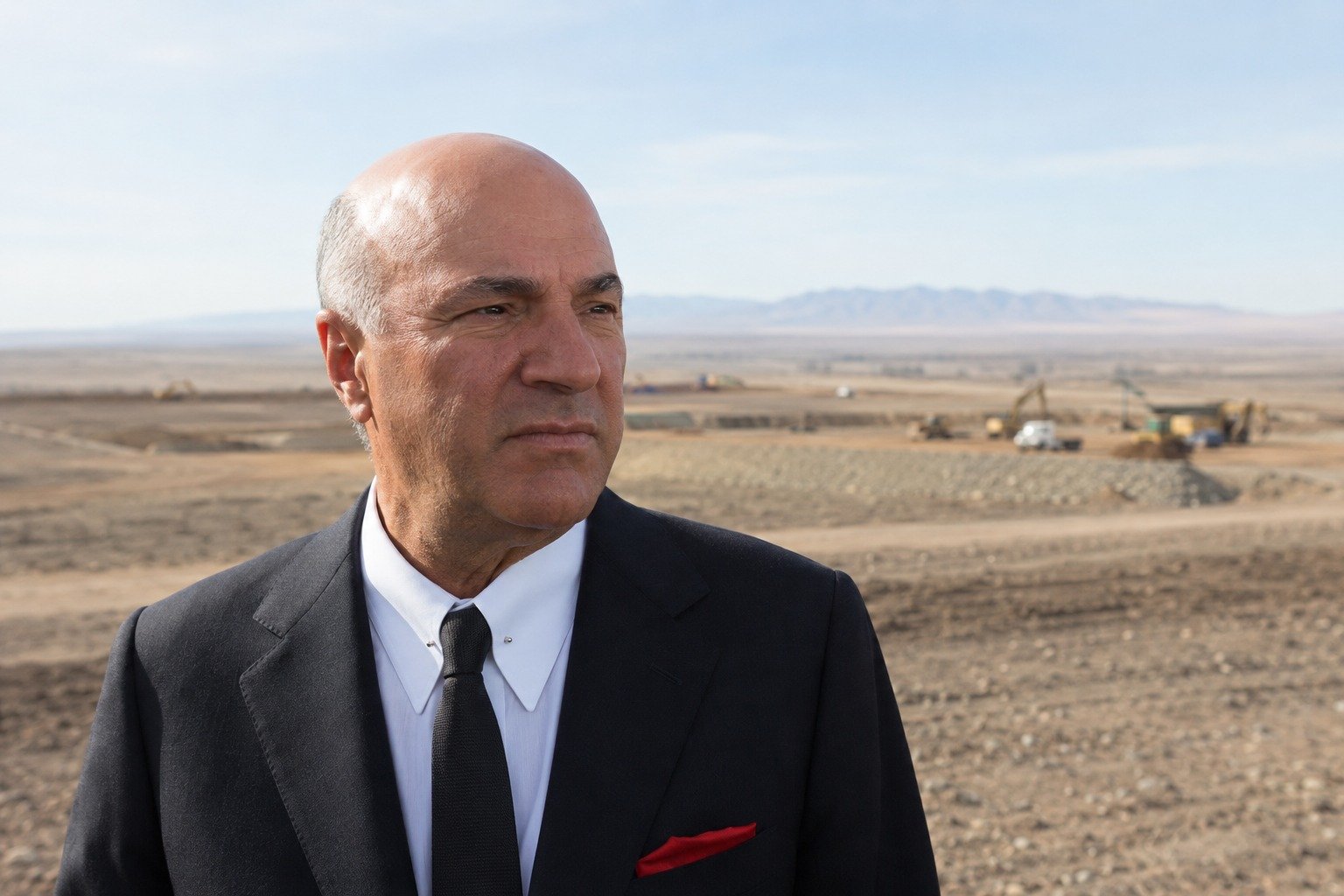
Kevin O’Leary is scaling back. The Shark Tank investor known as “Mr. Wonderful” has agreed to shrink his planned Stratos AI data center in Utah by roughly half — cutting it from a sprawling 40,000 acres to about 19,430 acres — after months of mounting local outrage and direct pressure from state lawmakers. “I have no choice,” O’Leary told NBC News.
A City-Sized Project Meets a Wall of Opposition
The Stratos project was pitched as one of the largest AI-focused data center developments on Earth. At its original footprint of 40,000 acres in Box Elder County, it would have covered an area larger than many American cities — a massive industrial campus built to power the artificial intelligence boom with enormous appetites for land, water, and electricity.
But in a drought-prone state where the Great Salt Lake is already shrinking and residents are protective of farmland and wildlife habitat, the sheer scale of the proposal set off alarm bells. Ranchers, families, and conservation advocates spent months organizing against it, warning that a project of that size could drain scarce resources and permanently reshape the rural landscape.
Lawmakers Demanded a 75% Cut
The turning point came when Utah Senate President J. Stuart Adams, a Republican, publicly called on O’Leary to slash the project’s footprint by 75% — down to roughly 10,000 acres. Adams didn’t stop at size. He also pressed for stronger water conservation commitments, real public transparency, and binding protections for wildlife habitat, agricultural land, and the Great Salt Lake.
Adams urged the project to use the latest technology to minimize water consumption, dedicate any excess treated water to the Great Salt Lake, and enter into agreements with state officials to preserve habitat and farmland. The message from Utah’s top state Senate leader was unmistakable: the project, as designed, was not acceptable.
“I Have No Choice”
O’Leary’s response was blunt. Telling NBC News “I have no choice,” he signaled that the combination of community backlash and political pressure had left him little room to maneuver. He said he planned to send a formal, revised proposal to Adams with the new details.
But there’s a crucial catch. O’Leary’s revised plan cuts the project by about half — not the full 75% lawmakers demanded. At roughly 19,430 acres, the scaled-back Stratos would still be enormous, covering more ground than many U.S. cities. For the residents who have fought the project from the start, half a giant is still a giant.
What This Means for Utahns
This fight is about more than one billionaire’s ambitions. It’s a test of whether ordinary residents and their elected representatives can force a powerful investor to answer for the impact of a project on the land, water, and communities around it. The AI boom is driving a nationwide rush to build data centers, and Utah is now a front line in the debate over who bears the costs.
The unanswered question is whether “roughly half” will be enough to satisfy the families, ranchers, and lawmakers who refused to stay quiet — or whether the pressure that already shrank the project will keep pushing until it meets the 75% cut they demanded. A companion lawsuit filed by Utah residents over the project is also working its way forward, keeping the heat on.
Stay informed on the stories that matter most. Follow Your Daily Updates on Facebook and bookmark yourdailyupdates.news for breaking news and analysis.