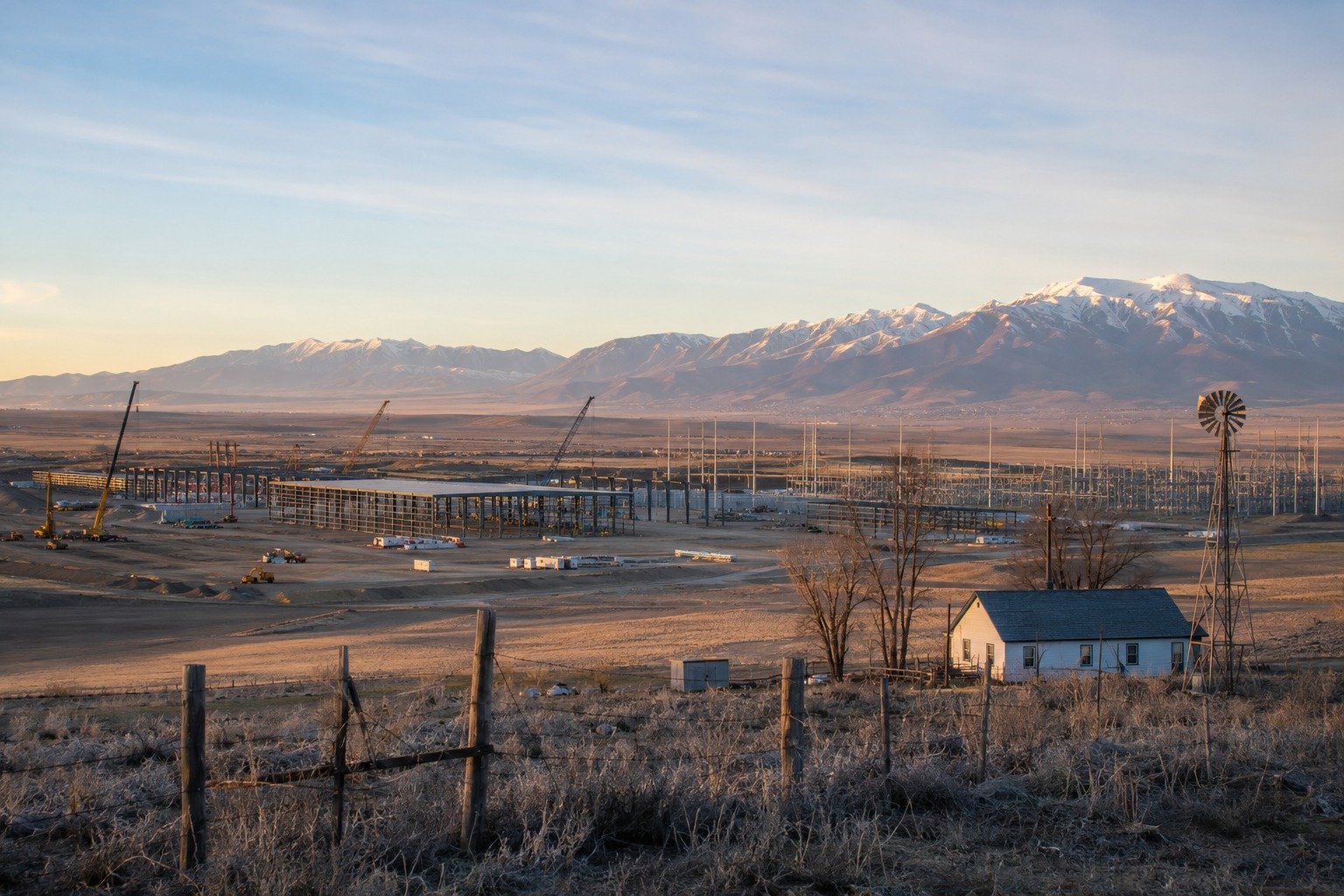
A group of Utah residents has decided they are done being ignored, and they are taking their fight against one of the largest data center projects in the state straight to court.
The Alliance for a Better Utah, a progressive nonprofit, joined five Box Elder County residents in filing a lawsuit Wednesday in Utah’s 3rd District Court challenging the approval of Kevin O’Leary’s “Stratos Project,” a sprawling artificial intelligence data center planned for the rural Hansel Valley. At the heart of their complaint is a simple but explosive argument: the people who actually live in the path of the development were never given a meaningful say in whether it should move forward.
An unelected board at the center of the fight
The lawsuit takes direct aim at the Military Installation Development Authority, known as MIDA, the special state entity that signed off on the project. The plaintiffs allege that MIDA exercised powers that “the Utah Constitution never authorized,” approving a massive development that could reshape residents’ water, land, environment, and daily lives without any democratic vote or local accountability.
According to the complaint, MIDA’s approval of the Stratos Project Area Plan stripped Box Elder County residents of any real opportunity to weigh in on a matter that stands to affect their health, their livelihoods, and the surrounding landscape for generations. The suit frames the case not just as a dispute over one data center, but as a broader test of whether an appointed body can override the will of the communities it governs.
Two sitting lawmakers named in the suit
Beyond MIDA itself, the lawsuit names the Box Elder County Commission, Utah Senate President J. Stuart Adams, and state Sen. Jerry Stevenson as defendants. The inclusion of Adams and Stevenson raises one of the most pointed questions in the case.
Both Adams and Stevenson are sitting legislators who also serve on the MIDA board. Attorney David Irvine, who represents the plaintiffs, argues that holding both roles at once “appears to violate the prohibition on holding more than one office of public trust simultaneously.” If the court agrees, the plaintiffs contend, it could render the project’s approval null and void. The complaint lays out ten separate claims alleging that MIDA and the county commission violated the constitutional rights of residents when they approved the plan.
The pressure is already producing results
Even before the courtroom battle begins, the public backlash appears to be having an effect. The original proposal called for a 40,000-acre data center campus, an enormous industrial footprint stamped across open high-desert farmland. O’Leary has since conceded to significant changes, agreeing to shrink the project by roughly 75 percent.
The reality television personality and investor has also committed water to the shrinking Great Salt Lake and agreed to set aside thousands of acres for open space, wildlife protection, and continued agricultural use. For residents who have watched their valley become a flashpoint in the national debate over AI infrastructure, those concessions are a sign that organized pressure can move even a billionaire’s plans.
But the plaintiffs are not satisfied with a smaller version of the same project. They are asking the court to throw out the approval entirely and to issue an injunction that would “permanently prevent” any further attempt to implement or administer the Stratos Project Area Plan.
A bigger question about who decides
The case now poses a question that reaches well beyond one rural valley: can a handful of residents stop a billionaire’s data center ambitions, and force their own government to answer for how the project got approved in the first place? As AI data centers spread across the country, consuming vast amounts of land, water, and power, the outcome in Box Elder County could echo far beyond Utah’s borders.