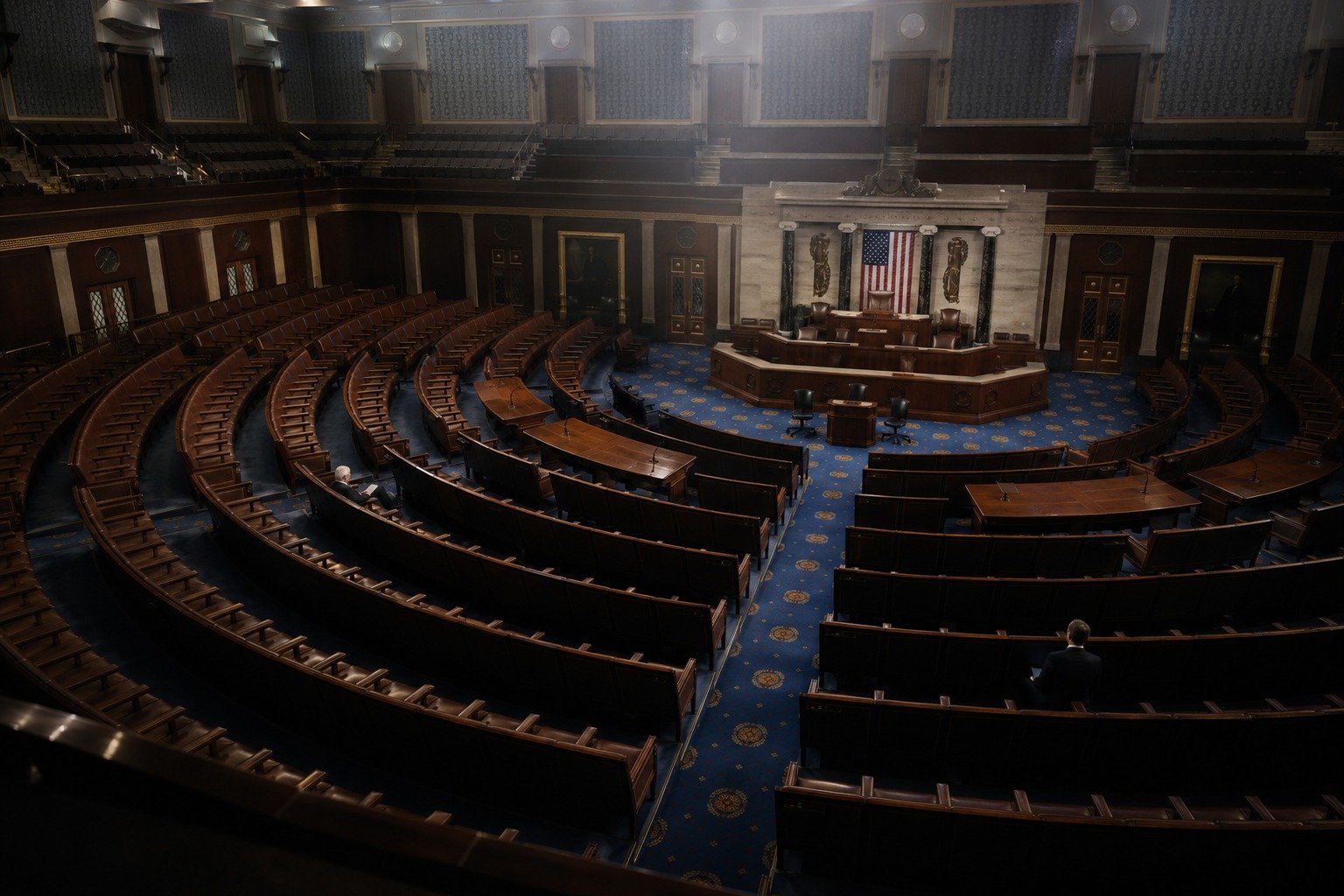
The branch of government built to write the nation’s laws is barely writing any. New reporting shows the 119th Congress is on track to pass the fewest bills in roughly 50 years, even as President Donald Trump moves on his own to set tariffs, commit the military, and direct federal spending – powers the Constitution explicitly assigned to the legislature.
It is an analytical projection based on the current pace, not a finalized record. But the trajectory is hard to miss: a Congress that legislates less and less while one office absorbs more and more of the decisions that shape American life.
The Numbers Tell the Story
In its first year, only about 45 bills became law – the second-lowest count since at least the 1970s. To grasp how steep that drop is, consider that some Congresses in the 1970s pushed upwards of 200 bills into law in a single first year. The decline from a few hundred to a few dozen is not a rough patch or a slow stretch. By any historical measure, it is a collapse in legislative output.
Bill counts are an imperfect measure of a Congress – a single sweeping law can matter more than fifty minor ones. But the long-term trend line, tracked across decades, captures something real about how much of the nation’s governing is actually being done through the legislative process versus around it.
Why the Separation of Powers Matters
Tariffs, war, and the power of the purse were handed to Congress on purpose. The framers of the Constitution deliberately split these powers among the branches so that no single person could wield them alone. The power to tax and to fund the government, to declare war, and to regulate commerce with foreign nations all sit in Article I – the article that describes the legislature, not the presidency.
That design was not an accident of history. It was a direct response to the dangers of concentrated power. When lawmakers stop legislating and allow the White House to fill the vacuum on tariffs, military action, and spending, the checks built into the system do not merely weaken. They quietly disappear, often without a single dramatic vote to mark the shift.
A Choice, Not an Accident
Much of this is happening with the cooperation of the congressional majority, which has largely chosen to defer to the executive branch rather than assert its own authority. A thinner legislative record is often blamed on gridlock and partisanship, and those forces are real. But deferring to the president on the biggest questions is itself a decision – one that steadily transfers unilateral power to a single office.
The result is a Congress that increasingly reacts to executive action rather than setting the agenda itself. When the legislature does not act, the questions do not go away. They simply get answered somewhere else, by someone who was never meant to answer them alone.
What This Means for Americans
This is not an abstract debate about process. Tariffs raise the prices Americans pay at the store. Spending decisions determine which programs are funded and which are cut. War commits the country’s troops and resources. When those calls are made by one office instead of a deliberative body of hundreds of elected representatives, ordinary people lose a layer of representation that was meant to stand between them and unchecked power. The fewer bills Congress passes, the fewer chances voters have to see their representatives put their positions on the record and answer for them.
The core question is simple, even if the answer is not: Is Congress giving away the power voters sent it to Washington to use?
Stay informed on the stories that matter most. Follow Your Daily Updates on Facebook and bookmark yourdailyupdates.news for breaking news and analysis.