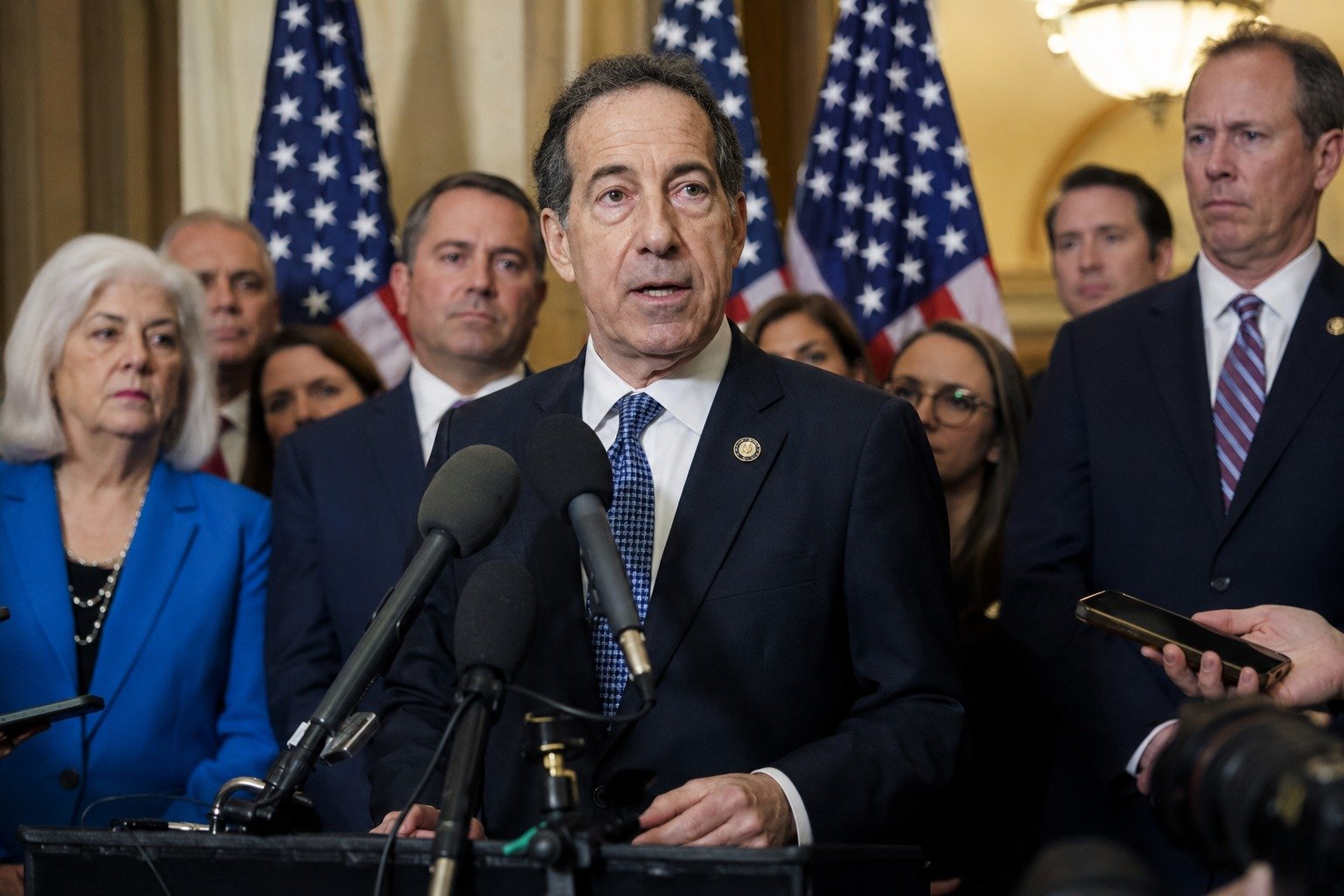
Rep. Jamie Raskin (D-Md.) has introduced a sweeping anti-corruption legislative package, and one of its bills takes direct aim at a part of presidential power that almost never comes with a paper trail: the pardon. Backed by 93 co-sponsors, the bill would require any president to disclose to Congress every payment they receive from a person they pardoned or granted clemency to.
The premise is simple, and the implication is sharp. A pardon is meant to be an act of mercy. Raskin’s proposal is built around a question most Americans have never had reason to ask: what happens if money flows back to a president, or to a business a president controls, after that mercy is granted?
What the Bill Would Actually Do
Under the measure, a president would be legally required to report to Congress every dollar received from anyone they pardoned or granted clemency to. There is currently no such requirement. As the law stands today, a pardon recipient could route payments toward a president or a presidentially owned business with no obligation for that money to be disclosed to lawmakers or the public.
The bill would change that by turning what critics describe as a potential pay-to-play vulnerability into a documented record that Congress can review. The goal, supporters say, is not to second-guess the use of the pardon power itself, but to make sure that power can’t quietly double as a revenue stream.
A Proposal, Not a Law
It’s important to be clear about where this stands. The bill has been introduced – not passed. It is part of a broader anti-corruption package pushed by House Democrats, who are currently in the minority. That political reality matters: a bill introduced by the minority party faces a steep climb to ever reach a floor vote, let alone clear both chambers and land on a president’s desk to be signed into law.
In other words, this is a statement of priorities as much as it is a piece of pending legislation. Raskin and his 93 co-sponsors are laying down a marker – spelling out exactly what they believe accountability at the highest level of government should look like, and positioning the issue for the moment the math in Congress might shift.
The Broader Package
The pardon-disclosure bill doesn’t stand alone. It’s one piece of a wider legislative effort aimed at curbing what its backers describe as the potential for self-dealing and profiteering from public office. The package as a whole is designed to close gaps that, in the view of its authors, allow financial entanglements to stay hidden from the very institution meant to provide oversight: Congress.
That framing – transparency as a guardrail rather than a punishment – is central to how supporters are selling it. The argument is that disclosure alone changes the incentives. If every payment tied to a pardon has to be reported, the calculus around granting one shifts.
The Debate Ahead
Supporters call the measure a basic, common-sense safeguard against corruption at the top of the executive branch. Critics are likely to frame it as a politically motivated swipe at a sitting president, designed more to make a point than to become law. Both readings can be true at once – the bill is both a policy proposal and a political signal.
What it ultimately forces into the open is a straightforward question: should the public have the right to know if a pardon came with a payment attached? For now, the answer the law gives is no. Raskin’s bill is an attempt to change that answer – even if the path to passage is, by his own party’s admission, a long one.
What This Means for Americans
For ordinary Americans, the stakes come down to trust. The pardon power is one of the broadest and least-checked authorities a president holds. A rule requiring disclosure of any money that follows a pardon would give the public a tool to see whether that power is being used as intended – or being monetized behind closed doors. Whether or not this particular bill becomes law, it puts a spotlight on a question of accountability that affects everyone who expects government to work for the public, not for private payouts.
Stay informed on the stories that matter most. Follow Your Daily Updates on Facebook and bookmark yourdailyupdates.news for breaking news and analysis.