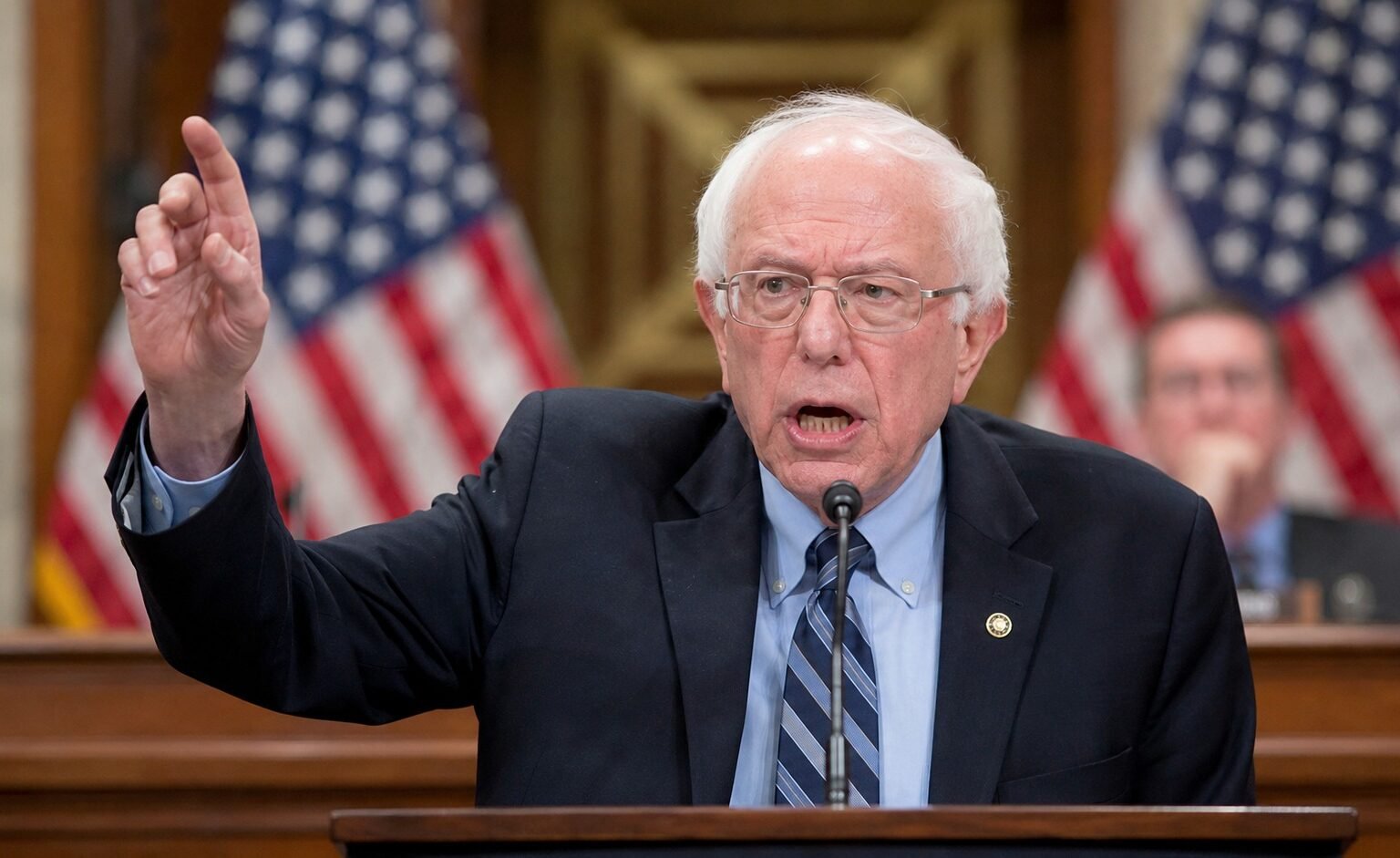
Senator Bernie Sanders has spent months saying three words about America’s role in arming Israel’s war in Gaza: “Enough is enough.” This spring, he turned that slogan into roll-call votes — forcing the United States Senate to go on the record on whether to block specific weapons sales to the Netanyahu government.
The measures did not pass. But they revealed something that would have been unthinkable a year ago: a majority of Senate Democrats are now willing to vote to halt offensive arms shipments to a longtime U.S. ally.
What Sanders Actually Did
Sanders, the independent from Vermont who caucuses with Democrats, used a legislative tool called a Joint Resolution of Disapproval to force floor votes. These resolutions allow Congress to try to block specific foreign arms sales that the executive branch has approved. They are rarely brought to the floor, and almost never succeed — but they put every senator on record.
In April 2026, Sanders brought two such resolutions. One aimed to block roughly $295 million in Caterpillar military bulldozers. The other targeted about $151.8 million in 1,000-pound bombs. Both failed by the same margin: 40 to 59. But a majority of Senate Democrats voted in favor of stopping the sales. Only seven Democrats crossed the aisle to join Republicans in keeping the weapons flowing.
A Dramatic Shift in Less Than a Year
To understand how significant that April vote was, look back to July 2025. Sanders pushed a similar effort then — a resolution to block roughly $675 million in 1,000-pound bombs, JDAM guidance kits, and tens of thousands of assault rifles. It was crushed, 27 to 70.
In other words, in under a year, the bloc backing Sanders grew from a long-shot minority into a near-unified Democratic caucus. The cause did not win, but the coalition behind it expanded dramatically — a sign that pressure inside the party over Gaza is reshaping what was once a bipartisan consensus on unconditional military support for Israel.
Sanders’ Argument
Sanders has been blunt about why he is pushing these votes. His central claim is that the United States should not be complicit in the killing of civilians and the famine unfolding in Gaza under the Netanyahu government. He argues that American taxpayers are effectively financing weapons used against a starving population, and that Congress has both the authority and the responsibility to say no.
It is important to be precise about what these resolutions did and did not do. They targeted specific offensive weapons sales — not all U.S. funding and not every category of weapon. And because they failed, they did not become law. No shipment was actually stopped by these votes. What changed was the political math: more lawmakers were willing to publicly break with the policy than ever before.
What This Means for Americans
For voters, these votes are a rare moment of clarity. Arms sales usually move quietly through Washington with little public debate. By forcing roll-call votes, Sanders made every senator take a side — and gave constituents a clear record of where their representatives stand on a question of war, taxpayer dollars, and human suffering.
The resolutions fell short, and the sales were not blocked. But the trajectory is unmistakable. The question now is no longer whether opposition exists — it is how long before “enough is enough” becomes the majority position.
Stay informed on the stories that matter most. Follow Your Daily Updates on Facebook and bookmark yourdailyupdates.news for breaking news and analysis.