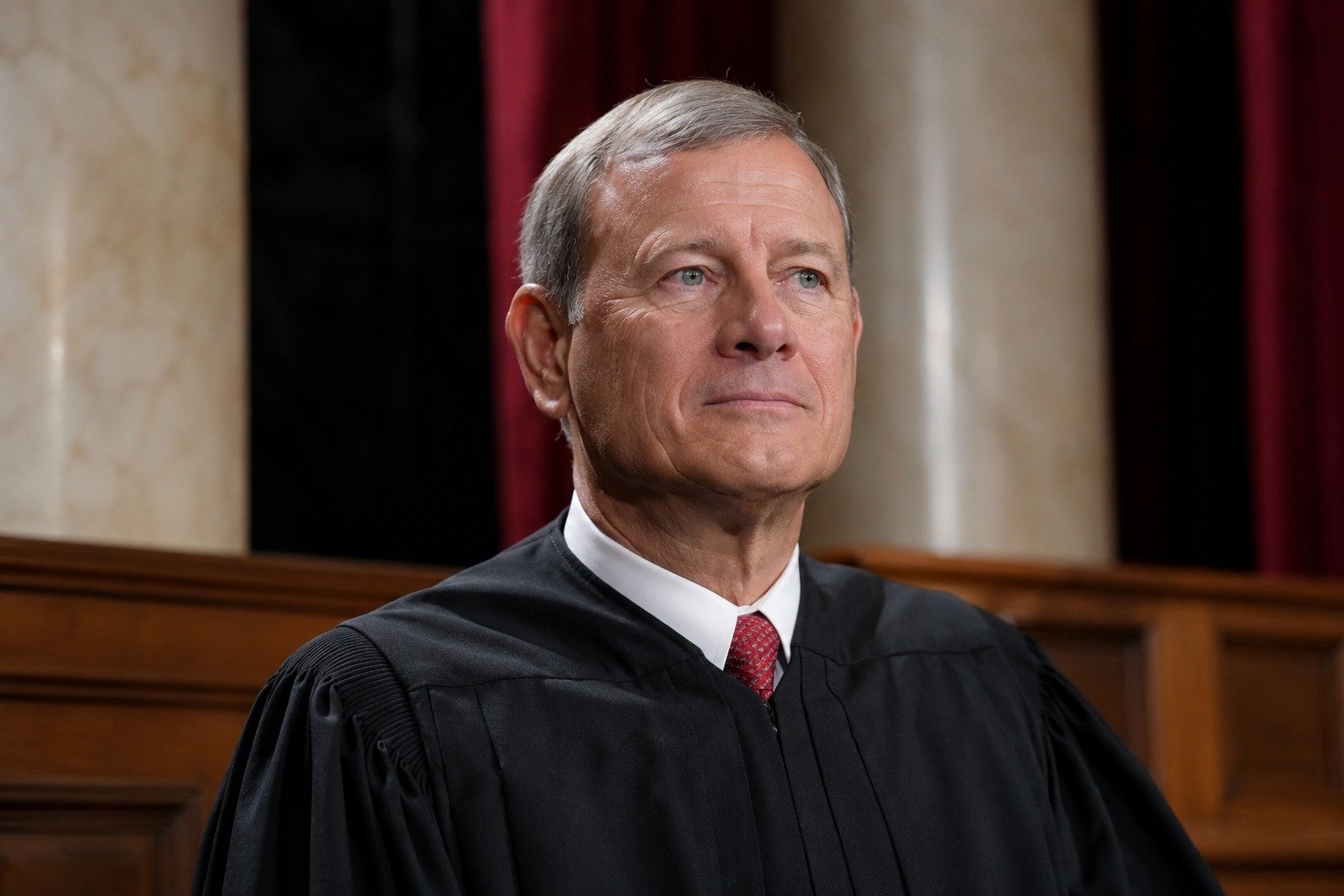
A senior House Democrat has formally moved to put the Chief Justice of the United States on trial. Rep. Steve Cohen of Tennessee, a longtime member of the House Judiciary Committee, has filed six articles of impeachment against Chief Justice John Roberts, accusing him of allowing the Supreme Court to become a partisan instrument and of repeated ethics failures. The resolution, designated H.Res.1309, was introduced on May 21, 2026.
What Cohen Is Alleging
The resolution lays out a sweeping indictment of Roberts’ tenure. Cohen argues that the Chief Justice has committed “high crimes and misdemeanors” by violating the Constitution, disregarding his statutory obligations, and breaching his oaths of office. In Cohen’s telling, Roberts has steered the Court to a breaking point through perceived political bias, unexplained rulings, and a pattern of siding with the rich and powerful over ordinary Americans.
The six articles include charges that Roberts allowed the Court to become a partisan weapon, placed the president above the law, and endorsed what Cohen describes as a corrupt campaign finance system. They also cite decisions that permitted Alabama and Louisiana to redraw congressional maps in ways that shaped which voters landed in which districts.
The Ethics Charges
Some of the most pointed allegations concern conflicts of interest. Cohen contends that Roberts failed to recuse himself from cases involving law firms while his wife earned millions of dollars recruiting attorneys for those same firms. The resolution also alleges that Roberts did not fully report his assets as required. For a Chief Justice who has repeatedly positioned himself as a guardian of judicial integrity and an institutionalist above the political fray, the accusations strike at the heart of his public image.
A Symbolic, Uphill Effort
It is important to be precise about what has actually happened. This is a resolution that was introduced, not an impeachment that has passed. As of its filing, Cohen had no co-sponsors, and with Republicans narrowly controlling the House, the measure is not expected to advance. Cohen, who has announced he is retiring, framed the filing as a statement of accountability rather than a realistic path to removal.
History underscores how rare such an action is. Only one Supreme Court justice has ever been impeached by the House: Samuel Chase in 1804. He was acquitted by the Senate, and no justice has been impeached since. Removing a sitting Chief Justice would require a two-thirds vote in the Senate, a threshold that is not remotely in reach.
What This Means for Americans
Even a resolution that goes nowhere forces a conversation that the Court has largely avoided: whether the most powerful judicial body in the country answers to anyone. Public confidence in the Supreme Court has slid in recent years amid questions about ethics, recusal standards, and the absence of a binding code of conduct. Cohen’s filing puts those questions back in the spotlight, regardless of its legislative fate.
Stay informed on the stories that matter most. Follow Your Daily Updates on Facebook and bookmark yourdailyupdates.news for breaking news and analysis.