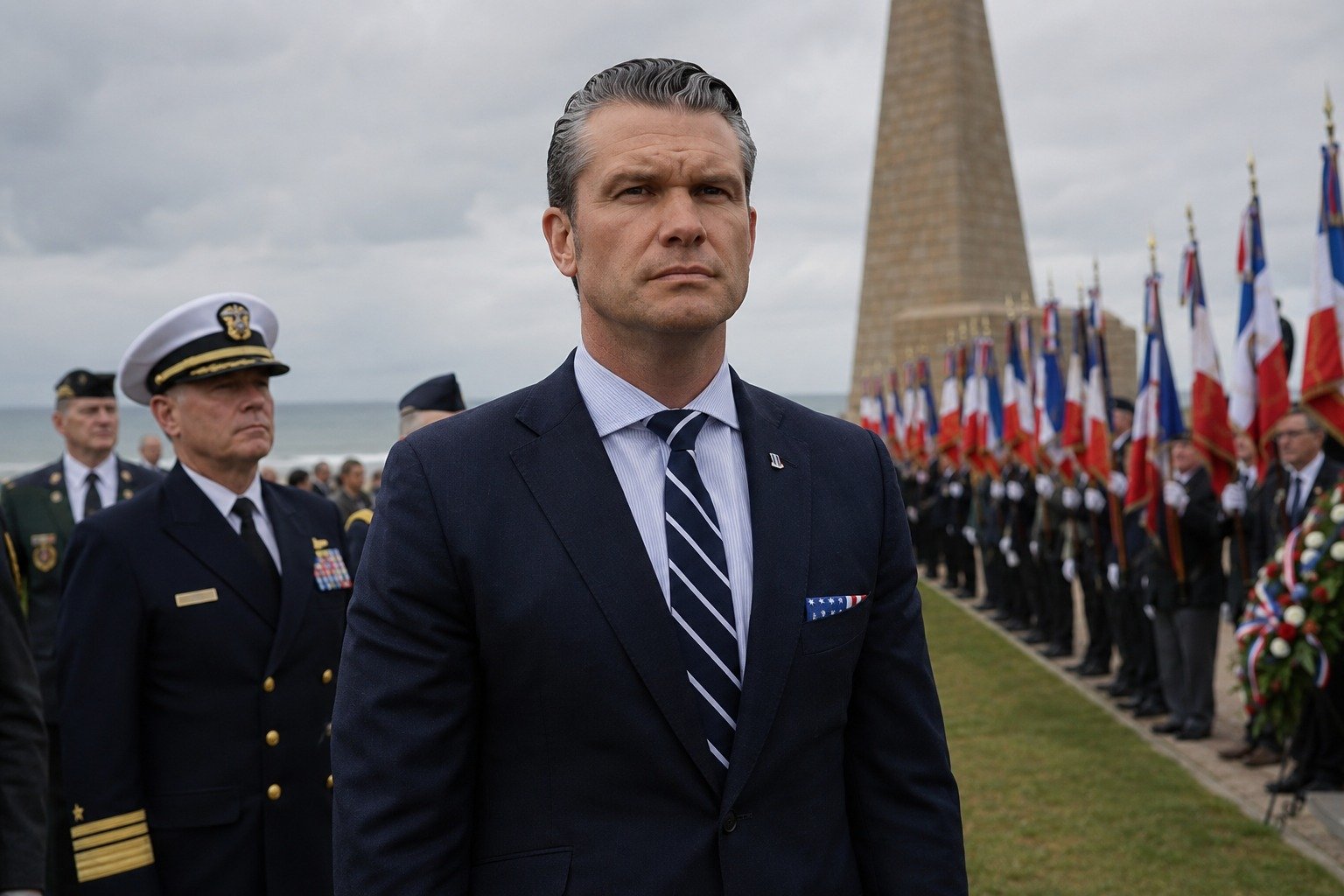
Before Defense Secretary Pete Hegseth ever touched French soil, a small coastal village in Normandy had already made up its mind about him. As he traveled to France for the 82nd anniversary of D-Day, residents of Langrune-sur-Mer publicly declared him unwelcome, calling for his visit to be canceled and labeling him “persona non grata” by name.
It was a striking rebuke at a site defined by sacrifice – a community that lived the history of the 1944 Allied invasion telling a sitting American defense chief, in advance, that it did not want him there.
A Pre-Arrival Rejection
The pushback did not happen in the moment or in the heat of a protest. It came before Hegseth arrived. A local group calling itself Langrune en Commun issued a public statement urging that the visit be called off altogether, criticizing Hegseth directly and declaring him unwanted in their town.
That distinction matters. Despite sensational framing elsewhere suggesting Hegseth was physically “told to turn around,” he was not stopped or turned away at the gate. What happened was a deliberate, organized statement of opposition issued ahead of time by residents of the very place that paid a price during the Normandy landings.
Locals Shut Out of Their Own Ceremony
The friction did not end with words. Under heightened security surrounding the high-profile visit, locals were barred from attending the commemoration ceremony held in their own community. For a town whose identity is tied to D-Day remembrance, being locked out of the observance added insult to an already tense moment.
Normandy’s commemorations are usually a rare space where American and French histories meet without controversy – a shared act of remembrance for the soldiers who died to liberate Europe. This year, that shared space was strained.
Hegseth Attended – and Talked About ‘Invasion’
Hegseth went ahead with the visit and delivered remarks. In them, he leaned into the language of immigration and “invasion” – a framing that landed awkwardly at a memorial honoring soldiers who died fighting a very different kind of invasion eight decades ago.
At a site built to remember troops who stormed the beaches to defeat fascism and free a continent, repurposing the word “invasion” to describe migration struck many as tone-deaf. For the residents who had already asked him to stay away, the speech did little to bridge the gap.
Why It Resonated
The episode captured a larger tension. A U.S. defense secretary arrived to honor a shared sacrifice, while a community that fought to be heard said plainly that it did not want him present. The contrast between the solemn purpose of the day and the open rejection from locals turned what is normally a unifying event into a flashpoint.
It also underscored how rhetoric travels. Language used in domestic political debates does not stay home – it follows officials abroad, and it can collide with the meaning of the very ground they stand on.
What This Means for Americans
How American officials carry themselves overseas shapes how the country is seen by its closest allies. When a defense chief is publicly declared unwelcome at one of the most sacred sites of the U.S.-French alliance, it is a signal worth paying attention to. Commemorations like D-Day are about more than ceremony – they are reminders of partnerships built on enormous human cost, and they can be tested by the words leaders choose.
Stay informed on the stories that matter most. Follow Your Daily Updates on Facebook and bookmark yourdailyupdates.news for breaking news and analysis.