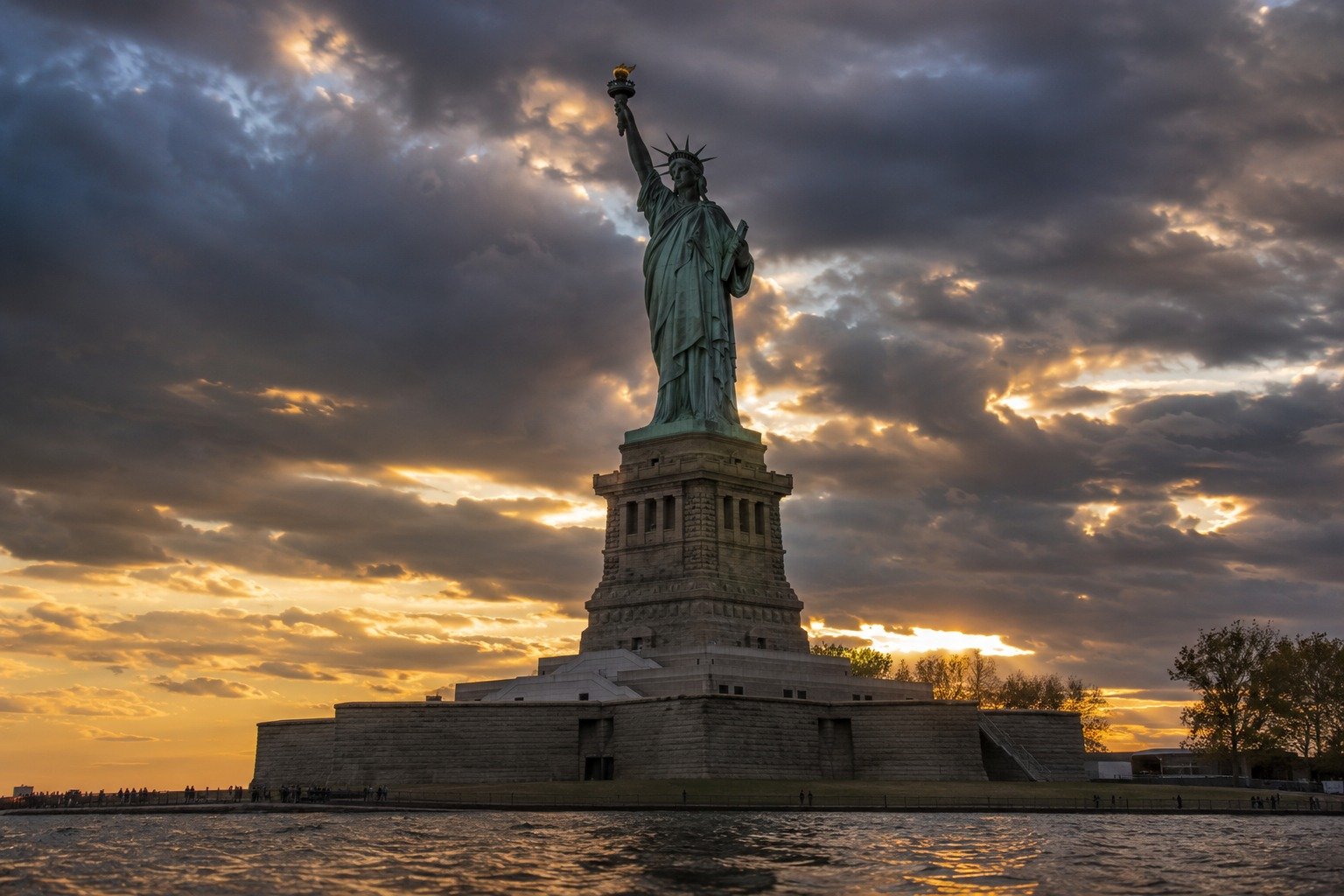
During oral arguments before the D.C. Circuit Court of Appeals on June 5, a federal judge asked a Justice Department lawyer a question meant to test the outer limits of presidential power: if the president decided to bulldoze the Statue of Liberty, could anyone actually stop him in court? The government’s lawyer agreed that no one would likely have the legal standing to do so. “I think that’s right, yes,” he said.
The exchange was hypothetical. Nobody is planning to tear down one of the most recognized monuments in the world. But the legal position the administration advanced was very real, and it landed with a jolt in a courtroom already wrestling with how much oversight courts can exercise over what a president does with federal property.
How the Statue of Liberty Came Up
The question did not come out of nowhere. The appeals court was hearing arguments over President Trump’s demolition of part of the White House complex to make way for a new ballroom — a project that has drawn lawsuits from critics who argue it was carried out without the reviews and approvals such changes to a historic federal building normally require.
Judge Patricia Millett used the Statue of Liberty as a deliberately extreme example. The point of the hypothetical was to pin down the government’s theory: if courts could not hear a challenge to the ballroom demolition because no one had standing, then where exactly was the line? Was there any federal landmark so significant that someone — a member of Congress, a preservation group, an ordinary citizen — would be allowed to walk into court and object?
The Doctrine Behind the Answer
The administration’s answer turned on “standing,” one of the most consequential and least understood concepts in American law. To sue in federal court, a plaintiff has to show a concrete, personal injury that a court can actually remedy. It is not enough to be outraged, or to believe the government is acting wrongly. You have to show the action hurts you specifically.
Standing exists for good reasons. It keeps courts from becoming a venue for every political grievance. But the doctrine has a sharp edge: if an action harms everyone in a general way and no one in a specific, legally recognized way, it can become almost impossible to challenge. That is the gap the DOJ leaned into — arguing that decisions about federal property may simply not be the kind of thing courts can second-guess, no matter how dramatic.
Why It Unsettled the Courtroom
Read narrowly, the lawyer was making a technical point about who is allowed to sue. Read more broadly, he was describing a zone of presidential action that courts cannot reach. Millett’s question wasn’t really about a statue. It was about whether any limit still applies — and the government’s willingness to say “yes, that’s right” to the most extreme version of the hypothetical is what made the moment resonate well beyond the ballroom dispute.
Legal scholars have long debated how far the standing doctrine should stretch. Pushed to its limit, an argument that no one can challenge how a president treats federal property hands the executive enormous unchecked discretion. Critics of the administration seized on the exchange as a window into how expansively it views its own authority.
What This Means for Americans
For most people, “standing” sounds like courtroom trivia. It isn’t. It is often the difference between a government action that can be challenged and one that cannot. When the government argues that no one could sue even over something as drastic as demolishing a national monument, it is really arguing about how much power a president can wield without anyone being able to say no in court. The ballroom case will be decided in the coming weeks, but the question the DOJ answered out loud will linger far longer: if not the Statue of Liberty, then what exactly is off-limits?
Stay informed on the stories that matter most. Follow Your Daily Updates on Facebook and bookmark yourdailyupdates.news for breaking news and analysis.