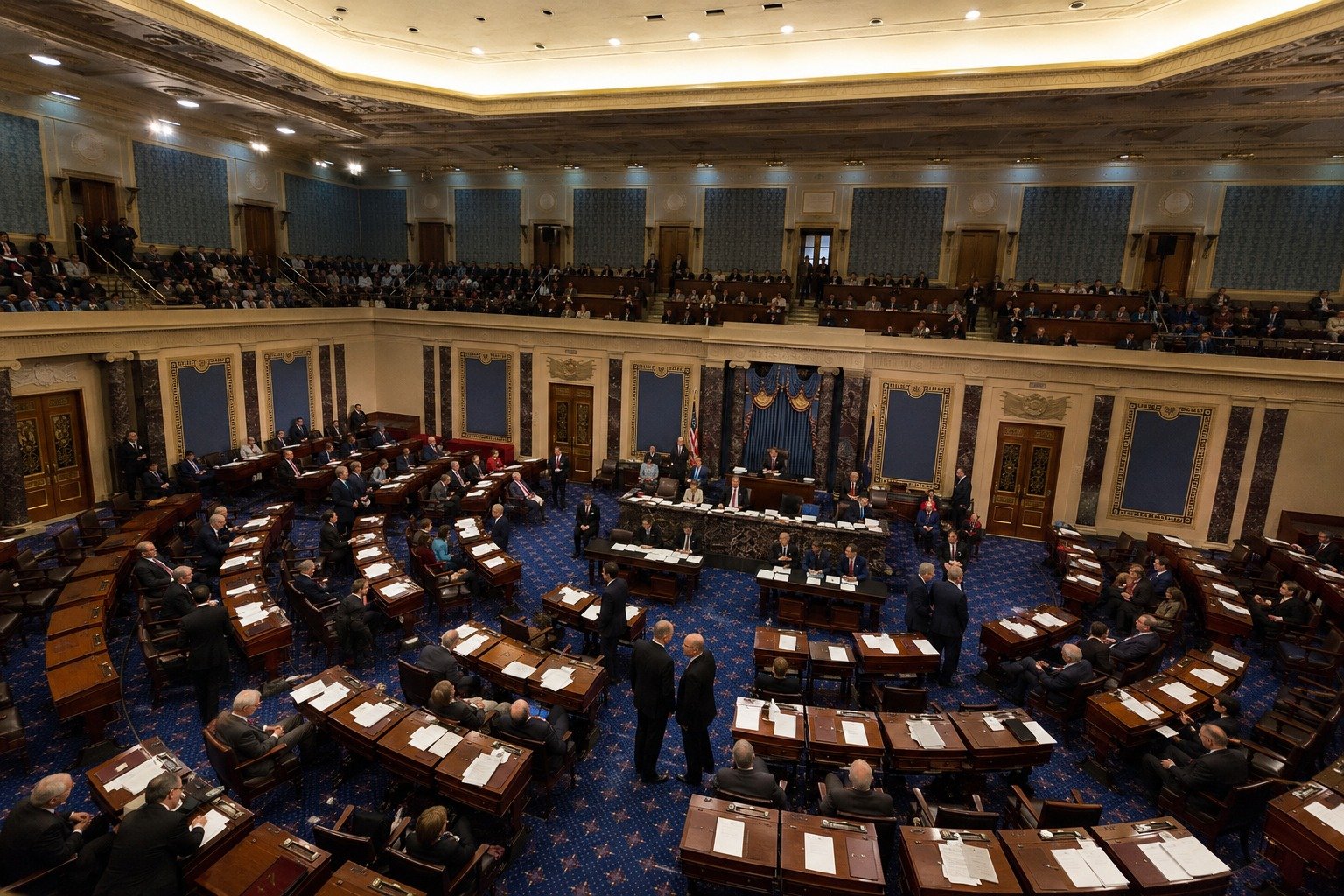
Three Senate Republicans crossed party lines on Thursday to vote for banning a $1.8 billion Justice Department fund tied to President Donald Trump – and even with their support, the effort to kill it fell a single vote short.
The amendment, brought by Senate Minority Leader Chuck Schumer, failed 49 to 50. It would have blocked the DOJ from establishing the so-called “anti-weaponization” fund, a pot of money critics have spent weeks warning could become a payout vehicle for politically connected allies. The narrow margin laid bare a growing fracture inside the Republican conference.
Three Republicans Break Ranks
Senators Susan Collins of Maine, Dan Sullivan of Alaska, and Jon Husted of Ohio joined every Democrat in supporting Schumer’s amendment. All three face difficult reelection campaigns this November, and their votes signaled that the fund had become a political liability they were unwilling to carry. The rest of the Republican caucus held firm, and the measure died on the floor.
For Schumer and Senate Democrats, the vote was a chance to force Republicans on the record. For GOP leadership, it was a test of discipline that they passed by the slimmest possible count – one vote.
What Is the “Anti-Weaponization” Fund?
At the heart of the dispute is a $1.8 billion fund connected to a settlement between Trump and the Internal Revenue Service over the leak of his tax returns. The administration has described it as a mechanism to compensate people who believe the federal government wrongly targeted them.
Critics see something very different. They warn the fund could end up directing money to individuals who claim they were victimized by the government – including, they argue, some who took part in the January 6, 2021 attack on the U.S. Capitol. Supporters reject that characterization and frame the fund as a legitimate remedy for government overreach. That gap in interpretation is exactly what made the vote so charged.
A Republican Party Divided
The floor fight exposed a real split inside the party. GOP leaders spent days working to head off a revolt from a small group of senators who wanted the fund explicitly killed in writing before they would agree to support a larger immigration enforcement bill the amendment was attached to.
That maneuvering reflects the bind leadership found itself in: hold the line on the fund and risk losing votes on priority legislation, or cave to the holdouts and hand Democrats a victory. In the end, leadership kept just enough members in line to defeat the amendment, but the three defections showed how thin that margin really is.
Mixed Signals From the Administration
Adding to the confusion, acting Attorney General Todd Blanche told House lawmakers earlier in the week that the administration had abandoned the plan entirely. “We are not moving forward with the fund. Period,” he said.
But Trump muddied that message. Speaking to reporters, he called the underlying settlement “very important” and, when asked whether the fund was dead, said he did not know whether it was truly finished or simply on hold. The conflicting statements left lawmakers unsure whether they were voting on a live proposal or a political ghost.
What This Means for Americans
For ordinary Americans, the fight is about more than $1.8 billion. It is a question of how public money is used, who gets to decide, and whether the people in power face real checks when they reach for taxpayer dollars. With the administration sending mixed signals and a handful of senators willing to break ranks, the issue is far from settled – and how it resolves could shape the political battles heading into November.
Stay informed on the stories that matter most. Follow Your Daily Updates on Facebook and bookmark yourdailyupdates.news for breaking news and analysis.