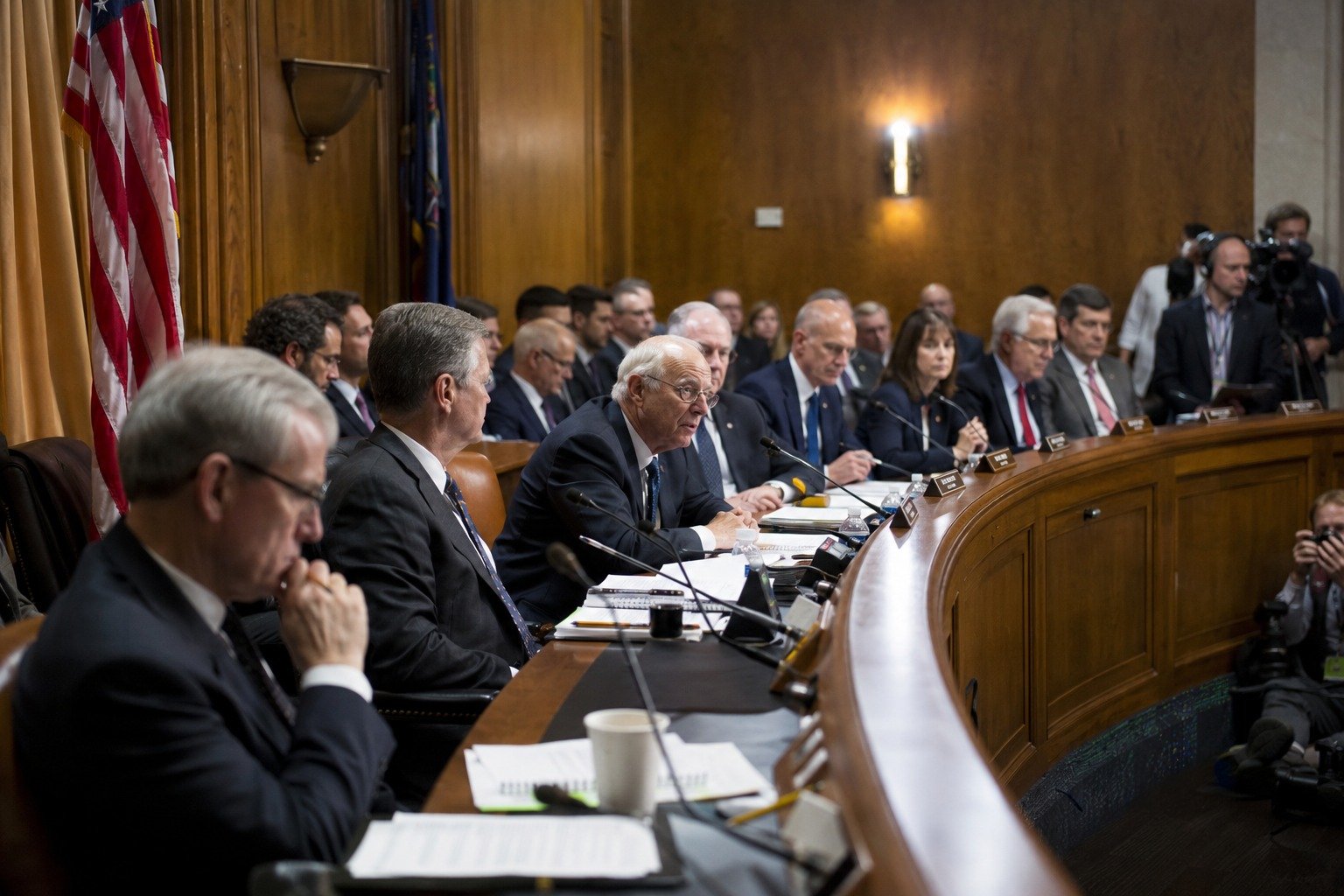
A sitting member of Congress wants her own colleagues put to the test — and the proposal is reigniting one of the most uncomfortable debates in American politics: how old, or how impaired, is too old to hold federal power?
Rep. Marie Gluesenkamp Perez, a Democrat from Washington state, recently proposed an amendment that would direct the Office of Congressional Conduct to develop a standard for measuring whether a lawmaker can still perform the duties of office “unimpeded by significant irreversible cognitive impairment.” In plain terms, it would create a formal way to flag members who may no longer be mentally fit to serve.
Why This Came Up Now
The timing is not random. Nearly 120 members of Congress are now 70 or older, and the average age on Capitol Hill has been climbing for years. Questions about the age, health, and sharpness of the people running the country have moved from the fringes into the center of the national conversation, raised about figures in both parties.
Gluesenkamp Perez framed her amendment as a transparency-and-accountability measure rather than an attack on any individual. The goal, she has said, is to give the public confidence that the people writing the nation’s laws are still capable of doing the job — the same expectation Americans hold for countless other high-stakes professions.
What the Amendment Actually Did — and Didn’t Do
It is important to be clear about where this stands. This was a proposal, not a new law. The amendment was raised in the House Appropriations Committee, where it proved unpopular and did not advance out of committee. There is no mandatory cognitive test for members of Congress today, and none is currently moving toward becoming one.
The measure would not have created a pass-or-fail exam that instantly removed lawmakers from office. Instead, it directed the Office of Congressional Conduct to develop a standard — a framework that could open the door to ethics review in cases where a member’s capacity to serve is genuinely in question. Despite the committee setback, Gluesenkamp Perez has said she plans to keep pushing the idea.
The Case For — and Against
Supporters argue the logic is straightforward. Commercial pilots face regular medical and cognitive screening. Surgeons, air traffic controllers, and even everyday commercial drivers operate under fitness standards. Why, supporters ask, should the people who hold some of the most consequential decision-making power in the world be the only ones who never have to demonstrate they are still up to the task?
Critics push back hard. They warn that a “cognitive test” for elected officials could easily be weaponized as a political tool to force out opponents a sitting majority simply does not like. Who designs the test? Who scores it? And what happens when “fitness” becomes a matter of partisan interpretation? Voters, they argue, already render that judgment at the ballot box, and that is where the decision should stay.
What This Means for Americans
For voters, the debate cuts to a basic question of trust in government. Whether or not a formal test ever becomes reality, the conversation reflects a broader frustration: many Americans feel the people representing them are increasingly distant in age and circumstance from the lives they govern. That frustration is unlikely to fade, even after a single amendment dies quietly in committee.
Stay informed on the stories that matter most. Follow Your Daily Updates on Facebook and bookmark yourdailyupdates.news for breaking news and analysis.