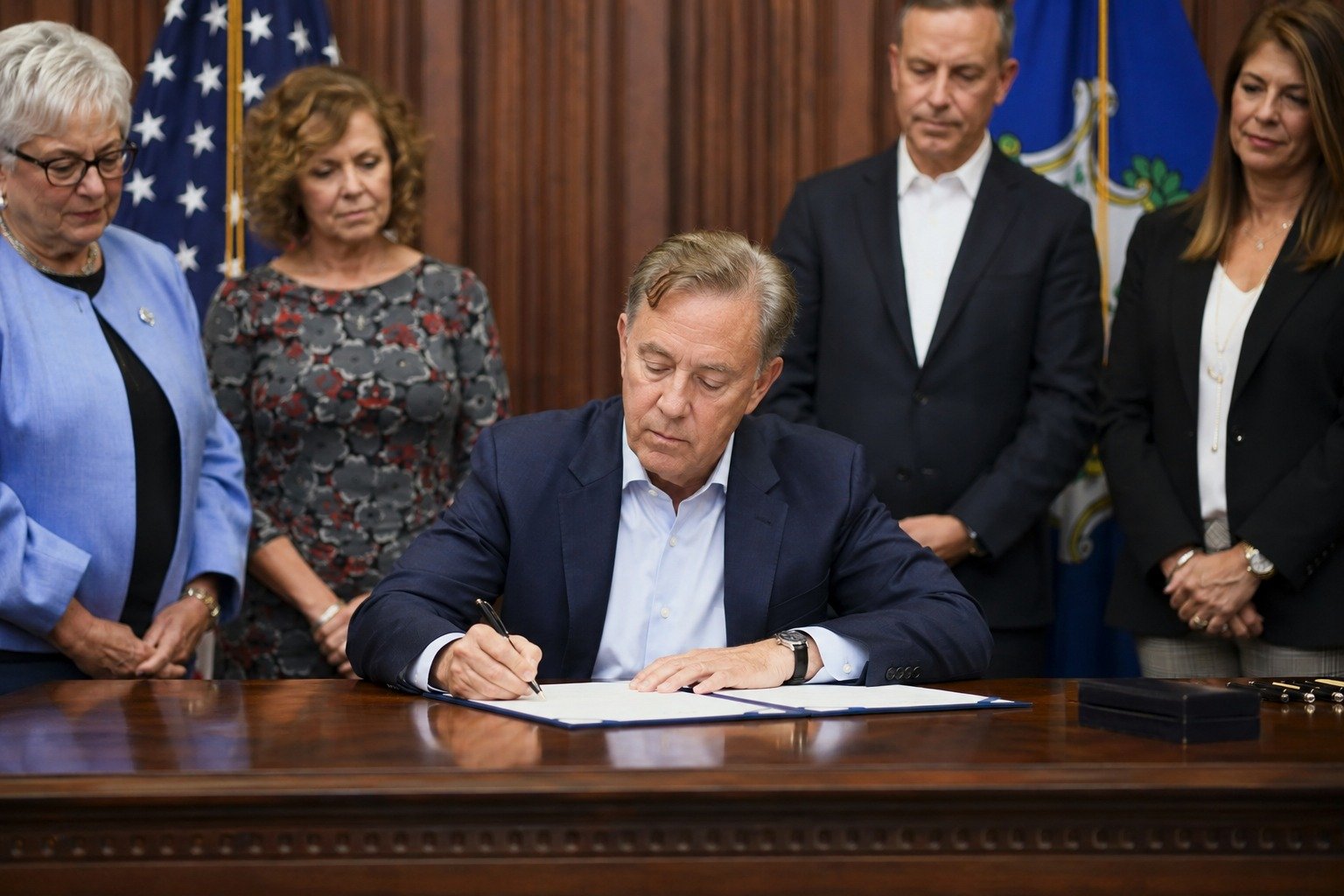
Connecticut has drawn a new legal line around its schools, hospitals, and churches. Governor Ned Lamont signed Senate Bill 397 into law, requiring federal immigration agents to obtain a warrant signed by a judge before making civil arrests at a long list of sensitive locations across the state.
The measure cleared the state Senate 24-10 and the House 91-53 before reaching the governor’s desk. It is one of the most expansive state-level limits on federal immigration enforcement passed this year, and it sets up a likely test of how far a state can go in restricting how federal agents operate within its borders.
What the Law Requires
Under SB 397, U.S. Immigration and Customs Enforcement and other federal officers will need a judicial warrant — not the administrative warrants ICE typically issues itself — before carrying out civil immigration arrests at protected sites. The list of those sites is broad and detailed.
It covers schools from preschool through universities, licensed hospitals and urgent care centers, houses of worship, food banks, homeless shelters, domestic violence shelters, child care centers, playgrounds, school bus stops, and disaster relief sites. The idea, supporters say, is that people should not have to fear arrest while dropping a child at school, seeking emergency medical care, or attending religious services.
More Than Just Warrants
The law reaches well beyond the warrant requirement. It creates a civil cause of action allowing Connecticut residents to file lawsuits against federal officers for alleged constitutional violations — a provision modeled on existing civil rights frameworks but extended to reach federal agents directly.
It also bars federal officers from wearing masks to conceal their identities during enforcement operations, a response to growing public concern about unidentified agents. And it restricts how data collected by automated license plate readers can be used, limiting retention of that data and barring its use for immigration enforcement.
Support and Opposition
The bill drew intense public interest. Hundreds of residents testified in favor during committee hearings earlier in the year, framing the measure as a way to protect families and keep essential services accessible without fear. Faith leaders, educators, and medical providers were among those who pushed for the protections.
Critics argue Connecticut is overstepping its authority by attempting to dictate how federal agents enforce federal law. They contend that immigration enforcement is a federal power and that a state cannot impose warrant requirements or mask bans on federal officers. Legal analysts widely expect the law to face a court challenge, with the central question being whether the state can enforce these limits at all.
What This Means for Connecticut Residents
For now, the practical impact is on hold. The protected-location provisions do not take effect until October 1, giving both supporters and opponents months to prepare — and giving the courts time to weigh in before the rules are tested in the field. If the law survives a legal challenge, it could become a template other states look to as they debate their own limits on federal enforcement.
The broader fight is about where the line falls between local protections and federal authority — a question that has divided states, courts, and communities for years and shows no sign of being settled soon.
Stay informed on the stories that matter most. Follow Your Daily Updates on Facebook and bookmark yourdailyupdates.news for breaking news and analysis.