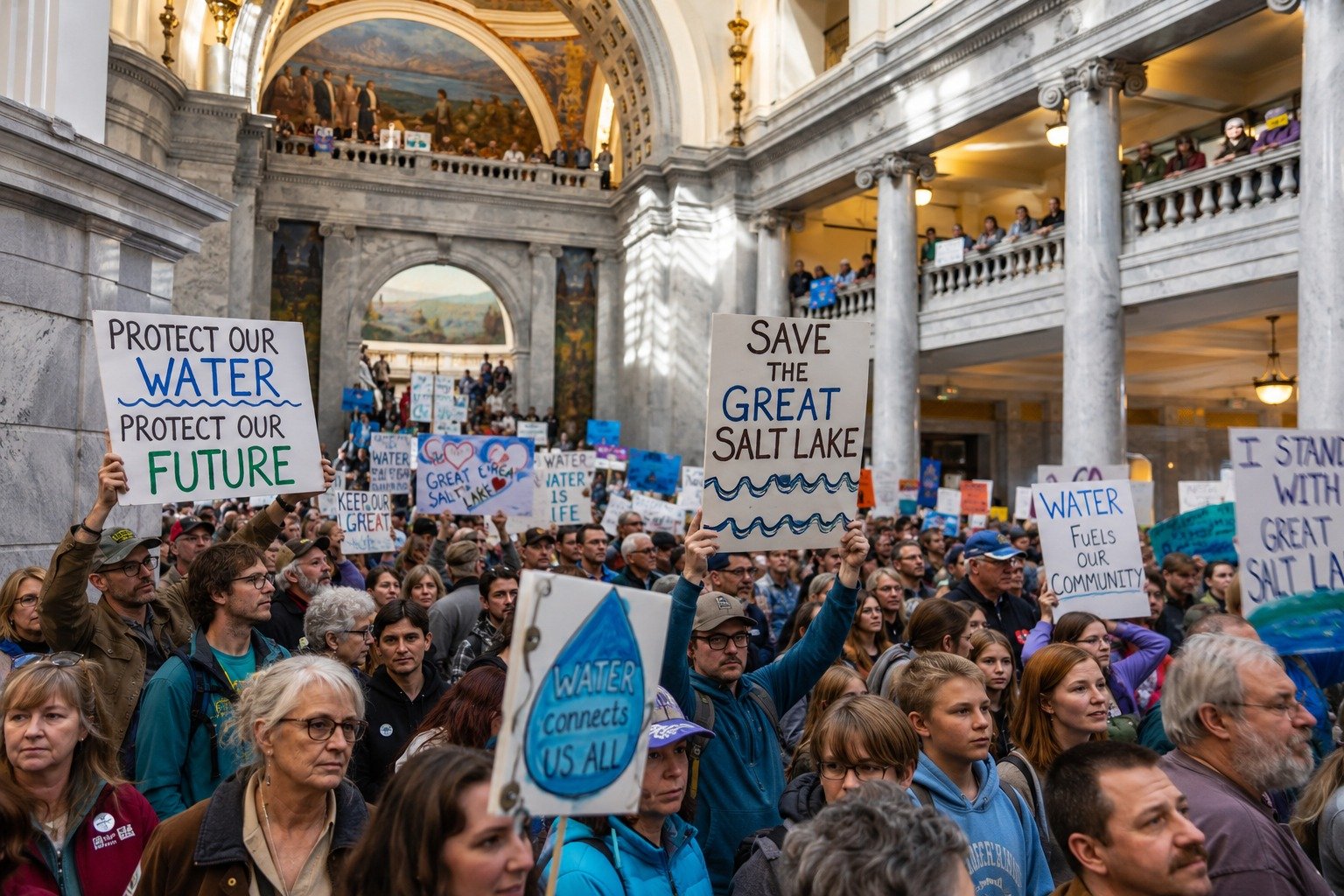
More than 600 people crowded into the Utah State Capitol this week to oppose a data center the size of a small city – and it marked the second rally at the Capitol in under two weeks, a sign that local opposition is growing rather than fading.
The project at the center of the fight is called Stratos, nicknamed “Wonder Valley.” It is backed by Kevin O’Leary, the “Shark Tank” investor widely known as “Mr. Wonderful.” The proposal calls for a roughly 40,000-acre, 9-gigawatt artificial intelligence data center paired with a natural gas plant in Box Elder County, in the northern part of the state, just north of the shrinking Great Salt Lake. The figure floated for the full buildout is around $100 billion.
Why Residents Are Alarmed
The scale of the project is what has so many Utahns worried. By the numbers being discussed publicly, Stratos would more than double the amount of electricity the entire state of Utah currently uses, and it would significantly increase the state’s carbon footprint – by some estimates around 50 percent.
But the concern that has galvanized the protests most is water. The facility is projected to require roughly 16.6 billion gallons of water every year – the equivalent of about 25,000 Olympic-size swimming pools. The land sits just north of the Great Salt Lake, a body of water that has already been shrinking for years and serves as a critical sanctuary for migratory birds. Residents who live nearby fear that a water demand of that size could drain the lake even faster.
O’Leary Pushes Back
O’Leary has not backed away from the project. Following one local vote, he claimed – without offering evidence – that more than 90 percent of the people protesting were paid to do so and had been bussed in, including from outside the state. Reporting by the Salt Lake Tribune disputed that claim.
The dispute has only intensified the local backlash. For many residents, the suggestion that their opposition was manufactured was an insult to a grassroots movement they say is rooted in genuine concern for their water, their air, and the future of their communities.
State Leaders Step In
The pressure has reached the highest levels of Utah’s government. Utah Senate President Stuart Adams publicly asked O’Leary to shrink the project by 75 percent – cutting it from 40,000 acres down to 10,000 – and laid out six demands for the developers aimed at limiting the project’s impact on the region.
The grassroots effort has gathered steam as well. Roughly 6,000 people signed a letter to Governor Spencer Cox asking him to protect their community and the Great Salt Lake. Box Elder County commissioners had earlier voted to advance the project, and amid the mounting backlash, the governor moved to issue new rules governing data center development in the state.
What This Means for Americans
The Utah fight is a preview of a debate playing out across the country. The artificial intelligence boom has triggered a wave of enormous data centers, and the facilities that power it consume staggering amounts of electricity and water. Communities from Texas to the Mountain West are now weighing the promise of jobs and investment against the strain these projects put on local power grids and water supplies. For ordinary residents, the question is whether the infrastructure powering the modern economy is being built responsibly – or faster than local governments can manage.
For now, the future of Wonder Valley is unsettled. The developers face new demands from state leaders, a skeptical public, and a governor under pressure to act. Whether the project moves forward at its current size, shrinks dramatically, or stalls altogether remains an open question.
Stay informed on the stories that matter most. Follow Your Daily Updates on Facebook and bookmark yourdailyupdates.news for breaking news and analysis.