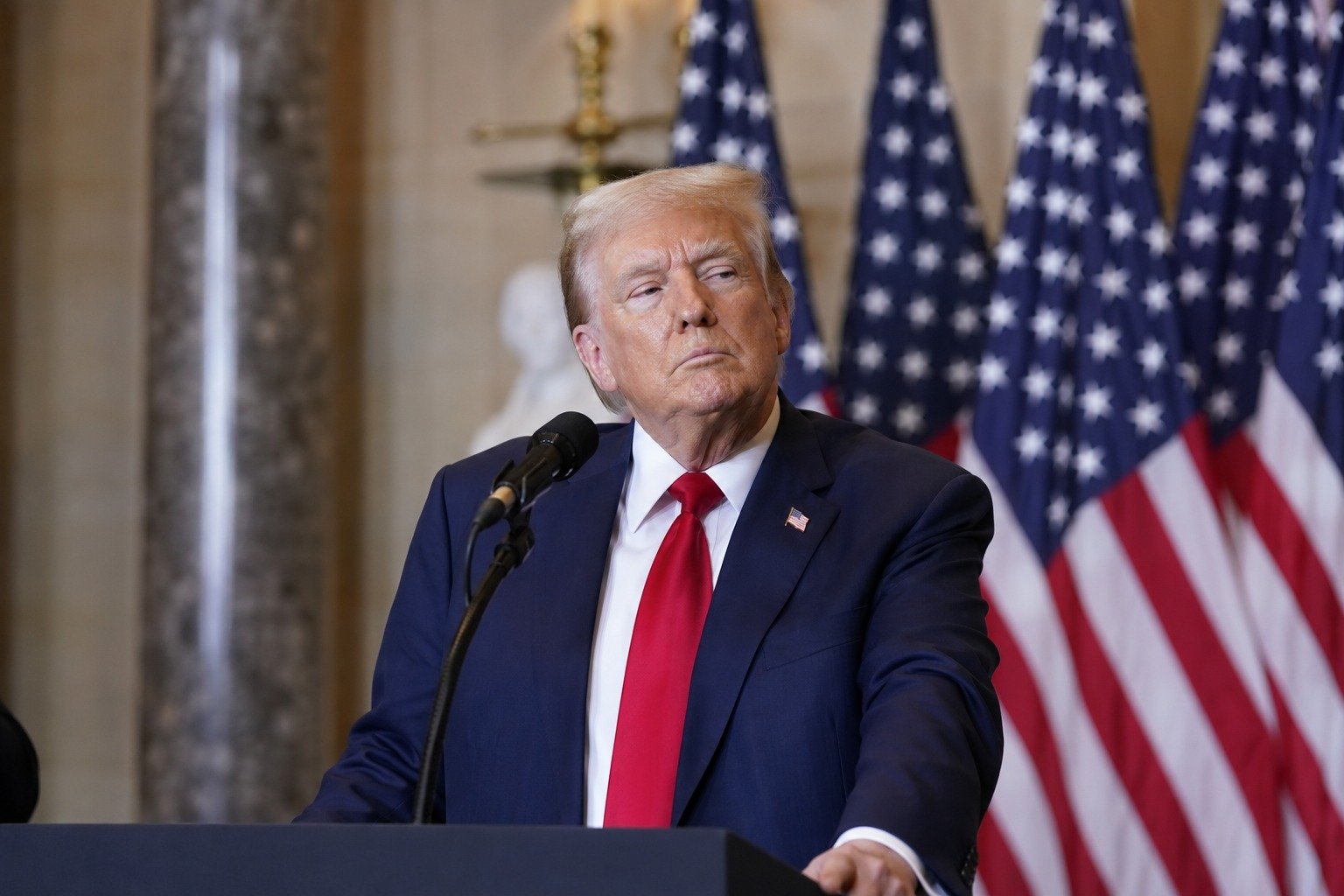
The acting head of the U.S. Justice Department says Donald Trump was on a direct path to prison, and that only his 2024 election victory kept him out of a cell. Acting Attorney General Todd Blanche – the very lawyer who defended Trump in his New York criminal trial – made the claim on national television, telling Fox News host Sean Hannity that Trump “absolutely” would have served time behind bars had he lost the race for the White House.
The Man Making the Claim
Blanche is not a distant observer. Before stepping into senior leadership at the Department of Justice, he served as the lead attorney on Trump’s defense team during the Manhattan hush-money case. That gives his assessment unusual weight – he sat at the defense table, reviewed the evidence, and knew exactly how exposed his client was. When the man who ran the defense says prison was a near-certainty, it is a striking admission from inside the room.
In that 2024 trial, a Manhattan jury convicted Trump on 34 felony counts of falsifying business records. Prosecutors tied the records to a $130,000 payment made in the closing weeks of the 2016 campaign. The conviction made Trump the first former president in American history to be found guilty of felony crimes.
The Cases That Were Closing In
Blanche laid out for Hannity just how many fronts Trump was fighting on at once. There was a federal case in Washington, D.C. There was the classified documents case in Florida, which had been dismissed but which prosecutors were actively appealing. And there was the New York judge overseeing the felony conviction – a judge Blanche described as leaving “no scenario” in which Trump would have avoided prison time.
That last point is the heart of the claim. According to Blanche, sentencing in the New York case was never going to go Trump’s way if he remained a private citizen. The combined weight of the cases, he argued, made incarceration not just possible but inevitable.
What Actually Happened After the Win
The outcome looked very different once Trump won. In New York, the judge ultimately granted Trump an unconditional discharge. That ruling preserved his status as a convicted felon – the conviction stands on the record – but it spared him from any further penalty. No jail time. No fine. No probation.
On the federal side, the special counsel moved to drop the cases against the president-elect, citing the long-standing Justice Department policy against bringing criminal proceedings against a sitting president. In a matter of weeks, the legal threats that had defined Trump’s year largely evaporated.
Reactions and Implications
The remark has landed differently across the political spectrum. To Trump’s supporters, Blanche’s words confirm a belief they have held all along – that the prosecutions were a coordinated effort that voters ultimately overruled at the ballot box. To his critics, the same words read as an admission that an election effectively halted accountability a jury had already delivered.
Both readings point to the same uncomfortable fact: the legal system and the electoral system reached opposite conclusions about the same man, and the election won. That tension is now baked into the historical record, and it raises lasting questions about how the country handles criminal cases against candidates for its highest office.
What This Means for Americans
For everyday Americans, the episode is more than political theater. It tests a basic principle – whether the law applies the same way to everyone, or whether winning enough votes can change the equation. However you come down on the question, the precedent set here will be studied and argued over for years, and it will shape how future cases involving powerful officials are handled.
Stay informed on the stories that matter most. Follow Your Daily Updates on Facebook and bookmark yourdailyupdates.news for breaking news and analysis.