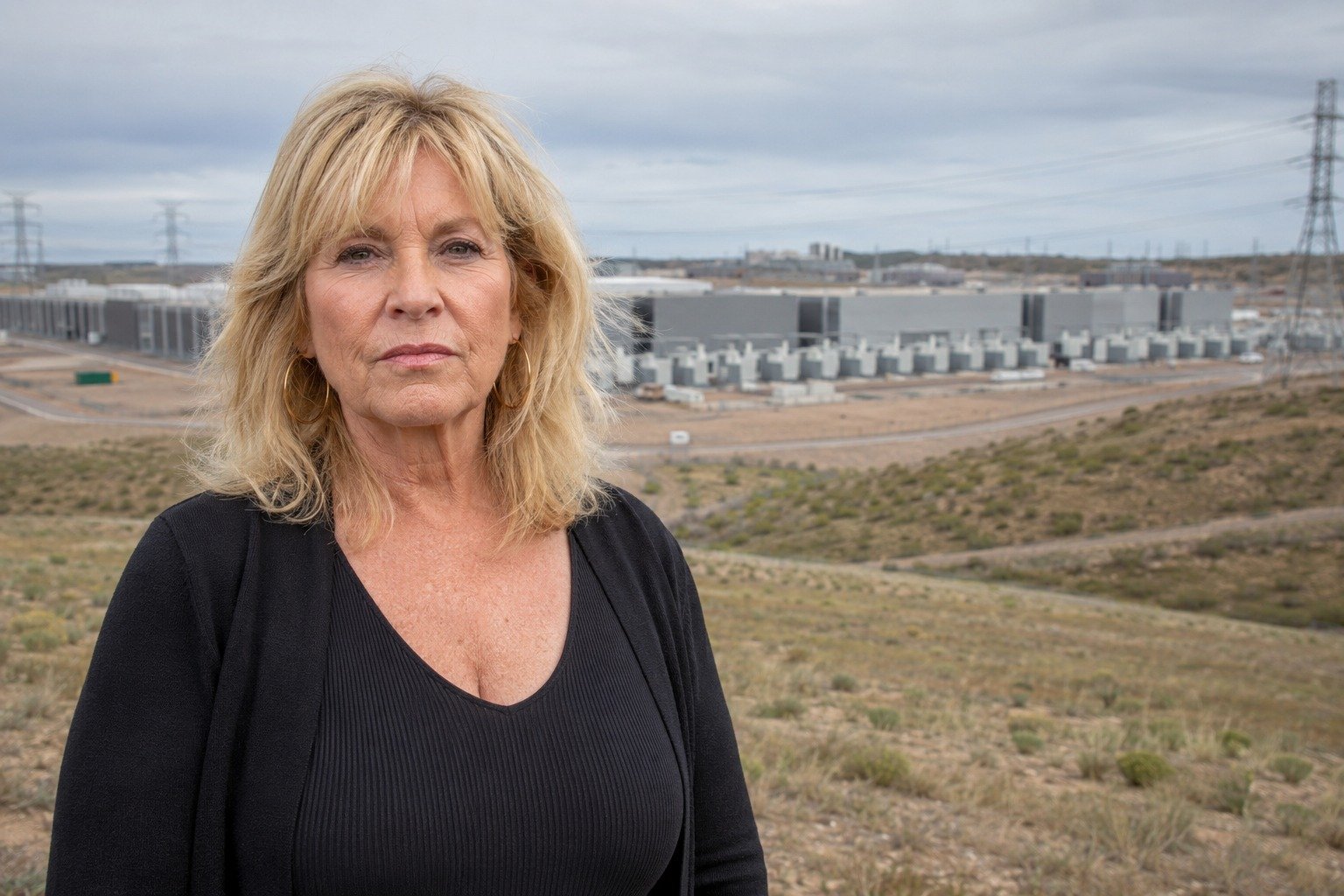
The woman who once took down a billion-dollar utility company over contaminated water has a new target: the explosion of artificial intelligence data centers reshaping communities across America. Erin Brockovich has launched a nationwide interactive map that tracks these facilities and lets ordinary residents report what is happening near their homes.
The response was swift. As of late May 2026, people in 2,716 communities across the country had already filed reports through the project, flagging concerns about the sprawling facilities now multiplying from coast to coast.
Why Brockovich Is Stepping In
Brockovich built her reputation decades ago by giving ordinary people a way to fight back against powerful interests they could not take on alone. Her work against Pacific Gas and Electric, dramatized in the Oscar-winning film that bears her name, turned a single legal assistant into a household name for environmental accountability.
Now she is applying that same playbook to one of the fastest-growing industries on the planet. AI data centers are being built at a breakneck pace to power the chatbots, image generators, and cloud services that companies are racing to deploy. But that growth has come with a footprint that many neighboring communities say they were never warned about. Brockovich’s pitch is simple: gather the scattered local complaints into one national picture so the public can see exactly what is being built, and where.
What Residents Are Reporting
The map lets residents upload photos, pin the location of facilities near them, and submit firsthand accounts of what they are seeing and hearing. The data that has poured in paints a consistent picture of what worries people most.
At the top of the list is water. Data centers consume enormous volumes of it to cool the servers that run artificial intelligence around the clock, and many towns fear their local supply simply cannot absorb that kind of demand. Right behind water came electricity, with residents pointing to soaring energy use and the prospect of higher utility bills as massive new facilities plug into the grid.
Concerns about health and wildlife rounded out the list, along with complaints about the constant noise generated by industrial cooling systems and backup generators that run day and night. For people living a few hundred feet from one of these campuses, that hum never stops.
The Debate Over the Boom
Supporters of Brockovich’s project call it long-overdue transparency on an industry that has been expanding faster than local governments can keep up with. They argue that the companies building these centers already know precisely where they are headed next, and that residents deserve the same visibility.
Skeptics counter that data centers are the backbone of the technology the entire economy is now racing to adopt, from medicine to manufacturing to national defense. They contend that the jobs, tax revenue, and investment these facilities bring can outweigh the strain, and that slowing construction risks ceding ground in a global technology race.
What This Means for Americans
For millions of people, the AI boom has felt like something happening somewhere else, in server rooms and boardrooms far from daily life. Brockovich’s map makes it local. It turns an abstract national trend into a question every homeowner can ask: is one of these being planned near me, and what will it mean for my water, my power bill, and my quiet street? With billions of dollars in data center construction now planned nationwide, that question is heading to a lot more town halls.
Stay informed on the stories that matter most. Follow Your Daily Updates on Facebook and bookmark yourdailyupdates.news for breaking news and analysis.