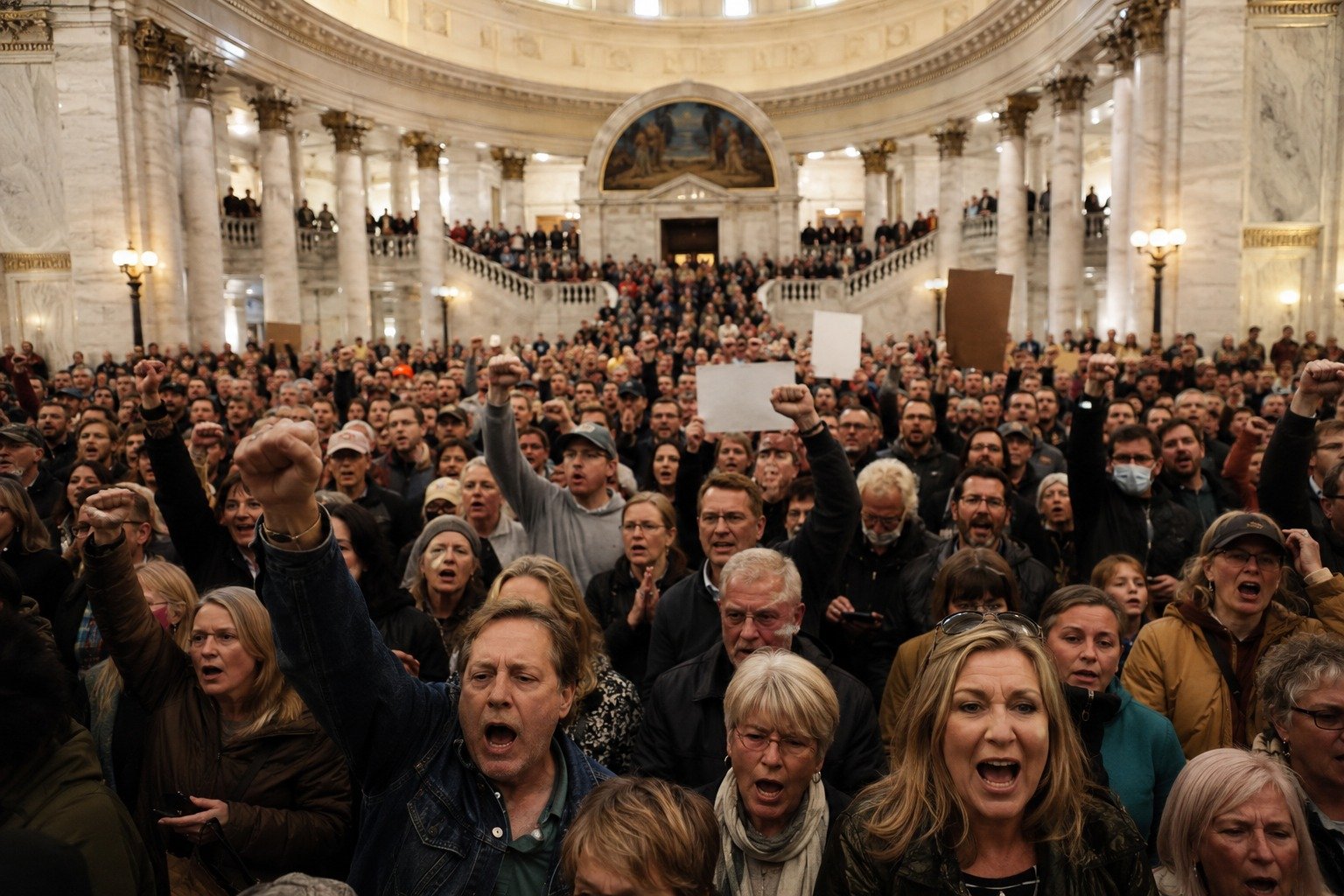
More than 600 people crowded into the Utah State Capitol this week to oppose a proposed data center the size of a small city, warning that the project could draw down the water supply feeding the already-shrinking Great Salt Lake. The rally, reported by Salt Lake City station KSL, turned a technical land-and-water question into one of the most visible public fights northern Utah has seen this year.
What Is Being Proposed
The development, known as “Wonder Valley” and also referred to as “Stratos,” would span roughly 40,000 acres in Box Elder County. It is backed by “Shark Tank” investor Kevin O’Leary, who has promoted it as a major economic engine for the region. Supporters frame it as a generational opportunity: a project that could bring jobs, new infrastructure, and billions of dollars in investment to a rural corner of the state, while positioning Utah as a hub for the computing power that increasingly drives the modern economy.
Data centers are the physical backbone of the internet and the artificial intelligence boom — vast warehouses of servers that store data and run the calculations behind everything from streaming video to AI models. They also require enormous amounts of electricity and, critically for this debate, large volumes of water to keep their equipment cool.
Why Residents Are Worried
For the residents who packed the Capitol, the central concern comes down to one word: water. The Great Salt Lake has been shrinking for years, and a decline in its water level carries consequences that reach far beyond the shoreline. A lower lake exposes dry lakebed that can send dust — sometimes laced with naturally occurring toxins — into the air that millions of people along the Wasatch Front breathe. It also threatens the wildlife and the brine shrimp industry that depend on the lake, and it can ripple through the regional economy.
Opponents fear a development of this scale could accelerate that decline. If a 40,000-acre data center campus consumes water at the levels critics anticipate, they argue, it could pull from a resource that is already stretched thin — and once the lake drops further, reversing the damage becomes far more difficult. That fear is what drew hundreds of people to the seat of state government rather than a local town hall.
The Case for the Project
Backers of the project push back on the worst-case framing. They argue the facility could be designed with water-efficient cooling technology — closed-loop systems and air cooling, for example, that dramatically reduce the amount of water consumed compared with older designs. They also point to the long-term economic benefits for a part of the state that has fewer high-paying employment options, and to the surging national demand for computing capacity that has to be built somewhere.
The two sides, for now, remain far apart. Opponents want firm, enforceable limits on water use before anything moves forward; supporters say the project can be engineered responsibly and shouldn’t be rejected on fears alone. The size of the crowd at the Capitol made one thing clear: any plan that touches the Great Salt Lake’s water will face intense public scrutiny.
What This Means for Americans
The fight in Utah is a preview of a debate playing out across the country. As AI and cloud computing expand, communities everywhere are being asked to host enormous data centers that consume water and power — and to weigh the promised jobs and investment against the strain on local resources. How Utah handles the tension between economic growth and an irreplaceable natural resource could become a model, or a cautionary tale, for the rest of the nation.
Stay informed on the stories that matter most. Follow Your Daily Updates on Facebook and bookmark yourdailyupdates.news for breaking news and analysis.