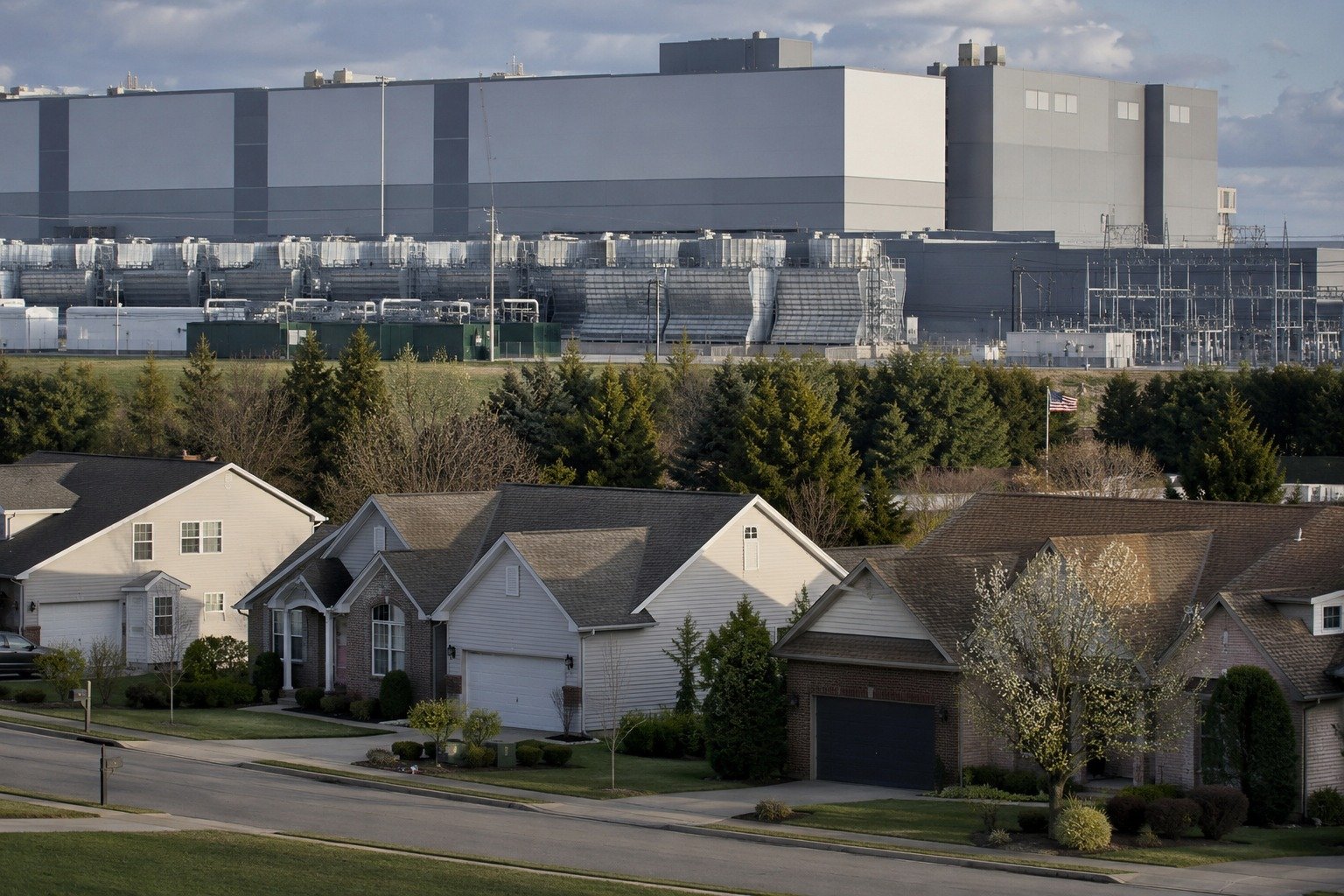
A new Gallup poll has put a hard number on a fight playing out in communities across the country: seven in ten Americans say they do not want an AI data center built near where they live. The survey found that 71% would oppose a data center in their area, with nearly half saying they “strongly oppose” the idea. Only about one in four said they would welcome one nearby.
What the Poll Found
The survey, conducted in March 2026, asked U.S. adults how they would feel about a large artificial intelligence data center being constructed in their community. The results were lopsided. Just 27% said they would support such a project nearby, while 71% lined up in opposition. Among those opposed, 48% described themselves as “strongly” against it rather than simply leaning that way.
What makes the finding notable is how broadly the opposition stretches. It was not confined to one region, one age group, or one political party. Majorities across the board said they would rather not have one of these facilities in their backyard.
A Rare Issue That Crosses Party Lines
In an era when public opinion splits sharply along partisan lines on almost everything, data centers stand out as an exception. The poll found opposition among Republicans, Democrats, and independents alike. There were differences in intensity rather than direction: Democrats were more likely to say they “strongly” oppose a nearby facility than Republicans, and women registered stronger opposition than men. But the headline number held steady no matter how the data was sliced.
That kind of cross-party agreement is unusual, and it suggests the concerns driving the opposition are practical rather than ideological. People are not reacting to a political talking point. They are reacting to what they believe a sprawling industrial computing hub would do to the place they call home.
Why People Are Saying No
The reasons cited by opponents were strikingly concrete. About half of those against a nearby data center pointed to the strain these facilities place on local resources, with water and energy use coming up repeatedly. Modern AI data centers consume enormous amounts of electricity and, in many designs, large volumes of water for cooling — and they run around the clock.
Beyond resource use, respondents raised worries about rising utility costs, pollution, declining quality of life, and the constant hum of equipment operating every hour of the day. For many, the question is not whether AI is useful, but whether their own neighborhood should bear the physical footprint of the technology.
The Case Supporters Make
Supporters of data center construction are not silent. They argue that these facilities bring jobs, tax revenue, and investment to the regions that host them. They also point out that data centers are the physical backbone of the AI economy — the tools and services that millions of Americans already use every day depend on exactly this kind of infrastructure existing somewhere.
Critics counter that the costs tend to land squarely on local communities — the water, the power demand, the noise — while the broader economic benefits flow elsewhere. That tension, between local burden and national benefit, is at the heart of nearly every data center fight now unfolding.
What This Means for Americans
This is not an abstract debate. With billions of dollars in data center construction now planned nationwide to keep pace with the AI boom, more and more towns are going to face this exact decision — sometimes whether they asked for it or not. The Gallup numbers suggest that when those proposals arrive, local officials are likely to encounter organized, bipartisan resistance from residents who simply do not want the facility next door.
For homeowners, that could mean fights at town halls over zoning, utility rates, and land use. For the tech industry, it means the easy assumption that communities will welcome the investment may no longer hold.
Stay informed on the stories that matter most. Follow Your Daily Updates on Facebook and bookmark yourdailyupdates.news for breaking news and analysis.