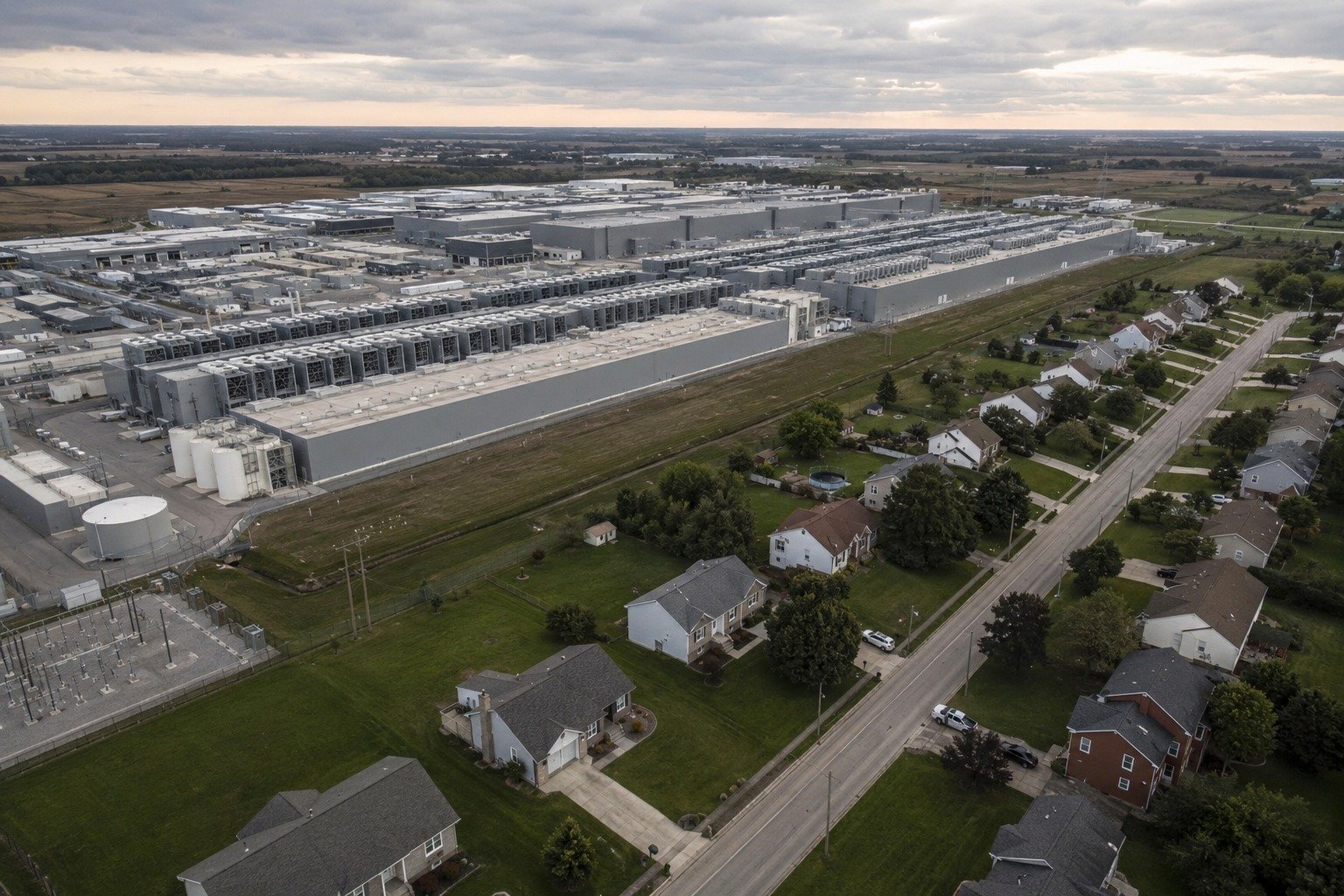
A new Gallup poll has put a hard number on a fight that has been brewing in towns across the country: roughly 7 in 10 Americans say they do not want an AI data center built anywhere near where they live. The finding cuts across party lines and points to a growing public unease with the physical footprint of the artificial intelligence boom.
The survey, conducted March 2 through March 18, 2026, among 1,000 U.S. adults in all 50 states and the District of Columbia, found that 71% oppose having one of these massive computing hubs in their area. Nearly half – 48% – said they were strongly opposed. Only about 1 in 4 respondents, 27%, said they would welcome one nearby.
More Opposed Than a Nuclear Plant
To put the depth of that opposition in perspective, Gallup found that Americans are now more resistant to a data center next door than to a nuclear power plant. In the same survey, 53% said they would oppose a nuclear energy plant in their area – a full 18 points lower than the 71% who object to a data center. For an industry that markets itself as clean, quiet, and modern, finding itself ranked below nuclear power in the public’s comfort level is a striking result.
Data centers are the warehouses of the AI era – sprawling, largely windowless campuses packed with servers that train and run the AI tools millions of people now use every day. As demand has exploded, so has construction, and the buildings have started showing up next to neighborhoods that never expected an industrial neighbor.
An Issue That Crosses Party Lines
What makes the Gallup numbers unusual is how little they split along partisan lines. In an era when almost every issue divides neatly into red and blue, opposition to nearby data centers shows up across the board. Gallup found that 56% of Democrats, 48% of independents, and 39% of Republicans expressed a “not in my backyard” attitude toward the facilities.
There is a gap between the parties, but every group lands on the skeptical side of the ledger. It is one of the rare questions where neighbors who disagree about nearly everything else find themselves nodding along together at the town hall.
Why People Are Saying No
The concerns driving opposition are practical rather than ideological. About half of opponents pointed to the enormous resources these centers consume, with water use and electricity use each cited by roughly 18%. Others raised worries about pollution, including noise, and about the strain on the local power grid that could push utility bills higher for everyone.
Roughly one in five opponents mentioned quality-of-life issues – more traffic, more construction, and a preference that the land be used for something else. A similar share cited economic worries, including the cost of living and who ultimately pays for the infrastructure these projects require.
The Case for Building
Supporters are not silent. Two-thirds of those who favor building data centers in their area point to economic benefits, and 55% specifically cite the prospect of new jobs. Backers argue that the centers bring tax revenue that can fund local schools and services, and that the computing power they provide is the backbone of the technology the modern economy increasingly runs on.
Tech companies, for their part, are not slowing down. Billions of dollars are being poured into new construction to keep pace with surging AI demand, which means more communities are about to face this exact decision – sometimes with little say in the matter.
What This Means for Americans
For millions of people, this is no longer an abstract debate about technology policy. It is a question that could land on their own street, affecting their water, their power bills, their traffic, and their property values. The Gallup data suggests that when the choice gets personal, most Americans – regardless of party – would rather the servers go somewhere else.
Stay informed on the stories that matter most. Follow Your Daily Updates on Facebook and bookmark yourdailyupdates.news for breaking news and analysis.