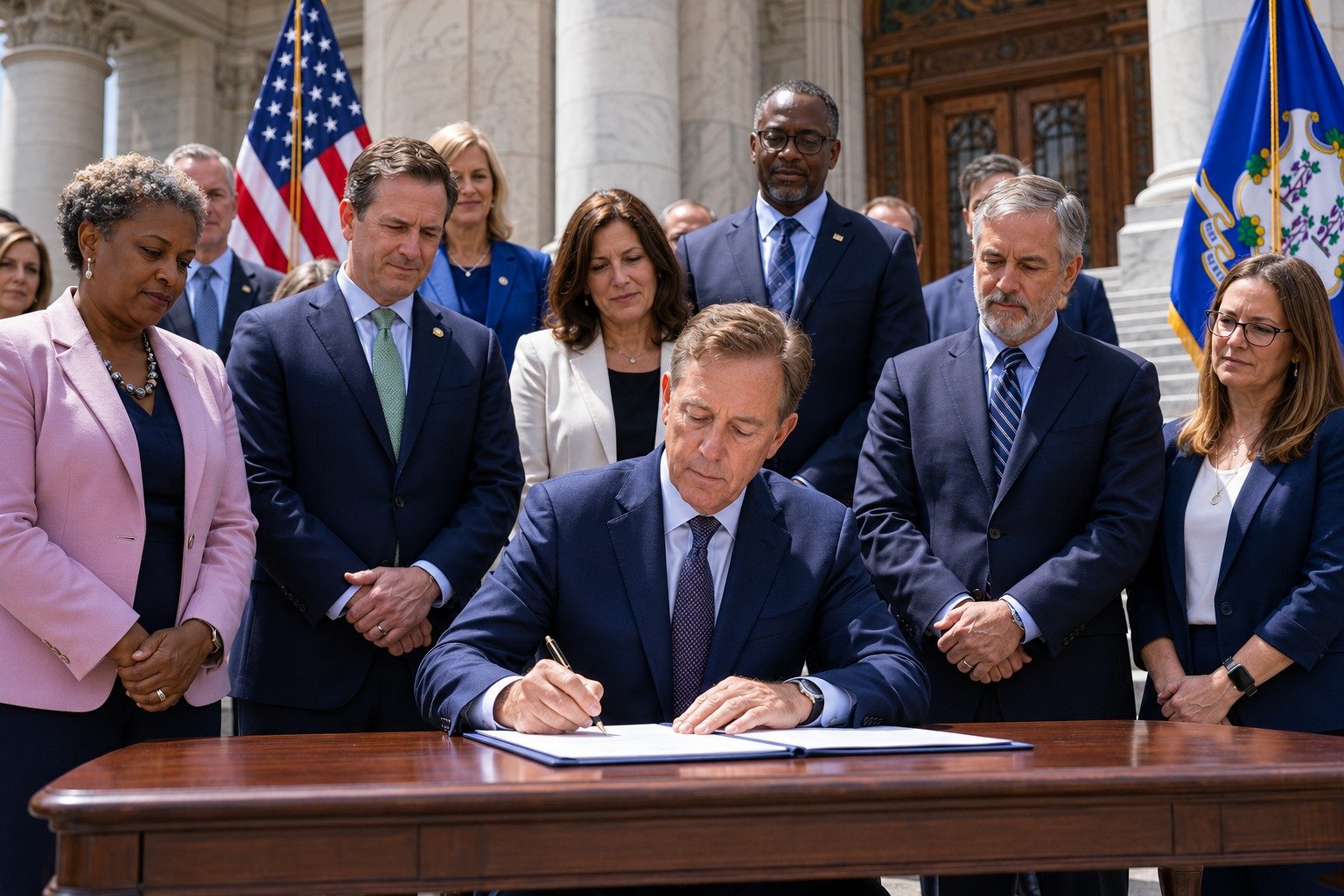
Connecticut has just become one of the most aggressive states in the country at limiting where federal immigration agents can operate. Gov. Ned Lamont signed Senate Bill 397 – formally titled “An Act Concerning Democracy and Government Accountability” – into law this month, barring U.S. Immigration and Customs Enforcement agents from making warrantless arrests inside a defined list of “protected areas” that includes schools, churches, hospitals, courthouses, and social service offices.
The move sets up a direct confrontation between a blue state and the Trump administration over the reach of federal immigration enforcement – and it is likely to land in court.
What the Law Actually Does
At its core, SB 397 establishes “protected areas” where a person cannot be arrested solely on the basis of a civil offense, such as a federal immigration violation. Houses of worship, public and private schools, hospitals, courthouses, and the facilities of social service agencies all fall under that umbrella. Inside those spaces, immigration agents would need a judicial warrant – signed by a judge – rather than the administrative warrants ICE typically issues itself.
But the law reaches beyond geography. It also creates a private right of action, meaning individuals who believe their rights were violated during a detention can sue the agents involved. And it requires federal, state, and local officers to show their faces and wear visible badges or name tags while conducting enforcement actions – a direct response to a wave of viral incidents involving masked, unidentified agents making street arrests across the country.
The section restricting warrantless arrests in protected areas is scheduled to take effect in October, giving agencies and courts a window before it is operational.
A Signing Staged for Maximum Signal
Lamont did not sign the bill quietly behind a desk. He staged the ceremony on the steps of the Connecticut Supreme Court, surrounded by state legislators and supporters – a deliberate visual underscoring that the state intends to defend the law on constitutional grounds. The setting telegraphed the obvious: aggressive federal immigration tactics are shaping up to be a defining wedge issue heading into the 2026 midterm elections.
Connecticut is not alone in testing the limits of state authority over immigration enforcement, but the combination of protected areas, a lawsuit provision, and an identification mandate makes its law one of the broadest attempts yet.
The Case For It
Supporters frame the law as a civil-liberties firewall. Their argument is rooted in everyday consequences: a child should not have to watch a parent dragged out of a classroom, and a sick person should not avoid the emergency room out of fear of being detained. By requiring a judicial warrant in sensitive locations, backers say, the state is simply forcing the federal government to honor the Fourth Amendment’s protections against unreasonable searches and seizures.
Advocates also point to the masking provision as a matter of basic accountability. If an officer is detaining someone, they argue, that officer should be identifiable – both so the public can trust the action is legitimate and so misconduct can be traced to a real person.
The Case Against It
Critics see the law very differently – as a state government attempting to handcuff federal law enforcement. Immigration, they note, is a federal power, and they warn that “protected areas” could function as shields for individuals who already have deportation orders. The provision allowing residents to sue individual agents, opponents argue, will make officers hesitate to do their jobs out of fear of personal liability.
The Trump administration has signaled that it views state laws of this kind as obstruction of federal enforcement, setting the stage for a legal fight that could ultimately reach the federal courts. The central question – whether a state can dictate the terms under which federal agents operate within its borders – is one that judges, not legislators, will likely decide.
What This Means for Americans
For residents of Connecticut, the immediate effect is a new set of rules governing how and where immigration arrests can happen. But the broader stakes are national. If Connecticut’s law survives a court challenge, other states will almost certainly follow with similar “protected areas” statutes. If it is struck down, it will reaffirm the federal government’s authority to enforce immigration law regardless of state objections. Either way, the outcome will shape the balance of power between Washington and the states for years to come.
Stay informed on the stories that matter most. Follow Your Daily Updates on Facebook and bookmark yourdailyupdates.news for breaking news and analysis.