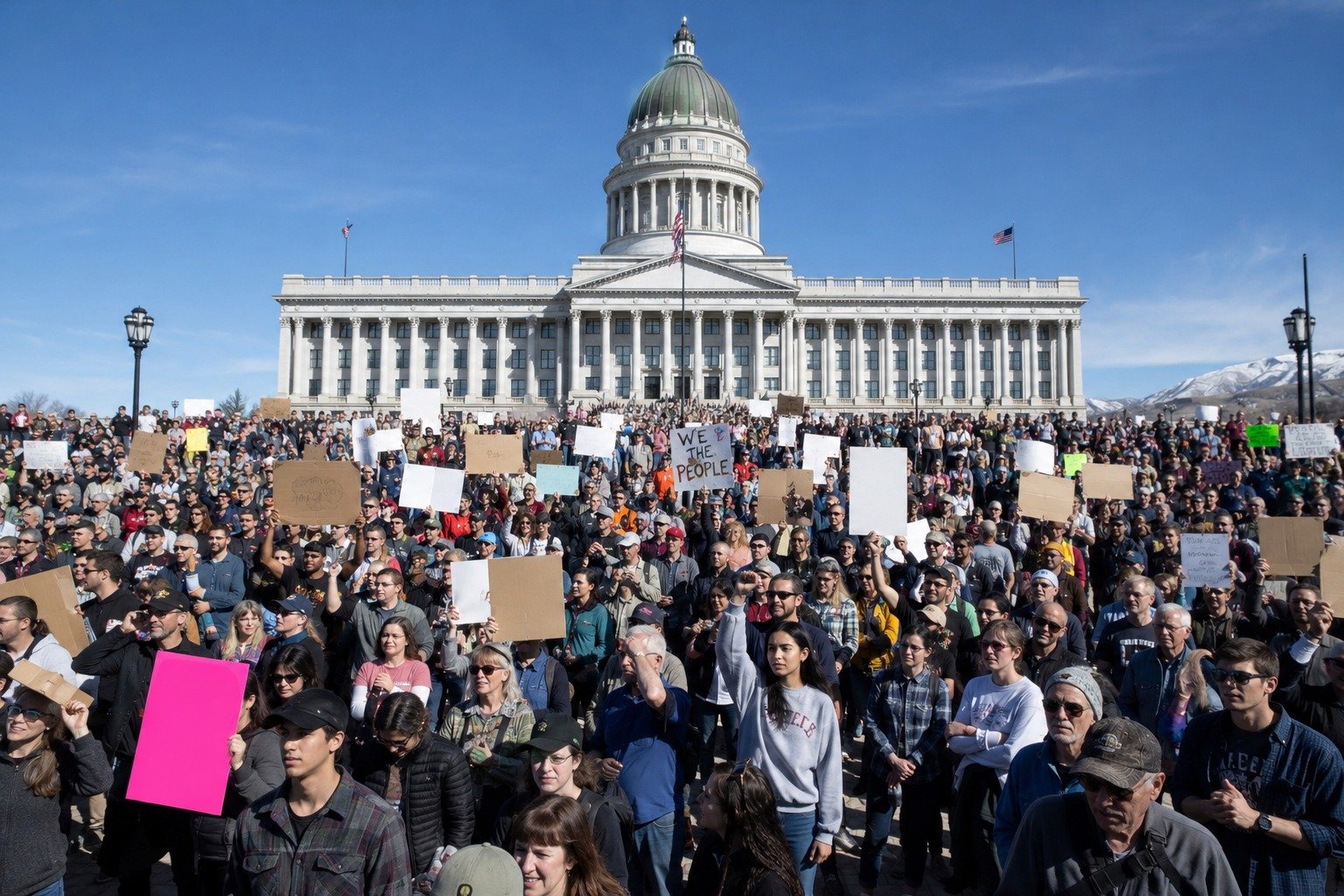
More than 600 people filled the Utah State Capitol this weekend to send a single, unmistakable message: leave the Great Salt Lake’s water alone. It was the second time in under two weeks that demonstrators packed the building, and the crowd’s anger was aimed squarely at a sprawling data center backed by celebrity investor Kevin O’Leary.
O’Leary, the venture capitalist best known as “Mr. Wonderful” on the TV show Shark Tank, is championing a project that state officials call “Stratos” – one he has branded “Wonder Valley.” If built as proposed, it would stretch across more than 40,000 acres of Box Elder County in northern Utah, a footprint roughly the size of a small city.
Why the Great Salt Lake Is at the Center of the Fight
The Great Salt Lake has been shrinking for years, and its decline has become one of the most closely watched environmental stories in the American West. As water levels drop, the exposed lakebed can release dust laden with heavy metals, threatening air quality for millions of people along the Wasatch Front. The lake also supports a multibillion-dollar ecosystem of brine shrimp harvesting, mineral extraction, and migratory bird habitat.
That fragile backdrop is exactly why the data center proposal has struck such a nerve. The site sits in a region tied directly to the health of the lake, and opponents fear that a facility of this scale could pull even more water from a basin that already has too little to go around. For many residents, the question is not abstract – it is about whether there will be enough water left to keep the lake, and the air around it, from getting worse.
The Scale of the Project
The numbers behind “Wonder Valley” are staggering. Projections tied to the development suggest it could more than double Utah’s total electricity use – a single project effectively rewriting the state’s power demand overnight. Critics also warn it would significantly raise Utah’s carbon footprint, in part because much of the facility’s power is expected to come from natural gas rather than the solar and wind sources sometimes floated in promotional materials.
The development has been pushed forward quickly through a state development authority, a pace that has itself become a point of contention. Protesters at the Capitol said they want more transparency and more time to study the project’s effects on water and air before any final approvals are locked in.
O’Leary Pushes Back
O’Leary has not retreated in the face of the backlash. He claimed – without offering evidence – that the overwhelming majority of the opponents were “bused in” from out of state, and he dismissed many of them as paid protesters. Residents pushed back hard against that characterization, insisting they are locals who simply do not want a private mega-project deciding the fate of their water and their air.
That clash has scrambled the usual political lines. The rally drew a mix of Utahns who would rarely find themselves on the same side of an issue, united less by party than by geography. The debate is less about left versus right and more about a basic question: should any single investor, no matter how wealthy, be able to reshape an entire region’s water supply?
What This Means for Americans
The Utah fight is a preview of a debate playing out across the country as the AI boom drives demand for enormous, power-hungry, water-cooled data centers. Communities from coast to coast are now weighing the promise of jobs and investment against the strain these facilities put on local water, electricity, and air. Supporters of “Wonder Valley” say it could bring economic opportunity to rural Utah. Opponents counter that no amount of money is worth gambling a dying lake. How Utah answers that question may shape how dozens of other towns answer it next.
Stay informed on the stories that matter most. Follow Your Daily Updates on Facebook and bookmark yourdailyupdates.news for breaking news and analysis.